The Rise of Portable Power Stations; Stay in Power at Home or On the Go
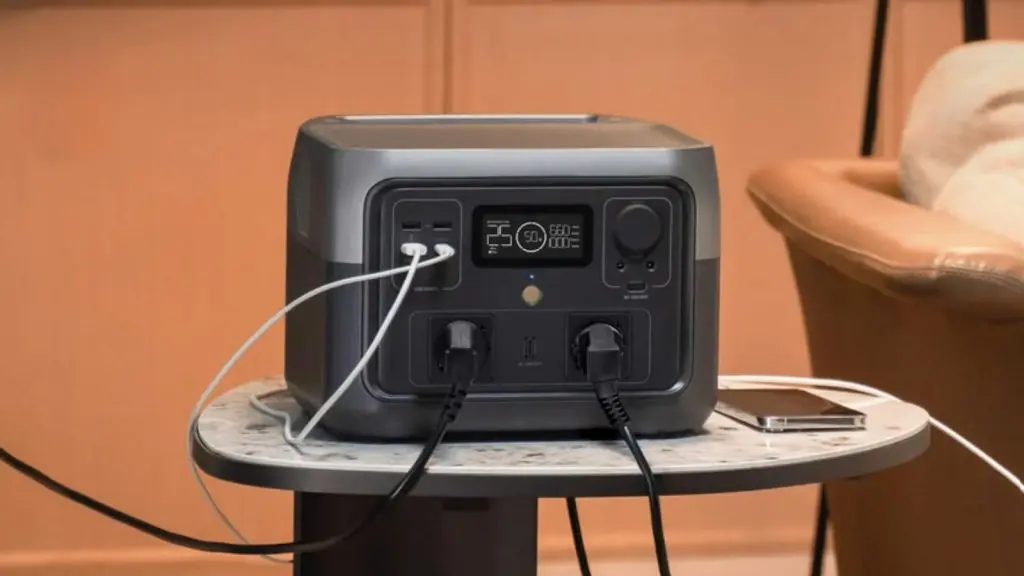

When we think of backup power, only two options come to our mind – inverters or power banks. Inverters are bulky devices coupled to extremely heavy lead-acid batteries and power banks are small, sleek but woefully short on capacity.

The primary function of inverters is not to provide portable charging option, rather to provide electricity backup in case of a power failure at home or office. The power banks on the other hand, provide portable charging anywhere, albeit with limited capacity.
Did you know there is a third option? This option can replace both power inverters and power banks and substitute them with a single option that does both – provide power backup at home/office and provide the convenience of portable charging on the go.
What are Power Stations
Power Stations belong to a new class of backup/charging devices and are called power stations. They offer sizeable power backup at home or office during power outages, yet are portable enough to let you charge your devices on the go.
These devices have been made possible due to the rise of Lithium-ion or Lithium iron phosphate battery technology. These batteries are small and lightweight but provide high energy density. These batteries maintain their useful life much longer than lead-acid batteries.
Power stations run on these batteries, which is why they are so compact and light, yet provide a lot of back up power. To give you an idea, a power station rated at 512wh will be able to provide power back up to a small home for about 2-3 hours or more, depending upon the usage. At the same time, you can easily carry them with you while going outdoors to keep all your electronics charged, many times over. They weigh about 5 kgs, measure almost similar as a handbag and come with a convenient handle to carry them around.
When at home, they can be used as power inverters, providing backup in case of electricity failure and when outside, they function like power banks, keeping your devices charged.
These devices are very efficient and come with many modern features.
Benefits of Power Stations
- They provide multiple AC and DC outlet ports, letting you run both your AC devices (that run on mains electricity) and electronic devices that need a charger. Usually they will have two 220V AC ports, multiple USB ports, 12V car socket port (for devices that run on 12V DC car supply) and some other specialized outputs, depending upon the region.
- These power stations get charged very quickly. These devices come with the option of mains 220V charging, car charging and solar charging. If you are charging from the mains 220V supply, they usually take about 60-80 minutes to go from 0 to 100 percent charging. If you are charging them using your car’s 12V socket or solar charging, they will get fully charged in about 3 hours time.
- Unlike the regular lead-acid batteries, their batteries are sealed inside the cabinet of the power station itself, making it one compact unit without any external wiring. These batteries are completely maintenance free and do not emit any harmful fumes while charging or discharging.
- There is a display panel on the device that gives you all the information such as charging status, input power, output power, battery temperature, backup time available, number of devices connected and much more. Most of these power stations have their dedicated app that lets you control all the parameters of the device remotely from anywhere in the world.
- They are bundled into very sleek futuristic looking devices that robustly built, look good to carry around and very very handy. They are best if you are undertaking a long car journey with family or friends, letting everyone’s devices stay charged.
- These devices are also very popular with camping and outdoor enthusiasts as they can run a multitude of devices from camping refrigerators to induction heaters to lighting to entertainment and almost anything that runs on electricity.
- Most of the power banks available in the market come with a 5 year warranty including the battery and claim only 5-10 percent reduction in the capacity after 5 years of usage or 3000 cycles.
How Much do Power Stations Cost
If you look at their long-term utility and freedom from maintenance, they are more economical than power inverters and power banks both. They come in various power capacities, starting from 100-256 WH and going up to upwards of 3-4 KWH. Their prices start from approximately Rs. 9000-25000 ($95-$265) for 100-300 WH devices, Rs. 25000-60000 ($265-$630) for 500-800 WH and Rs. 70000-1,50,000+ ($735-$1500) for 1000-2500+ WH capacity. However, the exact pricing may vary from region to region and from brand to brand.
Where to Buy Power Stations
Power stations are available at most leading ecommerce sites around the world and are also available at authorized brand showrooms or leading electronic stores.
Popular Brands of Power Stations
Few popular brands of power stations are EcoFlow, Bluetti, Jackery, Anker and a few more. They can easily be found online with individual websites providing more details.
Frequently Asked Questions
It depends on your requirement. If you are going to use it for pure backup at home or office, then conventional power inverters provide better value for money. However if you want portable power, then the price is totally justified.
There are two aspects of this question. The useful life of the power stations is generally more than five years. The battery capacity of the power station depends on the wattage of the station and amount of power being drawn from it.
Depending upon your region and requirement, there are many brands of power stations available in the market offering different storage capacities and budgets. You can choose the one that best fits your budget and requirement.
A power bank is essentially a small backup option for charging your electronic devices on the go with a very limited battery capacity, usually ranging from 5000-2000 mah, while a power bank is a large power back up devices which, besides charging your devices, can also provide AC back to run most of your devices till the battery lasts. The battery capacity ranges from 100WH to 2500 WH, depending upon the model.
Depending upon the size and battery capacity chosen a power station can cost anywhere between Rs. 9000-25000 ($95-$265) to Rs. 70000-1,50,000+ ($735-$1500).
Since this is not a sponsored article by any power station brand and meant for general information only, we have not provided information about specific brands or their pricing and warranty details. All the information provided above, including features, capacities and prices are indicative only. Readers are advised to look for more information from the manufactures or their authorized representatives in their area about the product before making any purchase decision.