Mumbai-Vadodara Expressway on August 31: Travel Time Cut to 4 Hours
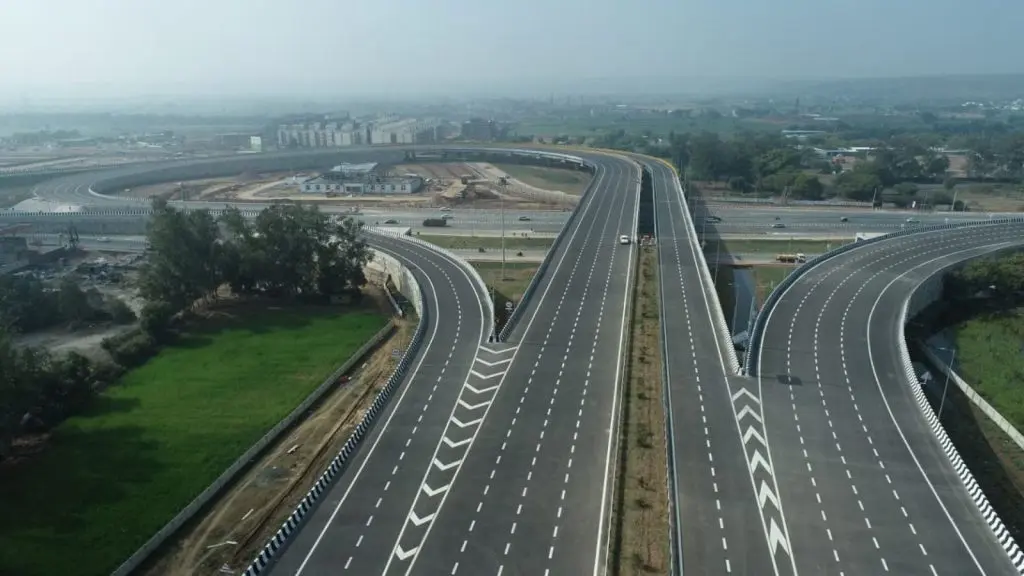

MUMBAI: Driving between Mumbai and Vadodara will take less than four hours by the end of this summer, marking a historic leap in regional transit times and logistical efficiency.

Maharashtra Chief Minister Devendra Fadnavis officially announced that the 157-kilometer Maharashtra corridor of the Delhi-Mumbai Expressway is fast-tracked for a public opening on August 31, 2026. The mega infrastructure expansion will slice the existing 8-hour commute between the industrial clusters entirely in half.
Built at an estimated cost of ₹24,000 crore, this crucial section bypasses dense urban terrain to offer a direct, high-speed economic channel across five major states, routing traffic directly toward the commercial arteries of Western India.
Maharashtra Stretch Near 100% Completion: Chief Minister’s Inspection
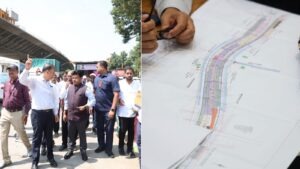
During an extensive on-site review at the strategic Virar interchange, Chief Minister Devendra Fadnavis evaluated progress alongside top technical engineers from the National Highways Authority of India (NHAI). The Chief Minister noted that structural milestones are progressing ahead of schedule.
The 157 km corridor within state lines is structurally divided into seven distinct construction packages. To date, work on five packages is entirely complete and structurally signed off for vehicular use. The remaining two execution packages are progressing under accelerated schedules to clear final alignments by the late August deadline.
The broader 8-lane, 1,386-kilometer access-controlled Delhi-Mumbai Expressway is being constructed under a total Union budget of approximately ₹95,000 crore. Once fully linked, it will bring down travel time between India’s national capital and financial capital from 24 hours to a swift 12-hour window.
Decolling Thane, Bhiwandi, and Ghodbunder Road Bottlenecks
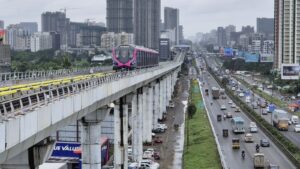
Beyond enabling faster cross-state transit, the upcoming commission resolves a massive pain point for regional commuters within the Mumbai Metropolitan Region (MMR).
Currently, heavy commercial trucks, container trailers, and interstate cargo fleets passing from Gujarat toward Konkan clog core city passages nightly. By routing these long-haul logistics fleets outside municipal parameters, the operational expressway will actively siphon away heavy transit volume from congested choke points.
Commuters can expect immediate, substantial relief across:
- Thane bypass routes
- Bhiwandi logistics lanes
- Ghodbunder Road arterial grids
Local authorities estimate that filtering commercial transit into this access-controlled alignment will save daily commuters hours of idling traffic while driving down heavy fuel expenditures and inner-city carbon footprints.
Unlocking a Fast-Track Commercial Pipeline to JNPA
The operationalization of this expressway acts as an absolute game-changer for international trade lines out of India.
The Mumbai-Vadodara layout connects directly into the sprawling network of the Jawaharlal Nehru Port Authority (JNPA). Industrial goods, manufacturing components, and agricultural outputs originating across north and central Indian economic zones will reach shipping terminals with minimal friction.
Furthermore, by establishing seamless connectivity with the proposed Virar-Alibaug Multi-Modal Corridor, the highway unlocks immediate access to upcoming secondary industrial zones. Economists project that the radical reduction in freight turnaround time will optimize supply chain structures, foster localized investment, and trigger extensive employment generation across Palghar and Thane districts.