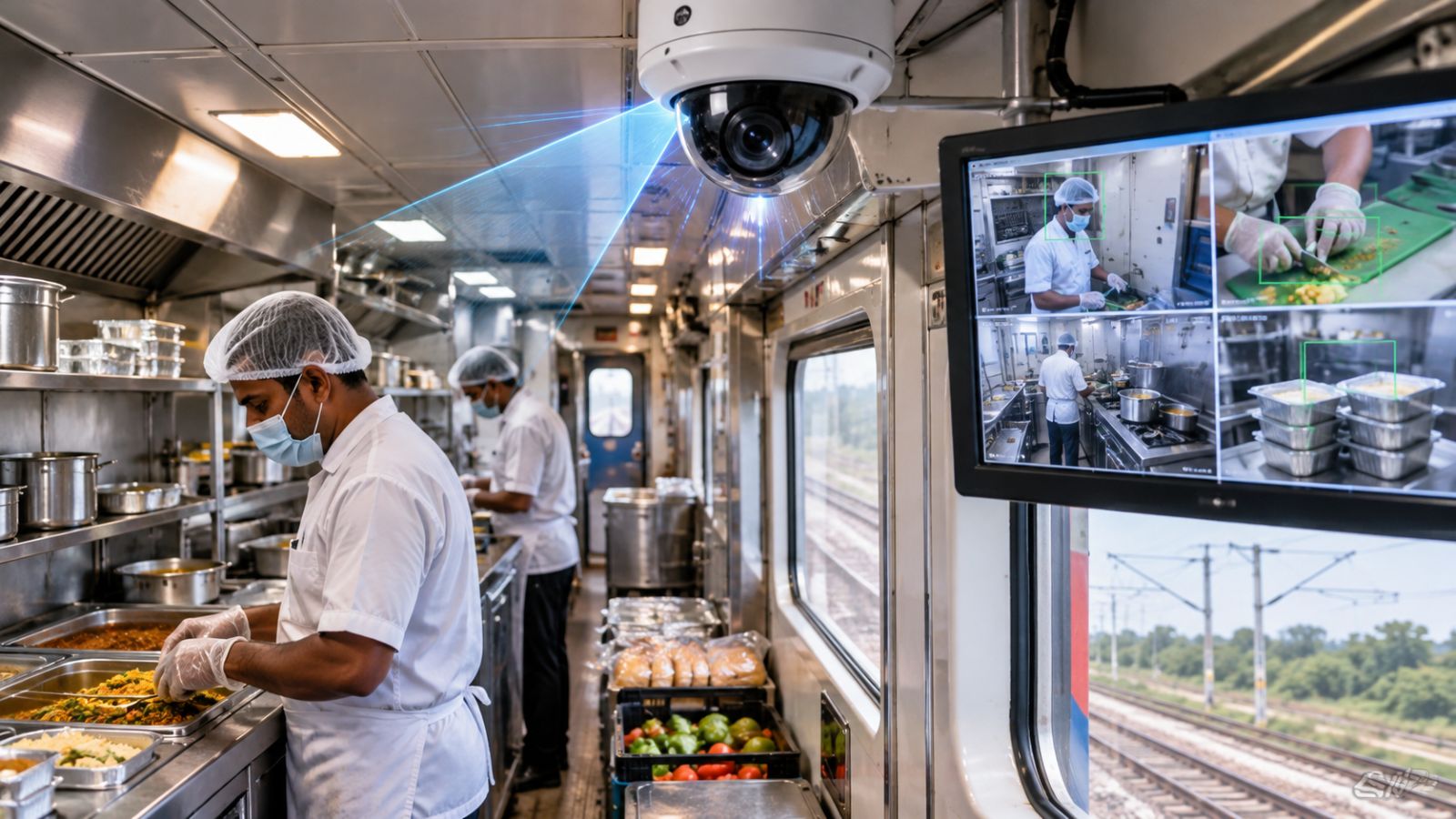

Indian Railways is set to expand the use of artificial intelligence to monitor food served on trains, with AI-enabled CCTV cameras planned for pantry cars and base kitchens under the East Central Railway (ECR) zone. The system will keep a round-the-clock watch on food preparation, handling and cleanliness, allowing catering officials to identify hygiene lapses and take corrective action.

The decision follows a recent visit by Railway Board Chairman Satish Kumar to the IRCTC monitoring war room in New Delhi, where he reviewed catering services and stressed the need to maintain food quality and hygiene standards for passengers.
According to IRCTC officials, ECR currently has 73 pantry car and train-side vending services operating on mail and express trains. The number of base kitchens serving the zone has increased to 62. The proposed camera network will cover food preparation, packaging and supply operations at these facilities as well as pantry cars.
The move extends a technology-based monitoring system that IRCTC has already introduced in railway kitchens across the country. More than 800 kitchens have been brought under AI surveillance, with 2,394 cameras monitoring their operations. The feeds are linked to a central war room at IRCTC headquarters in New Delhi.
Unlike conventional CCTV surveillance, the system uses AI to automatically detect hygiene-related violations. It can identify nine types of issues, including failure of kitchen staff to wear hairnets or transparent gloves, lapses in mopping and wiping, and the presence of rodents, flies and cockroaches.
The system generates around 350 alerts or error tickets a day. When a violation is detected, an alert is sent to the manager of the kitchen concerned. If the problem is not addressed, the matter is escalated, with action against those responsible generally initiated within two hours, according to an IRCTC official.
The surveillance assumes importance considering the scale of railway catering operations. Indian Railways serves around 58 crore meals annually on average. In August, the Railway Ministry said food-quality complaints account for about 0.0008% of meals served, while action taken over complaints during the previous three years included fines totalling ₹5.13 crore, 54 show-cause notices and termination of six contracts. Defaulting licensees have also been debarred.
CCTV monitoring is one of several measures being used by the Railways to improve onboard food safety. Other steps include sourcing meals from designated base kitchens, mandatory food-safety supervision, use of branded raw materials, deployment of IRCTC supervisors on trains, regular deep cleaning and pest control, and QR codes on meal packets carrying information such as the kitchen, packing details, licensee and FSSAI licence number.
With AI surveillance now being extended to pantry cars in the ECR zone, monitoring will move beyond kitchens where meals are prepared to areas where food is handled and supplied during train journeys. The objective is to detect hygiene violations faster and improve accountability in onboard catering.