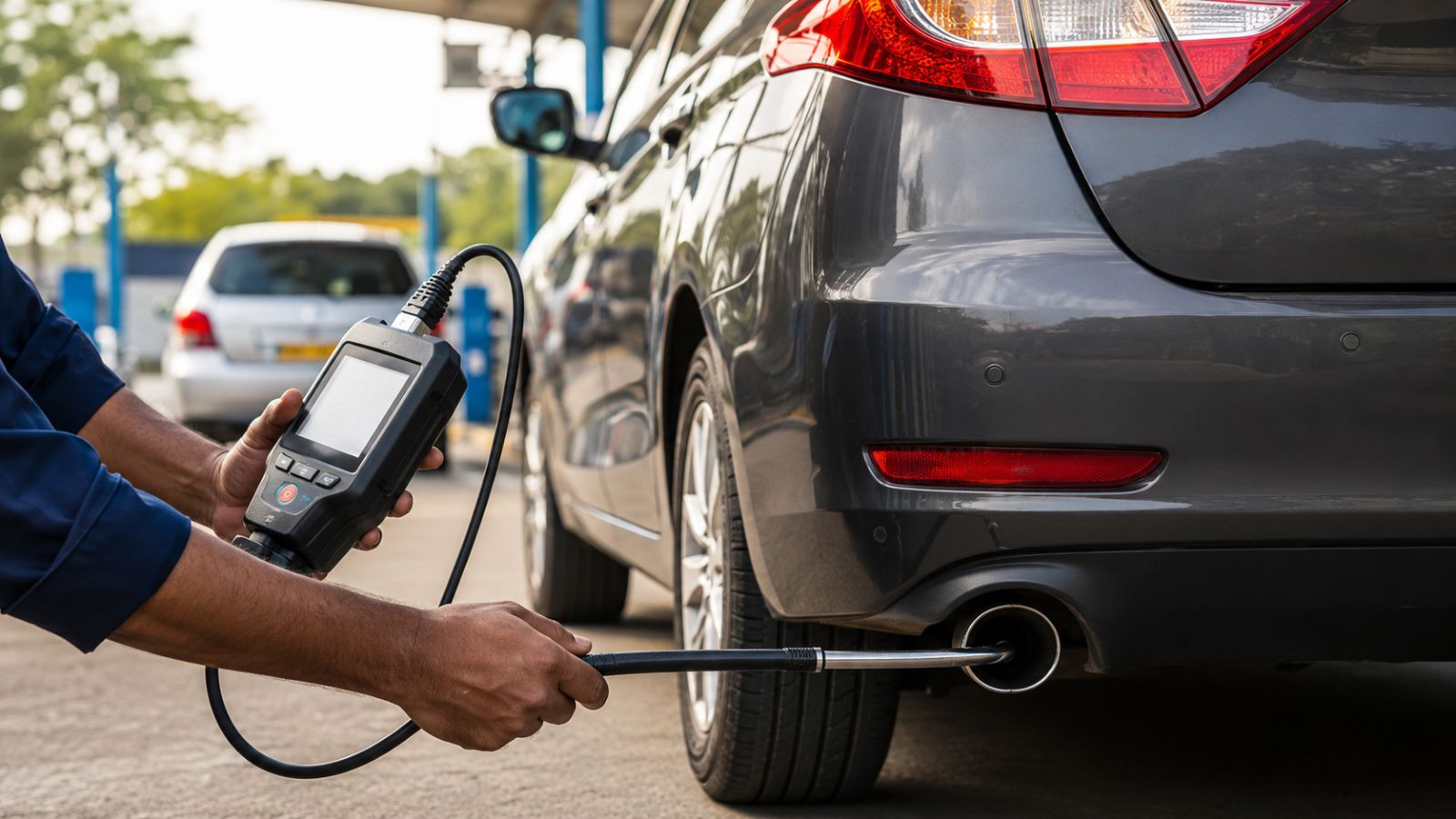

Vehicle owners may soon have fewer trips to PUC centres, but only if they drive newer BS6 vehicles.

The Ministry of Road Transport and Highways (MoRTH) has issued a draft notification proposing changes to the validity of Pollution Under Control Certificates (PUCC). If implemented, the proposal will extend the validity of PUC certificates for newer BS-VI private vehicles while introducing stricter testing schedules for older vehicles.
Three-Year PUC Validity Proposed for New BS6 Vehicles
According to the draft notification, privately owned BS-VI vehicles that are up to six years old will require a Pollution Under Control Certificate only once every three years, instead of the current one-year validity.
The proposal recognises that BS6 vehicles are equipped with advanced emission control technologies and generally produce significantly lower emissions than older vehicles.
New PUC Validity Schedule Proposed
BS-VI vehicles up to 6 years old
- PUC validity: 3 years
BS-VI vehicles between 6 and 10 years old
- PUC renewal: Every year
BS-VI vehicles older than 10 years
- PUC renewal: Every six months
BS-IV vehicles
- PUC renewal: Every six months
BS-I, BS-II and BS-III vehicles
- PUC renewal: Every three months
Proposal Yet to Become Law
The revised validity periods have not been implemented yet.
MoRTH has released the proposal as a draft notification and invited suggestions and objections from stakeholders. The final rules will come into effect only after the consultation process is completed and the government issues a final notification.
Why the Government Wants to Change the Rules
The proposed changes are aimed at making the PUC system more scientific by linking inspection frequency to a vehicle’s emission standards and age.
Since BS6 vehicles are designed to emit substantially lower levels of pollutants, the government believes they do not require annual emission testing during their initial years. On the other hand, older vehicles are more likely to develop higher emissions as components wear out, warranting more frequent inspections.
What Vehicle Owners Should Do Now
Until the draft notification is formally notified, existing PUCC rules remain applicable.
Vehicle owners should continue renewing their Pollution Under Control Certificates as per the current validity period applicable to their vehicle. Failure to maintain a valid PUCC can attract penalties under the Motor Vehicles Act and may also affect enforcement checks in several states.
What This Means
If approved, the proposal will benefit millions of owners of newer BS6 cars and two-wheelers by reducing compliance costs and visits to PUC centres. At the same time, it signals stricter monitoring of ageing vehicles that contribute a larger share of vehicular emissions.
The proposal represents one of the biggest changes to India’s PUC regime in recent years and is expected to impact vehicle owners, PUC centres and state transport departments across the country.

Jayant Mahajan is a writer and contributor at PuneNow, covering the intersection of technology, climate action, and urban governance across Pune. With an extensive background in business management, digital transformation, and academia, Jayant brings real-world insight to local sustainability issues, from civic infrastructure to smart city data ethics. As an educator and founder of the Change Before Climate Change mission, he focuses on how Pune’s institutions and businesses can build future-ready, sustainable systems. Through his columns, Jayant bridges policy, technology, and practical action to help Punekars navigate a rapidly changing urban climate.