App Based Cab and Ride Services in Maharashtra to be Strictly Regulated Through Motor Vehicle Aggregator Rules
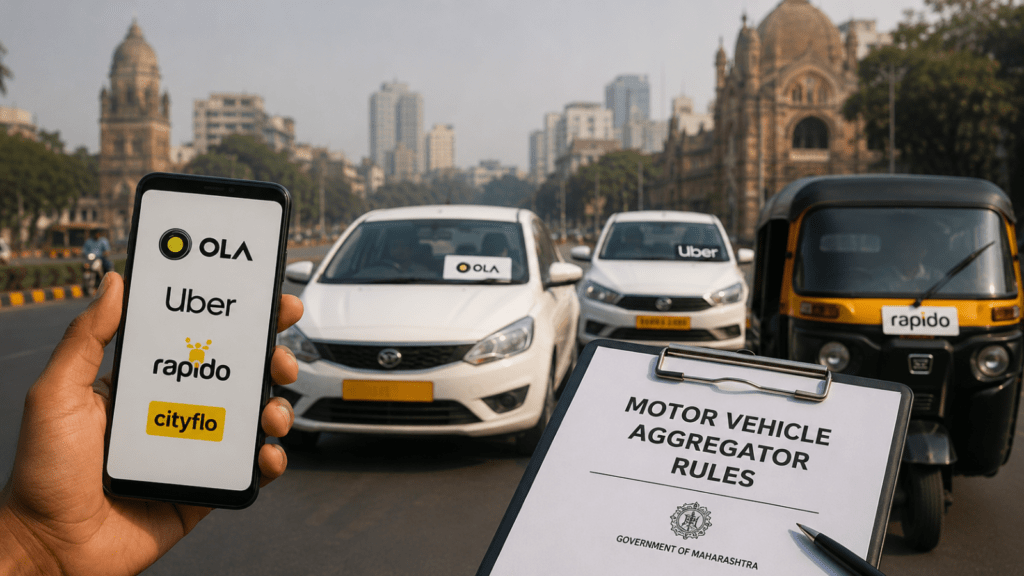

Maharashtra government has officially rolled out its comprehensive Motor Vehicle Aggregator Rules to clean up and regulate the rapidly growing app-based transport sector. Under this comprehensive policy, tech giants and ride-hailing services like Ola, Uber, and Rapido will now operate under strict state-mandated guidelines designed to prioritize passenger safety, safeguard driver earnings, and bring transparency to fare pricing.

State Transport Minister Pratap Sarnaik announced that every aggregator company running in Maharashtra is now required to obtain a formal operating license from the State Transport Authority. Each operator will be assigned a unique license identification number, bringing these tech platforms firmly within the government’s regulatory and tax net.
Regulating a Lawless Frontier
“Lakhs of passengers across Maharashtra depend on app-based cab and auto services every single day,” Sarnaik said. “However, the lack of a uniform regulatory framework had opened the door to serious issues, ranging from safety vulnerabilities and arbitrary, fluctuating surge prices to poor driver payouts and delays in resolving passenger complaints. This new policy changes that, putting a robust, legal, and transparent system in place.”
To ensure enforcement isn’t just on paper, the state government is building a dedicated online portal for real-time monitoring. The system will keep tabs on aggregator vehicles using GPS tracking, facilitate quick driver verification, and allow transport authorities to immediately log violations and penalize operators who flout the rules.
Safety First and Fair Payouts
The policy places passenger security at the top of the priority list. In addition to real-time GPS tracking, aggregators will be required to maintain 24/7 emergency customer support and a dedicated grievance officer to resolve disputes within a fixed timeline.
Crucially, the rules also look out for the financial interests of local drivers. Aggregators must now guarantee that drivers receive at least 80% of the total fare collected for each trip, heavily restricting the commission cuts taken by the platform companies. The state government also notes that this legal framework will formalize the sector, helping to boost revenues for the state treasury while opening up secure, regulated employment opportunities for local youth.