Maharashtra FDA Inspected 12,000 Food Businesses in 100 Days; Over 5,200 Issued Improvement Notices, 603 Licences Suspended
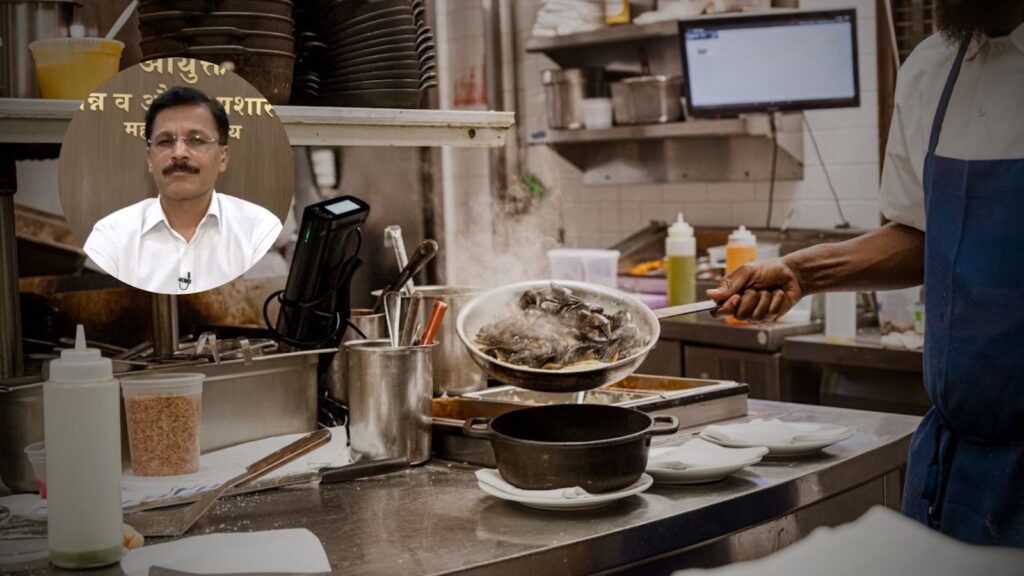

Maharashtra Food and Drug Administration (FDA) Commissioner Tukaram Mundhe has said that around 12,000 food establishments were inspected across the state over the last three months, or about 100 days.

More than 5,200 establishments were issued improvement notices, while licences of 603 establishments were suspended with immediate effect.
Mundhe shared the figures during a recent interview with NDTV while discussing the FDA’s action against restaurants and other food businesses in Maharashtra.
The inspections covered different parts of the food sector, including milk and milk products, hotels and restaurants. According to Mundhe, improvement notices were issued where inspections found non-compliances that needed to be corrected.
The 603 licence suspensions were mainly linked to non-compliance with Schedule 4 of the Food Safety and Standards (Licensing and Registration of Food Businesses) Regulations, 2011. Mundhe described these requirements as “non-negotiable”.
What is Schedule 4?
Schedule 4 of the Food Safety and Standards (Licensing and Registration of Food Businesses) Regulations, 2011 lays down hygiene and sanitary requirements that food businesses must follow. It covers areas such as cleanliness of premises, food handling and storage, water supply, waste disposal, pest control, personal hygiene of food handlers and measures to prevent contamination.
The requirements vary according to the type of food business and are intended to ensure that food is prepared, stored and handled under hygienic conditions.
Taken together, improvement notices and licence suspensions were issued in around 5,800 of the 12,000 establishments inspected.
At the same time, Mundhe said it would be incorrect to suggest that everything was wrong with the food sector, pointing out that more than 50% of the establishments inspected were found to be complying with requirements.
Food safety should be seen as a public health issue: Mundhe
Mundhe said food safety should not be viewed only in terms of adulteration or substandard food. It needs to be treated as a wider public health issue.
He referred to the Food Safety and Standards Act, 2006, saying its objective was ultimately to improve public health through science-based food standards and regulations.
He also spoke about the change in India’s disease burden since Independence. According to Mundhe, communicable diseases accounted for around 65% to 70% of the disease burden at the time of Independence, while non-communicable diseases made up the remaining share.
He said the situation has now reversed, with non-communicable diseases (NCDs) accounting for around 65% and communicable diseases around 30%.
Mundhe linked the rise in NCDs in part to what people consume, referring to obesity, cardiovascular diseases, cancer, blood pressure and other lifestyle diseases.
Consumers should check ingredients, not just brand and expiry date
Mundhe also asked consumers to pay greater attention to their food habits, particularly the consumption of products high in fat, salt and sugar.
Speaking about packaged food, he said consumers often look at the brand, price and best-before or expiry date, but do not pay enough attention to the ingredients.
He said food should be looked at from both safety and standards perspectives rather than only for adulteration or taste.