Pune Gets Two Months of Drinking Water in Just One Day of Heavy Rain
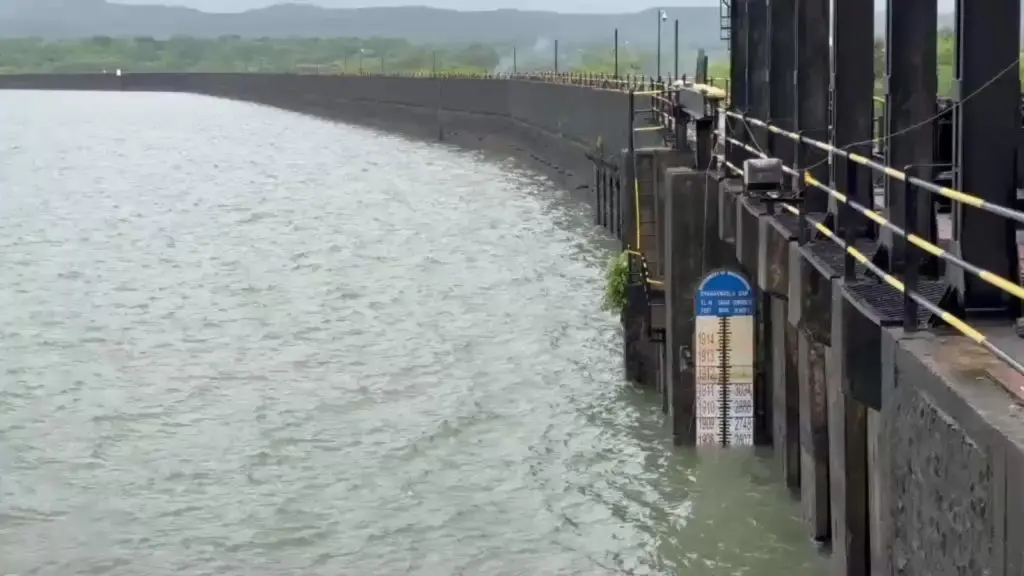

A night of heavy rain followed by a rainy Monday has completely changed the Pune’s water storage situation. In just 24 hours, a massive surge of water poured into the Khadakwasla dam system, bringing in 2.6 TMC of inflows, enough to satisfy the city’s drinking water requirements for nearly two months.

The collective live storage of the four crucial reservoirs feeding Pune, Khadakwasla, Panshet, Varasgaon, and Temghar, shot up from 5.72 TMC (19.63%) on Sunday to 8.32 TMC (28.55%) by Monday evening.
The sharpest rise was recorded at Khadakwasla dam itself, where the water stock more than doubled within a single day, climbing from 0.31 TMC to 0.68 TMC (34%) and then up to 62.98% by 4 am on Tuesday morning. Upstream, Panshet’s stock rose to 3.36 TMC (31%), Varasgaon reached 3.7 TMC (29%), and Temghar, which was running critically low, climbed to 0.56 TMC (15%). Meanwhile, other crucial reservoirs in the district also saw significant gains, with Bhama Askhed hitting the 50% mark (3.8 TMC), Pavana reaching 49% (4.15 TMC), and Andra climbing to 52% (1.5 TMC).
The deluge was driven by intense, widespread precipitation, with thirteen dams in the district recording over 100mm of rainfall in a 24-hour window ending Monday morning.
The Mulshi catchment emerged as one of the wettest zones, with Mulshi and Vadivale dams each receiving over 200mm of rain. Since the start of June, Mulshi has clocked a massive 1,700mm of rainfall, the highest among the 25 major dams in the Bhima basin. Mulshi dam now holds 50.84% water against a meagre 9+ percent just last week. Similarly Pawana dam is now 49.92%.
This intense runoff sent torrents of water crashing into regional water bodies. Major rivers including the Mula, Mutha, Pavana, Indrayani, and Bhima are currently in spate, fed by swelling local streams and nullahs. The water flow at Bund Garden surged to approximately 35,000 cusecs on Monday.
With storage capacities breaching safety thresholds elsewhere, the irrigation department commenced water discharges on Monday from Vadivale dam (9,000 cusecs) and Kalmodi dam (3,800 cusecs) after both crossed 90% of their respective capacities.
While the rapid rise initially triggered concerns about potential water release from the Khadakwasla dam, irrigation officials clarified on Monday evening that immediate discharges have been put on hold till the dam gets 80% percent filled.
“The Khadakwasla dam complex has received substantial rainfall over the last 24 hours, resulting in a significant rise in reservoir levels,” said Kiran Deshmukh, executive engineer for the Khadakwasla dam cluster. “We were assessing the possibility of releasing water from the dam considering the rising water level. However, rainfall intensity and inflows have reduced since then, and as of now, there are no plans to release water.”
Deshmukh added that officials are stationed at each dam site for round-the-clock monitoring, and any future release will only be considered if Khadakwasla’s storage touches 1 TMC.
Despite the single-day windfall, current storage remains significantly lower than last year’s levels. On the same date in 2025, the four-dam system held a robust 18.35 TMC (62.95%).
As a precautionary measure, authorities have issued strict alerts to citizens. Residents living along the riverbanks have been warned to remain highly vigilant, avoid venturing near the water beds, and proactively shift livestock and valuable equipment from low-lying areas.