From High Seas to High Street: Mumbai’s Cruise Terminal Redefines Travel with Shopping, Feasts, and Fun
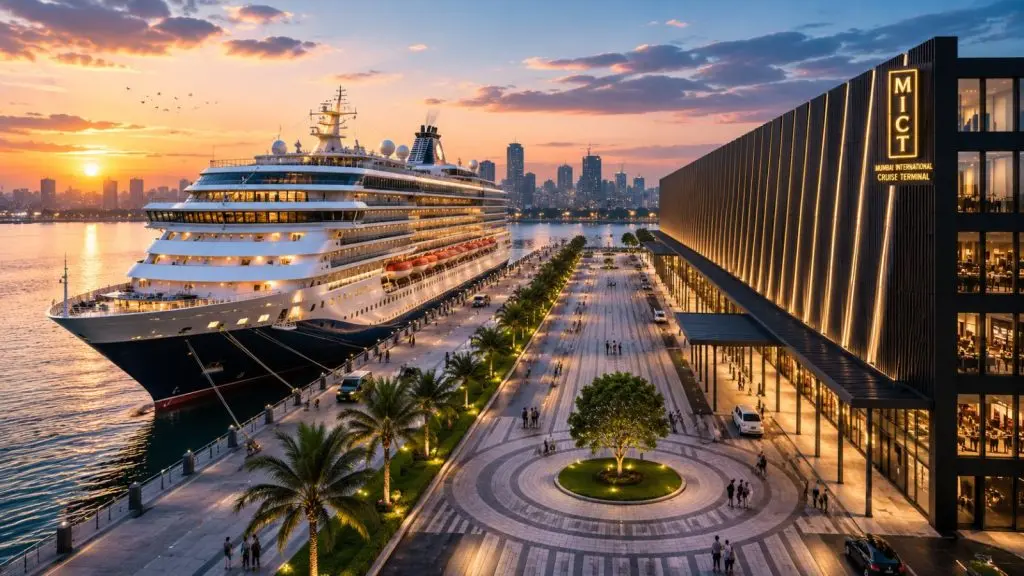

Mumbai’s iconic Ballard Pier has transformed into a world-class maritime gateway, blending luxury cruising with vibrant retail, dining, and entertainment, all open to the city.

The Arabian Sea laps gently against the historic docks of Ballard Pier, where cargo vessels once dominated the skyline. Today, a gleaming architectural marvel rises from these very waters, the Mumbai International Cruise Terminal (MICT). But this is no ordinary transit hub. It is India’s largest cruise facility, a ₹556-crore statement of intent that positions the country firmly on the global cruise map.
What sets this terminal apart from any other in the country is its dual personality. By day, it processes thousands of cruise passengers with world-class efficiency. By evening, it transforms into a buzzing waterfront destination where Mumbaikars can shop, dine, and unwind, all without a ticket to anywhere.
Attractive Features of Mumbai International Cruise Terminal
- Located at Ballard Pier, Indira Dock, South Mumbai
- G+3 structure (Ground plus three floors)
- Total area: 415,000 sq. ft.
- Annual passenger capacity: 1 million passengers
- Daily handling capacity: ~10,000 travellers
- Annual ship handling: ~200 cruise calls
- Simultaneous berthing: Up to 5 cruise ships
- Ship size capacity: Vessels carrying up to 500 passengers
- Operational days: 365 days a year
- Check-in & immigration counters: 72
- Elevators: 22
- Escalators: 10
- Parking capacity: 300+ vehicles
- Expansive glass panes offering Arabian Sea views
- Open to general public for recreation, leisure, shopping, and retail
- Pier Pop festival (June–July) featuring:
- Future additions: Sailing clubs, live music venues, permanent retail outlets, dining spaces
- Planned seafront park for public walking and relaxation
India’s Maritime Milestone
The Mumbai International Cruise Terminal sprawls across 415,000 square feet, with an operational area of approximately 170,000 square feet spread across four levels. Located at the historic Indira Dock within the Ballard Estate precinct, the terminal represents a significant leap forward in India’s maritime infrastructure.
Built under the national Cruise Bharat Mission, the terminal is designed to handle 1 million passengers annually, that’s roughly 10,000 travellers passing through its gates every day. With the capacity to berth up to five cruise ships simultaneously and handle approximately 200 cruise calls per year, the terminal is poised to become a major node in the international cruise network.
The project was executed under a public-private partnership model, with the Mumbai Port Authority handling the civil infrastructure and private operators, Ballard Pier Port Private Limited and JM Baxi & Co., bringing the interiors and operations to life through a 30-year concession agreement.
Beyond the Gangway: A Public Playground
Here is where the Mumbai International Cruise Terminal breaks the mould. Unlike traditional ports that remain off-limits to the general public, MICT has been designed as a year-round recreational destination open to local citizens.
During the monsoon months, when cruise liners take a pause, the terminal comes alive with the Pier Pop festival, a vibrant carnival of shopping, dining, and entertainment. Visitors can explore craft stalls, savour gourmet street food, challenge friends to pickleball, or watch children zoom around a dedicated go-kart track. Live music and cultural performances add to the festive atmosphere, making the terminal a weekend destination in its own right.
Even outside festival season, the terminal welcomes visitors for leisure and retail. Plans are already in motion to introduce sailing clubs, permanent dining outlets, retail spaces, and a public seafront park where visitors can stroll along the waterfront, opening up a stretch of Mumbai’s coastline that has remained inaccessible to most residents for decades.
World-Class Infrastructure for Global Standards
Behind the glamour lies a meticulously planned infrastructure designed for seamless passenger movement. The terminal features 72 check-in and immigration counters distributed across the ground and first floors, ensuring that processing thousands of passengers happens without bottlenecks.
With a draft of 10.5 metres, the terminal can comfortably accommodate cruise ships carrying up to 500 passengers. Parking for over 300 vehicles is available, and the building is equipped with 22 elevators and 10 escalators for smooth vertical movement.
The architecture itself is a visual treat. A wavy ceiling design mimics the rhythm of ocean waves, rose-gold accents add a touch of luxury, and expansive glass panes frame stunning views of the Arabian Sea and Mumbai’s skyline. It is a structure that pays homage to the city’s maritime heritage while looking firmly towards the future.
Sustainability at Sea
The terminal is not just about size and style, it also sets new benchmarks in environmental responsibility. A shore-to-ship power system allows docked vessels to plug into clean electricity, significantly cutting emissions from diesel engines that would otherwise run throughout the port stay.
Natural lighting through skylights reduces energy consumption in passenger movement areas. Heritage lighting at Port House and Evelyn House, along with the Sagar Upvan garden, adds an eco-sensitive and culturally conscious touch to the development.
A Boost for Economy and Employment
The economic implications of the Mumbai International Cruise Terminal extend far beyond its gates. The facility is expected to generate substantial employment opportunities across tourism, hospitality, logistics, and retail sectors. Local businesses, from souvenir shops to restaurants, stand to benefit as passenger footfall increases.
International cruise lines such as Norwegian, Celebrity, Silversea, and Regent Seven Seas are already showing interest, alongside domestic operators like Cordelia Cruises and Angriya. This mix of global and domestic players will bring in diverse travellers, further integrating Mumbai into the global cruise itinerary.
Conclusion
The Mumbai International Cruise Terminal is more than a gateway to the seas, it is a destination in itself. By blending the romance of cruising with the buzz of shopping, dining, and entertainment, it has redefined what a port can be. For Mumbai, it is a waterfront finally opened to its people. For India, it is a giant step towards becoming a global cruise hub.
As the sun sets over the Arabian Sea and the terminal lights begin to twinkle, one thing becomes clear, Mumbai has not just built a terminal. It has built an experience.
Frequently Asked Questions
1. Where is the Mumbai International Cruise Terminal located?
The terminal is situated at Ballard Pier in South Mumbai, occupying the historic Indira Dock within the Ballard Estate precinct.
2. Is the terminal open to the general public?
Yes. Unlike traditional ports, MICT is open to local citizens for recreation, leisure, shopping, and dining throughout the year.
3. What is the Pier Pop festival?
Pier Pop is a month-long festival hosted at the terminal during the monsoon season (June–July), featuring food stalls, shopping, live entertainment, pickleball, go-karting, and children’s activities.
4. How many passengers can the terminal handle?
The terminal is designed to handle 1 million passengers annually, with a daily capacity of approximately 10,000 travellers.
5. How many cruise ships can dock at the terminal?
The terminal can berth up to five cruise ships simultaneously, handling around 200 cruise calls per year.
6. What is the draft available at the terminal?
The terminal offers a draft of 10.5 metres, suitable for cruise ships carrying up to 500 passengers.
7. What are the sustainability features of the terminal?
Key features include a shore-to-ship power system for clean energy, natural lighting through skylights, and heritage-sensitive lighting around the port premises.
8. Who operates the terminal?
The terminal operates under a public-private partnership model, with Mumbai Port Authority handling infrastructure and Ballard Pier Port Private Limited along with JM Baxi & Co. managing operations under a 30-year concession.
9. What facilities are available for passengers?
The terminal offers 72 check-in and immigration counters, parking for over 300 vehicles, 22 elevators, 10 escalators, and passenger-friendly lounges and waiting areas.
10. What is the total area of the terminal?
The terminal spans 415,000 square feet in total, with an operational area of approximately 170,000 square feet.
11. Will there be a public park at the terminal?
Yes. Future plans include a public seafront park where visitors can walk, relax, and enjoy views of the Arabian Sea.
12. When was the terminal officially inaugurated?
Prime Minister Narendra Modi inaugurated the terminal virtually on September 20, 2025, during the ‘Samudra se Samriddhi’ event in Bhavnagar, Gujarat. Commercial operations had commenced earlier on April 21, 2025.
13. Which cruise lines operate from the terminal?
Both international lines such as Norwegian, Celebrity, Silversea, and Regent Seven Seas, and domestic operators including Cordelia Cruises and Angriya, operate from the terminal.
14. What is the total project cost?
The terminal was developed at a total cost of approximately ₹556 crore, including EPC infrastructure and private investment.
15. How does the terminal benefit the local economy?
The terminal is expected to generate significant employment, boost tourism and hospitality sectors, and create opportunities for local businesses and retail vendors.