Caught on CCTV: Leopard Stalks and Kills Dog Inside IIT Bombay Campus, Residents on Edge
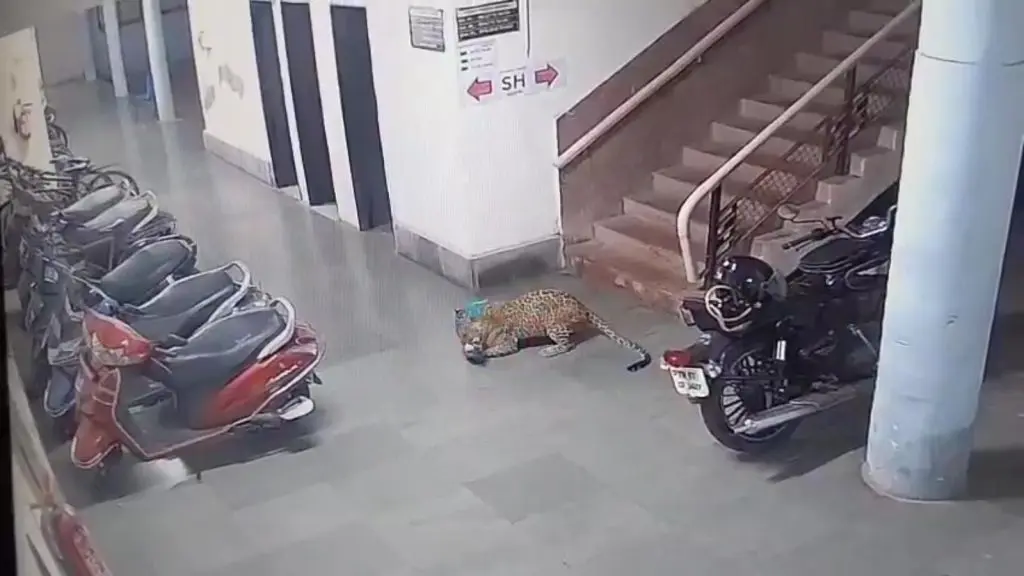

A chilling CCTV video showing a leopard attacking a dog inside the IIT Bombay campus has sent shockwaves across Mumbai and triggered fresh concerns over wildlife movement in urban areas bordering forests.

The incident took place in the staff hostel area of the prestigious institute in Powai during the early hours of Friday. The big cat was caught on surveillance cameras prowling through the residential section before pouncing on a dog, killing it within moments. The footage quickly spread across social media platforms, prompting concern among students, faculty members and campus residents.
IIT Bombay Leopard Sighting Triggers Safety Concerns
The IIT Bombay leopard incident has once again highlighted the unique challenges faced by communities living close to forested regions in Mumbai.
Located in Powai, the sprawling campus is surrounded by green cover and lies in proximity to wildlife habitats connected to the Sanjay Gandhi National Park ecosystem. While occasional sightings of wild animals have been reported over the years, the latest attack has reignited discussions on safety measures and wildlife management.
Residents of the campus were alarmed after the CCTV footage surfaced online, with many expressing concern about the presence of a predator inside a residential zone.
CCTV Footage Goes Viral
The CCTV clip reportedly shows the leopard moving silently through the campus before attacking the unsuspecting dog.
The speed and precision of the attack have left viewers stunned. The video has attracted significant attention online, with students and residents sharing concerns about movement during night-time hours. Social media discussions suggest the attack occurred near staff housing and recreational facilities within the campus.
Why Are Leopards Being Seen Near Urban Areas?
Wildlife experts say leopard sightings in parts of Mumbai are not unusual, particularly in neighbourhoods located near SGNP, Aarey and adjoining green corridors.
Leopards often venture into human-dominated landscapes in search of food, with stray and community dogs forming a major part of their diet. Experts have repeatedly noted that the animals generally avoid humans and are most active during the night.
The IIT Bombay campus, known for its extensive greenery, lakes and open spaces, provides a natural movement corridor for several species of wildlife.
Previous Wildlife Incidents at IIT Bombay
The leopard sighting is not the first wildlife-related incident reported from the campus.
Earlier this year, a nine-foot crocodile strayed into the IIT Bombay campus and had to be rescued by wildlife officials. The campus has also witnessed leopard sightings in previous years due to its location near natural habitats.
What Authorities Are Likely to Advise
Wildlife experts generally recommend the following precautions in areas where leopard movement is reported:
- Avoid walking alone in isolated areas at night.
- Keep pets indoors after dark.
- Do not attempt to approach or photograph wild animals.
- Report sightings immediately to campus security or forest officials.
- Maintain adequate lighting around residential areas.
Experts stress that panic is unnecessary, but awareness and vigilance are essential when living close to wildlife habitats.
Human-Wildlife Interface Under Spotlight
The IIT Bombay leopard incident serves as another reminder of Mumbai’s complex relationship with nature. As urban development continues to expand around forested landscapes, encounters between humans and wildlife are becoming increasingly visible.
While no human injuries have been reported in the latest incident, the attack has renewed calls for greater awareness, better monitoring and coordinated action between educational institutions, residents and forest authorities to ensure safety for both people and wildlife.