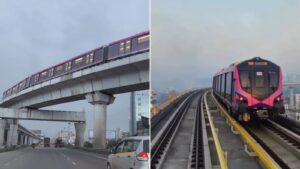
India Poised to Overtake USA as World’s Second-Largest Metro Network
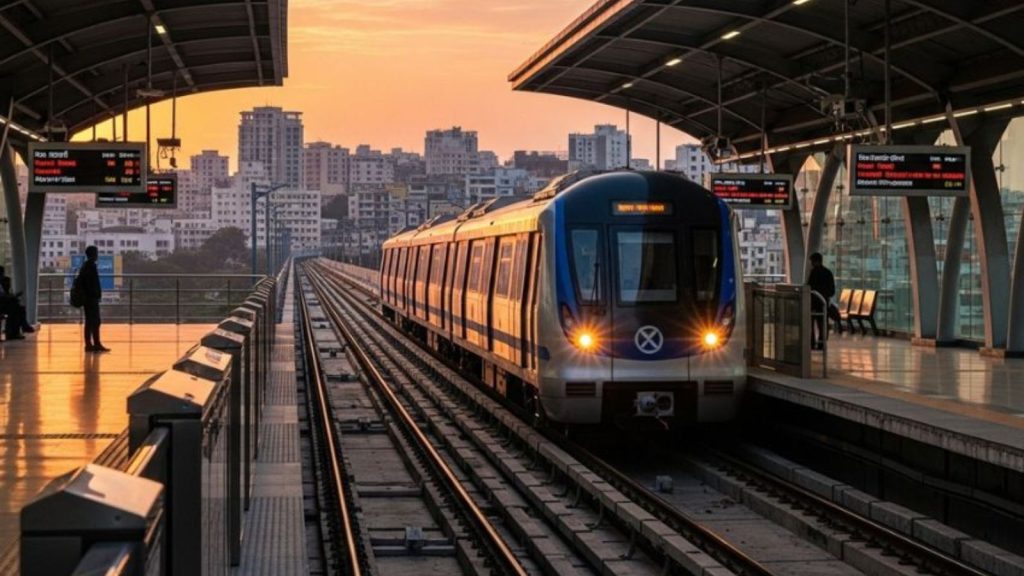

India is on the verge of a historic infrastructure milestone, with its operational metro rail network projected to surpass that of the United States within the next few years. According to recent global transit data, India has firmly established itself as the third-largest metro market globally, trailing only China and the U.S.

As of early 2026, India boasts an operational metro length of 1,066.3 kilometers across 29 cities. This rapid expansion follows a “golden decade” of urban development where the network grew from just 248 kilometers in 2014. With approximately 936 kilometers of additional lines currently under construction, India is set to bridge the gap with the United States, which currently operates 1,389.4 kilometers.
Global Rankings: The Top 10
The global landscape of urban rapid transit is dominated by China, which maintains a staggering lead with over 12,000 kilometers of operational tracks across 47 systems. The current standings highlight a significant shift toward Asian infrastructure dominance:
| Rank | Country | No. of Systems | Operational Length (Km) |
| 1 | China | 47 | 12,062.50 |
| 2 | United States | 23 | 1,389.40 |
| 3 | India | 20* | 1,066.30 |
| 4 | Japan | 16 | 897.50 |
| 5 | South Korea | 21 | 760.73 |
| 6 | Russia | 7 | 746.70 |
| 7 | Spain | 3 | 469.80 |
| 8 | United Kingdom | 9 | 446.40 |
| 9 | France | 6 | 398.30 |
| 10 | Turkey | 5 | 391.20 |
*Note: India’s operational length excludes the Delhi-Meerut RRTS.
A Strategic Push for Mobility
The acceleration in India’s ranking is attributed to massive capital expenditure and the “Make in India” initiative. The annual metro budget for the 2025-26 fiscal year rose to ₹29,550 crore, a nearly fivefold increase from 2013-14 levels.
Urban planners note that while the U.S. network relies heavily on legacy systems in cities like New York and Chicago, India’s growth is fueled by new, high-tech corridors in Tier-1 and Tier-2 cities including Pune, Ahmedabad, and Bengaluru. This modern infrastructure currently serves nearly 11.5 million passengers daily, playing a critical role in reducing urban congestion and carbon emissions.
As construction continues at a record pace, the transition from the world’s third-largest to the second-largest network appears to be a matter of “when,” not “if.”