Indian Railways Fast-Tracks 7 Bullet Train Corridors with Bundled Approvals – Travel Time Slashed
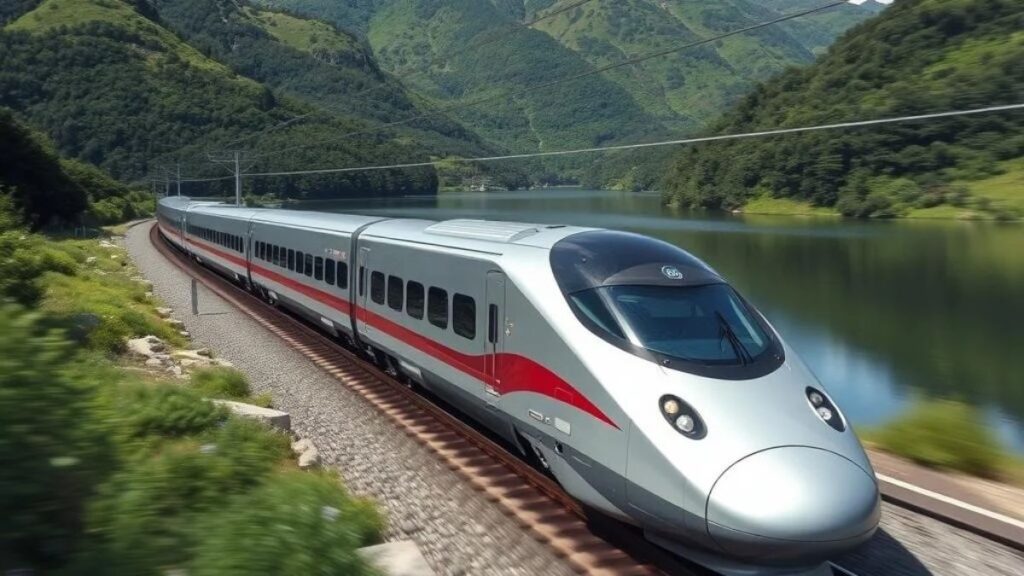

Indian Railways rolls out mission-mode bundled approvals for 7 bullet train corridors including Mumbai-Pune and Delhi-Varanasi. Swadeshi B28 trainset to debut in 2027. Read travel time details.

In a landmark move to reshape India’s high-speed rail landscape, Indian Railways has decided to implement future bullet train corridors on a mission-mode basis, seeking bundled clearances across central, state, and local authorities simultaneously.
The strategic shift comes as a direct response to the land acquisition delays that plagued the Mumbai-Ahmedabad High-Speed Rail corridor, whose cost ballooned to nearly ₹1.98 lakh crore from the original estimate of ₹1.08 lakh crore.
A senior official told ET on condition of anonymity: “Bullet train corridors will be given top priority in securing approvals across government levels,” adding that a dedicated team will coordinate with local authorities for speedy land acquisition.
The new approval mechanism – bundling environmental clearances, land use permissions, and right-of-way approvals – is designed to eliminate sequential bureaucratic bottlenecks. Standardisation of design across networks will also improve supply chains for rolling stock and signalling equipment.
Seven Bullet Train Corridors Announced – Full List
The Union Budget 2026-27 unveiled seven proposed high-speed rail corridors spanning nearly 4,000 km. These routes will act as “growth connectors” linking major economic hubs:
Western & Southern India Connectivity
- Mumbai-Pune – Travel time: 48 minutes
- Pune-Hyderabad – Travel time: 1 hour 55 minutes
- Hyderabad-Bengaluru – Expected ~2 hours
- Hyderabad-Chennai
- Chennai-Bengaluru – Travel time: 73 minutes
Eastern & Northern India Connectivity
6. Delhi-Varanasi
7. Varanasi-Siliguri
Related Corridor: The Bengaluru-Pune-Mumbai link is also under consideration, Railway Minister Ashwini Vaishnaw confirmed.
‘Swadeshi’ Bullet Train B28 – India’s Indigenous Answer to High-Speed Rail
While approval reforms accelerate new corridors, Indian Railways is simultaneously building domestic manufacturing capacity.
The B28 trainset – India’s first indigenously designed high-speed rake – is being manufactured at BEML’s ‘Aditya’ complex in Bengaluru, inaugurated by Railway Minister Vaishnaw on April 25, 2026.
Main highlights of the B28 project:
| Parameter | Detail |
|---|---|
| Design Speed | 280 kmph |
| Rollout Target | March-April 2027 |
| Manufacturing Facility | BEML Aditya, Bengaluru |
| Annual Capacity | ~100 coaches |
| Contract Value | ₹866.9 crore (for 2 trainsets) |
First Operational Stretch
The B28 trainset will debut on the Surat-Vapi section (97 km) of the Mumbai-Ahmedabad corridor by August 2027. This will mark India’s entry into operational high-speed rail, with the full corridor expected by 2029.
Railways Minister Ashwini Vaishnaw stated: “High-speed rail technology is complex. Developing it within the country marks a major milestone for indigenous engineering”.
The trainsets will feature fully air-conditioned chair-car configuration with reclining, rotatable seats, and onboard infotainment systems.
Record Railway Outlay Powers High-Speed Ambition
The government’s commitment is backed by financial firepower. The Union Budget 2026-27 allocated a record ₹2.78 lakh crore to Indian Railways – the highest-ever capital outlay.
Finance Minister Nirmala Sitharaman, presenting the budget, stated: “To promote environmentally sustainable passenger systems, we will develop seven high-speed rail corridors between cities as growth connectors”.
For Maharashtra alone, the railway allocation stands at ₹23,926 crore – nearly 20 times higher than the 2009-14 average.
How Bundled Approvals Solve the Land Acquisition Bottleneck
The traditional approach of sequential approvals – first central, then state, then local – often stalled projects for years. The new bundled clearance mechanism changes this fundamentally:
Advantages of the New System
- Parallel processing of all clearances instead of serial applications
- Standardised designs enabling pre-cast civil works for faster deployment
- Dedicated field teams for each corridor to manage pre-construction activities
- Priority status for high-speed rail in government clearances
Coordination meetings with states along proposed corridors will begin shortly, officials confirmed.
Railway Board has already directed the National High Speed Rail Corp Ltd (NHSRCL) to prepare or update detailed project reports (DPRs) for these seven corridors with current cost estimates.
The Board also mandated a robust trained technical workforce for each project, with progress reviewed at the highest level.
Long-term Vision – A 7,000 km High-Speed Network
Minister Vaishnaw outlined an ambitious long-term target: approximately 7,000 km of high-speed rail network across India.
The National Rail Plan 2030 recognises high-speed corridors as essential components of India’s rail ecosystem, complementing conventional and suburban services.
Economic and Passenger Impact
For passengers, the benefits are transformative:
- Mumbai-Pune: Currently 3+ hours by road/train → 48 minutes
- Chennai-Bengaluru: Currently 5+ hours → 73 minutes
- Pune-Hyderabad: Currently 8+ hours → Under 2 hours
Beyond passenger convenience, each corridor is expected to catalyse economic activity in tourism, logistics, real estate, and technology sectors along its route.
The shift to bundled approvals paired with indigenous manufacturing positions India to become a global player in high-speed rail technology, moving from a technology importer to an exporter of rolling stock expertise.
Disclaimer: This article is based on official announcements, government releases, and verified media reports published between February and April 2026. Project timelines and cost estimates are subject to change.