India Launches its First Hydrogen-Powered Train on July 17; Becomes One of Only 5 Countries Globally to Deploy This Technology
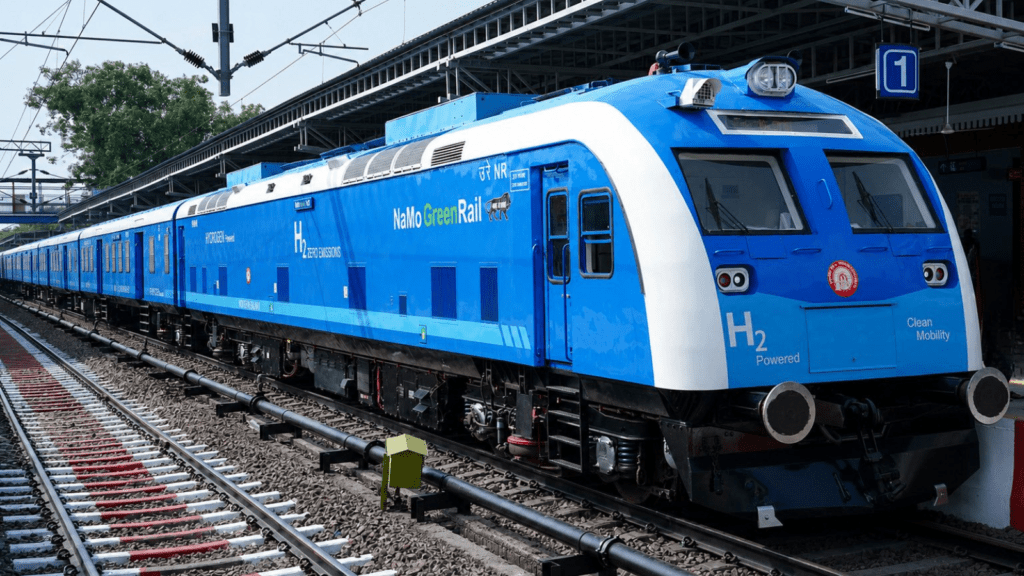

Indian Railways is charging ahead into a sustainable future. Starting tomorrow, July 17, 2026, the nation’s first-ever indigenous hydrogen-powered train will begin operations on the Jind-Sonipat route in Haryana, marking a monumental milestone for green mobility in India.

This indigenously developed, 10-car trainset generates its own electricity onboard by reacting hydrogen with oxygen. The only exhaust product this zero-pollution technology produces is water vapor! The train consists of two Hydrogen Driving Power Cars (DPCs) at each end and eight Trailer Coaches (TCs). Each DPC houses advanced fuel cells, lithium iron phosphate (LFP) batteries, and high-pressure hydrogen storage cylinders.
How Does a Hydrogen Train Work?
A hydrogen train uses hydrogen fuel cell technology to produce electricity through a chemical reaction. The primary energy source is a Proton Exchange Membrane Fuel Cell (PEMFC). This specialized cell generates electricity by reacting onboard hydrogen and atmospheric oxygen across a proton-conducting Perfluorosulfonic Acid (PFSA) polymer membrane.
The process produces only water vapor and heat as byproducts. Hydrogen is an incredibly efficient, high-energy fuel, yielding 120 MJ/kg (megajoules per kilogram) compared to diesel, which provides just 43 MJ/kg. The technology is low maintenance with a manageable carbon footprint, making hydrogen the cleanest propulsion technology currently available for rail transport. The electricity generated by the fuel cell is then used to power the traction motors of the train.
Features of India’s First Hydrogen-Powered Train
- 10-Car Configuration: A broad-gauge trainset consisting of 2 driving power cars and 8 passenger coaches.
- High-Capacity Propulsion: Powered by a 1,200 kW hydrogen fuel cell propulsion system.
- Speed Capabilities: Approved to operate at a maximum service speed of 75 kmph, with a built-in design speed of 110 kmph.
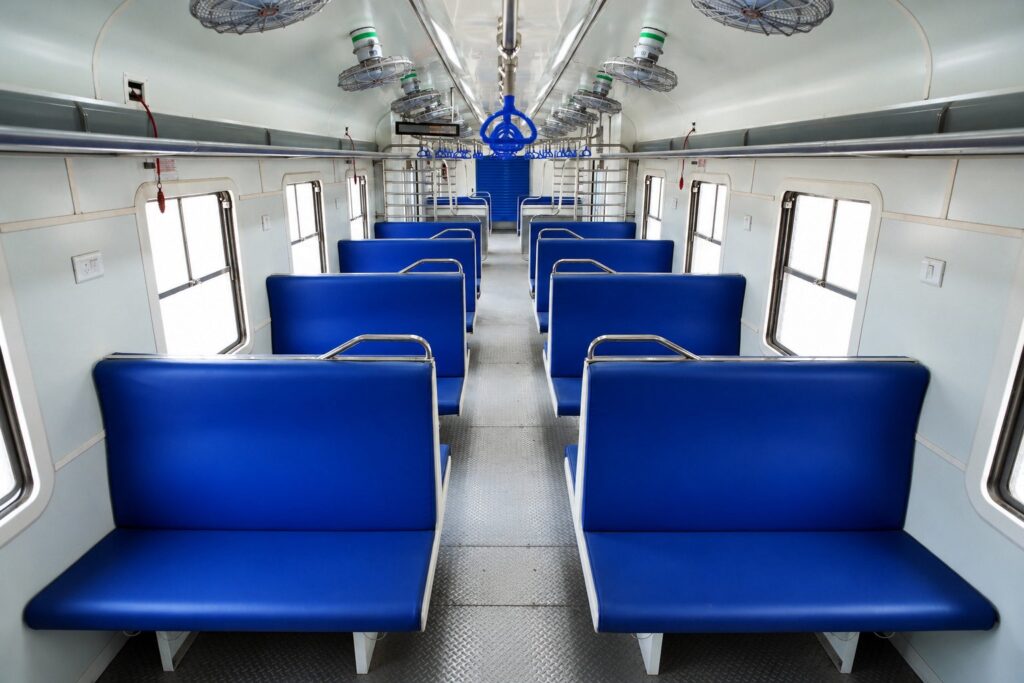
- Massive Passenger Capacity: Capable of carrying around 2,600 passengers per trip.
- Indigenous Development: Completely engineered in India from the design stage through prototype manufacturing.
- The Route: It will connect Jind Junction, Gohana Junction, and Sonipat. Proposed local halts include Jind City, Pandu Pindara Junction, Lalit Khera Halt, Bhambhewa, Isapur Kheri Halt, Butana Halt, Khandrai Halt, Rabrah Halt, Lath Halt, Mohana, Barwasni Halt, and Sonipat New.
To support this next-generation train, Indian Railways has set up the country’s largest dedicated railway hydrogen storage and refueling facility right here in Jind. The facility is capable of storing nearly 3,000 kg of hydrogen at a time. The entire ecosystem has undergone strict, independent safety audits by Germany’s TÜV SÜD. Additionally, the train is equipped with real-time leak and flame detectors that automatically shut down the fuel supply if any anomaly is detected.
By hitting the tracks tomorrow, India officially joins an elite global club of nations, including Germany, China, Japan, and the United States, actively running or testing hydrogen rail technology, paving the way for a net-zero carbon future.