Great Hornbills Gather in Anamalai Hills for Pre-Breeding Congregations
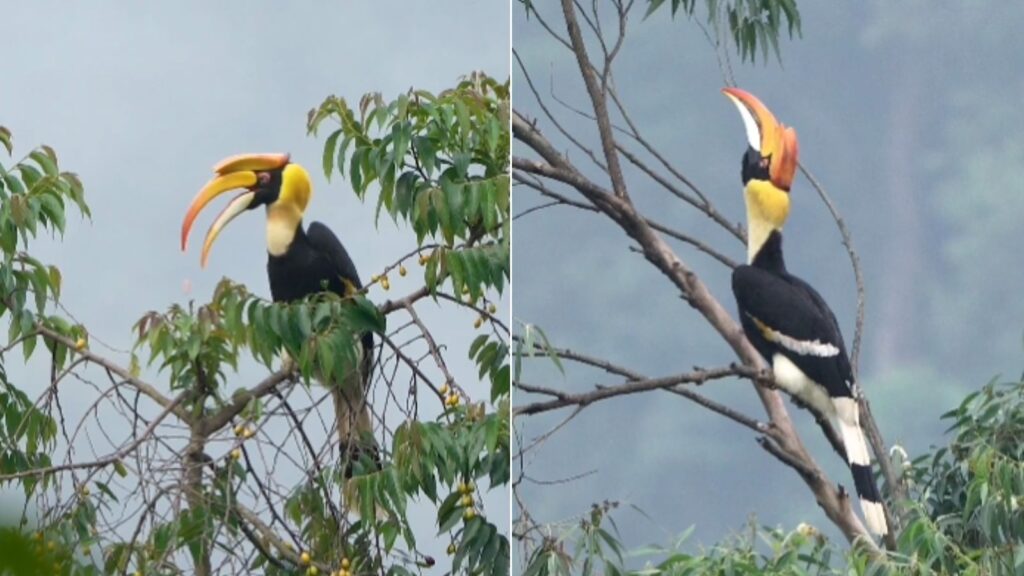

Tamil Nadu: Great Hornbills are gathering in the Anamalai Hills of the Western Ghats as their annual pre-breeding congregations take place during September and October.

According to Supriya Sahu, IAS, Additional Chief Secretary, Government of Tamil Nadu, the birds are drawn to fruiting fig trees and traditional roosting sites during this period. They gather, call and court before the nesting season. Their powerful wingbeats produce a sound similar to that of a helicopter.
While hornbills are often associated with Nagaland and the forests of Northeast India, the Anamalais are an important hornbill landscape in southern India. All four hornbill species found in southern India occur here — the Great Hornbill, Malabar Pied Hornbill, Malabar Grey Hornbill and Indian Grey Hornbill.
Listen to that deep, guttural call. The male Great Hornbill is announcing his presence, and the ancient rhythm of the forest is stirring once again.
— Supriya Sahu IAS (@supriyasahuias) September 21, 2026
Over the next few weeks, the skies above Tamil Nadu’s Anamalai Hills will belong to these magnificent birds. September and October… pic.twitter.com/98Kihipznn
Sahu said published research describes the Anamalais as a stronghold for Great Hornbills, with some of the highest numbers recorded in the Western Ghats.
As courtship progresses, pairs revisit old nesting trees. Around January, the female Great Hornbill enters a natural cavity high in a forest tree and seals herself inside, leaving only a narrow slit.
The male then brings fruit to the female and, later, their chick. Research in the Anamalais has recorded nesting cycles lasting between 114 and 130 days, while some nest trees have been used for decades.
Hornbills also play a role in seed dispersal. As they feed on forest fruit, they carry large seeds across valleys and disperse them away from the parent trees.