Royal Academy of Engineering, UK-Funded Initiative Empowers Tribal Community Through Plastic Recycling in Lavasa
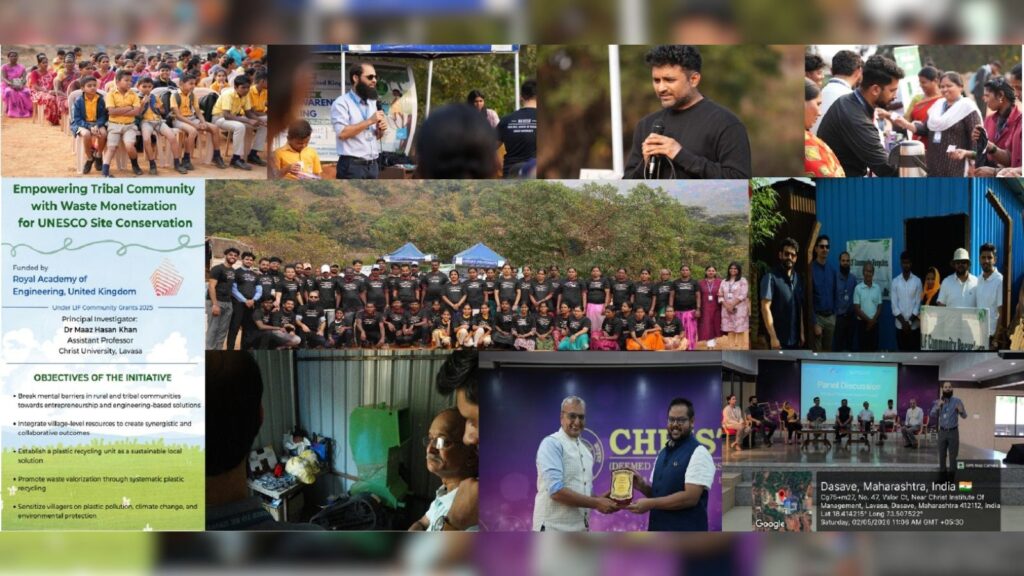

A community-led sustainability initiative conducted on May 02, 2026, aimed at reducing plastic pollution while creating livelihood opportunities for tribal families was successfully implemented in Dasve village, Lavasa, under the LIF Community Grant Project led by Dr. Maaz Hasan Khan in collaboration with Dr Jayant Mahajan Professor of Business Analytics and a social reformer, Dr Sudipto Mukhopadhyay, Associate Professor at Indian Institute of Technology Jodhpur, India and Mr Shubham Vishwakarma, CEO Arc Robotics.

The initiative was supported through a £ 5,000 Community Grant funded by the UK Department for Science, Innovation and Technology (DSIT), through the Royal Academy of Engineering, United Kingdom, under the Leader in Innovation Fellowships (LIF) Community Grants 2025.
The Royal Academy of Engineering (UK) is the United Kingdom’s national academy for engineering and a charitable organisation dedicated to advancing engineering for the benefit of society. Through its support for innovation, education, research, and community-focused initiatives, the Academy promotes engineering solutions that improve lives and contribute to sustainable development worldwide.
The centrepiece of the project was the inauguration of the LIF Community Recyclers plastic recycling unit, which has been established and transferred to the ownership of the local tribal community. The initiative aims to transform plastic waste into a source of livelihood while promoting environmental conservation in the UNESCO-recognised Western Ghats. By encouraging entrepreneurship and community ownership, the project demonstrates how local resources can be leveraged to create sustainable economic and environmental benefits.
Many government entrepreneurship and livelihood schemes fail to reach remote rural and tribal communities because psychological barriers and hesitation often discourage people from adopting new opportunities. By building confidence through a community-owned enterprise, the initiative aims to bridge this gap and contribute towards the vision of Viksit Bharat 2047 through inclusive and sustainable rural development.
A Plastic Recycling and Sustainable Development Goals (SDGs) Community Bootcamp was organised for nearly 100 tribal community members, focusing on plastic waste management, waste valorisation, climate change, and environmental protection. To encourage participation, T-shirts, refreshments, educational materials, and gift hampers were distributed to all participants.
As part of the initiative, an LIF India Alumni Meet brought together Fellows of the Royal Academy of Engineering from across India. The event featured an expert panel discussion on innovation and sustainability, followed by a Design Thinking Workshop attended by around 100 participants. Selected students also presented innovative business ideas in a Business Idea Pitch Competition, with the winning team receiving a shield (memento) and a gift hamper in recognition of their innovative idea.
The project highlights how international partnerships can translate into tangible grassroots impact by integrating engineering, entrepreneurship, sustainability, and community participation, offering a replicable model for environmental conservation and rural livelihood generation.
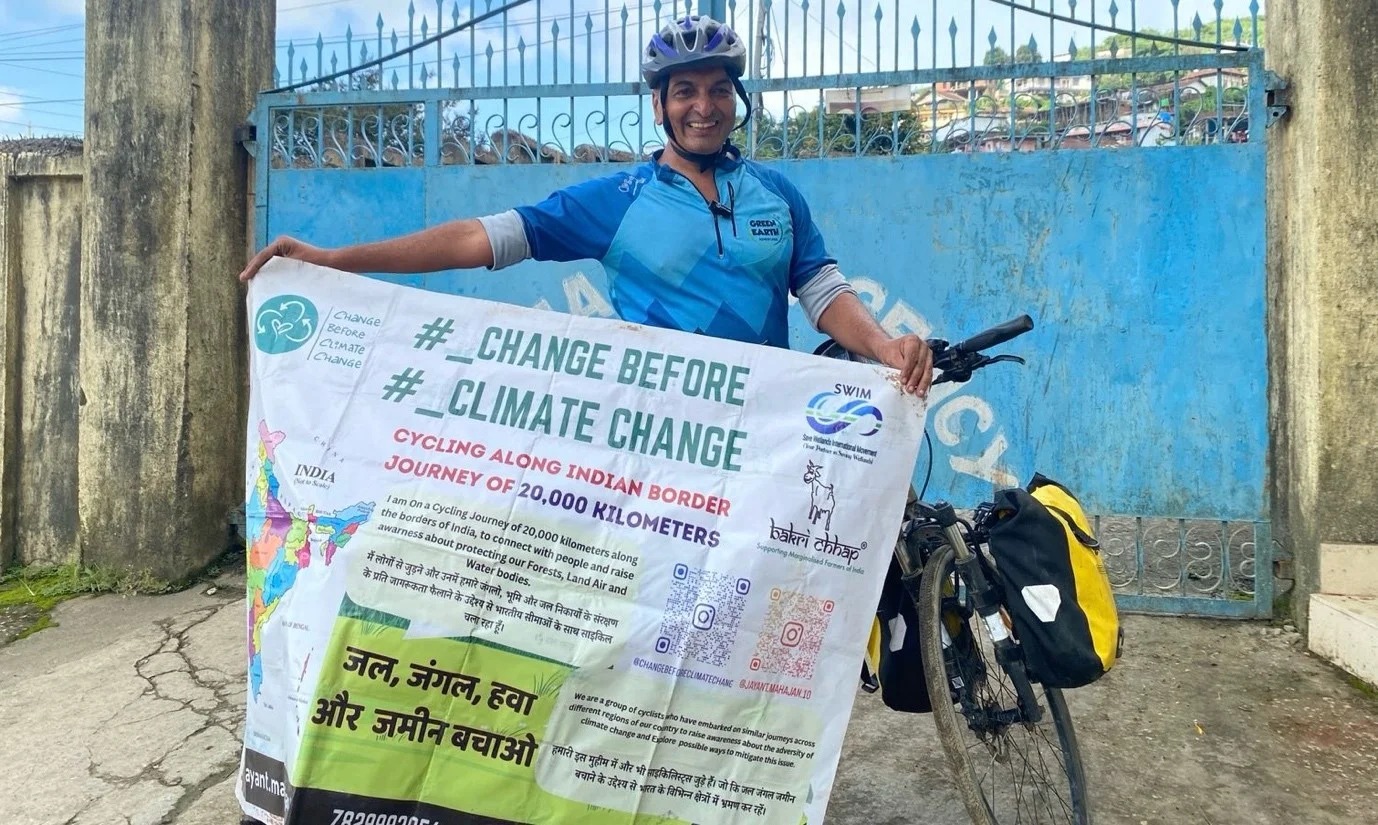
Jayant Mahajan is a writer and contributor at PuneNow, covering the intersection of technology, climate action, and urban governance across Pune. With an extensive background in business management, digital transformation, and academia, Jayant brings real-world insight to local sustainability issues, from civic infrastructure to smart city data ethics. As an educator and founder of the Change Before Climate Change mission, he focuses on how Pune’s institutions and businesses can build future-ready, sustainable systems. Through his columns, Jayant bridges policy, technology, and practical action to help Punekars navigate a rapidly changing urban climate.