Pune Court Awards Death Penalty to the Convict Bhimrao Kamble in Nasrapur Rape-Murder Case
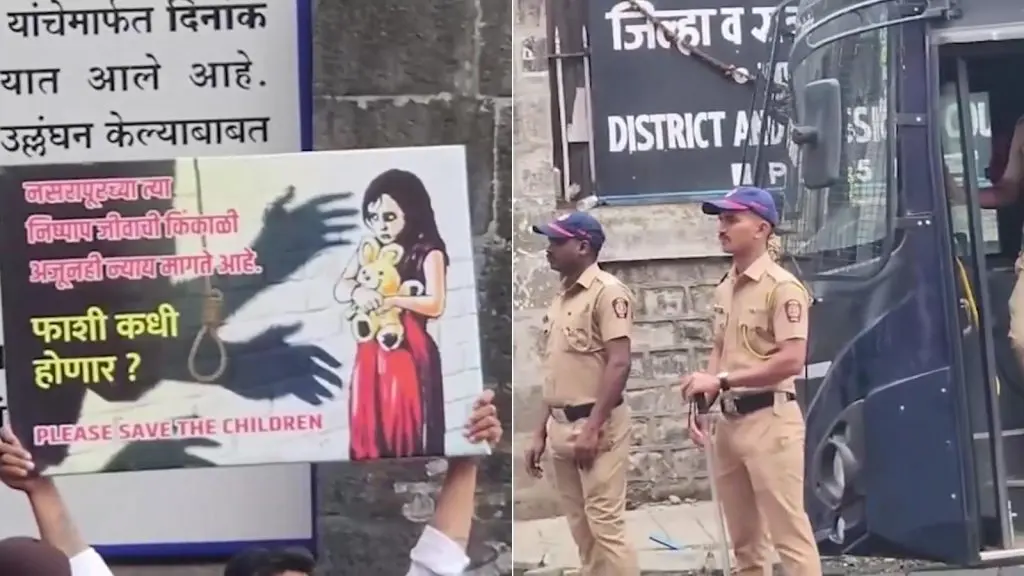

Pune, June 29, 2026: Today (Monday, June 29, 2026), a special fast-track court in Pune awarded the death penalty (“hanged till death”) to the convict, 65-year-old casual worker Bhimrao Kamble in the Nasrapur Rape-Murder Case.

Special Judge S.R. Salunkhe pronounced the sentence, declaring that the crime falls under the “rarest of the rare” category.
The court had officially convicted Kamble on Thursday, June 25, reserving the final sentencing announcement for June 29. He was found guilty under the relevant sections of the Bharatiya Nyaya Sanhita (BNS) and multiple sections of the POCSO Act (including Sections 4, 6, 8, and 12 for aggravated penetrative sexual assault).
Details of the Horrific Crime
- Date & Location: The crime occurred on May 1, 2026, between 3:00 PM and 4:00 PM in Nasrapur village (Bhor Taluka), Pune district.
- The Victim: A three-year-old girl who had come from Pune to her grandmother’s house in Nasrapur for her summer vacation.
- The Modus Operandi: Kamble lured the young child away from outside her grandmother’s house on the pretext of offering her snacks and showing her a newborn calf. He took her to a shed near a cattle barn, where he subjected her to a brutal sexual assault lasting approximately 39 minutes before murdering her by gagging her.
- The Discovery: When the child failed to return, her family searched for her and discovered her body hidden in the cowshed.
Evidence and the Brutality of Crime
- Unbroken Chain of Evidence: The prosecution built a airtight case based on an unbroken chain of circumstantial and forensic evidence. Chief evidence included crucial CCTV footage showing Kamble leading the child to the cowshed.
- Forensic & Scientific Proof: The court accepted concrete evidence, including DNA profiling, a potency test, and a mental fitness assessment. Semen matching the accused was recovered from the victim.
- Extreme Brutality: The post-mortem report detailed 18 distinct injuries on the toddler’s body. The judge remarked that the physical injuries highlighted the shocking, “inhuman brutality” of the crime.
- Witness Testimony: The prosecution examined 55 witnesses out of an initially proposed list of 82. This included key child witnesses who successfully identified Kamble during a Test Identification Parade (TIP).
The Prosecution’s Arguments & Convict’s Background
- Special Public Prosecutor: Celebrated criminal lawyer Advocate Ajay Misar spearheaded the state’s case.
- The “Rarest of Rare” Argument: To secure capital punishment, Misar cited 12 landmark Supreme Court judgments proving that the absolute gravity, vulnerability of the victim, and heinous nature of the crime warranted nothing less than the death penalty.
- No Remorse & Past Criminal Record: The prosecution successfully argued that Kamble was “beyond reform.” The judge noted that throughout the trial, Kamble showed zero remorse. Furthermore, his past history involved records of sexual misconduct and harassment involving a 62-year-old woman, a 17-year-old girl, and an animal.
- The Defence’s Stance: Because no private lawyer was willing to represent Kamble due to public outrage, the court appointed a Legal Aid Defence Counsel (LADC). The defence pleaded for leniency based on his advanced age (65) and his consistent denial of guilt. Kamble absurdly claimed the child was injured when he “slipped” while showing her the calf, an excuse the court completely rejected.
Timeline: A Benchmark for Speedy Justice
The case is being hailed as an extraordinary benchmark for the Indian judicial system, reaching a final death penalty verdict within just 58 days of the crime.
Timeline Breakdown:
- May 1, 2026: Crime committed; immediate public outrage followed, including citizens blocking the Pune-Bengaluru highway.
- Mid-May: Maharashtra CM Devendra Fadnavis assigned the case to a fast-track court and appointed Ajay Misar. Pune Rural Police filed a massive 1,200-page chargesheet within just 15 days of the incident.
- May 28, 2026: Charges were officially framed, leading to a swift, day-to-day, in-camera trial.
- June 21, 2026: Final arguments wrapped up.
- June 25, 2026: Court holds Kamble guilty.
- June 29, 2026: Death penalty awarded.
Maharashtra Deputy Chief Minister and Nationalist Congress Party (NCP) leader Sunetra Ajit Pawar welcomed the swift judgment, stating:
“The verdict delivered by the court in the deeply sensitive case of the rape and murder of a little girl in Nasrapur, our Pune district, further strengthens faith in our judicial system. There is absolutely no place for such inhuman acts in society. The safety of every woman and girl is the supreme priority of the government, and our determination to take stringent action against such crimes remains absolute. Justice has been served, but society and the administration must work together to be more vigilant so that such incidents never happen again.
There is no pardon for inhuman crimes like rape and murder. The court’s decision reinforces trust in the judiciary. Our government is fully committed to the safety of women, and the strictest possible action against such vile criminals will continue.”