MSRDC: 30 Years of Connecting Maharashtra; Achievements, Major Projects and Future Plans
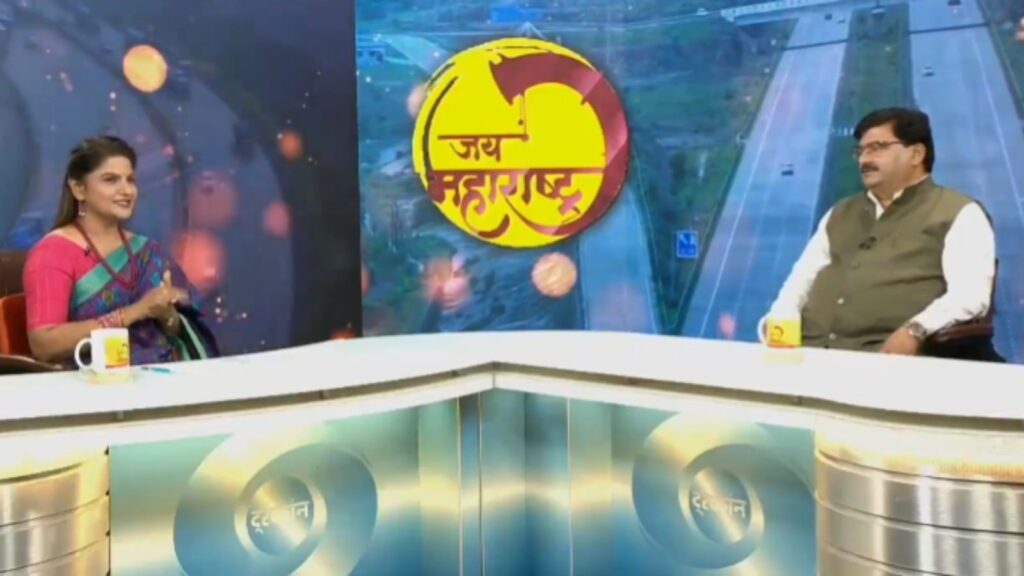

Maharashtra State Road Development Corporation (MSRDC) Vice Chairman and Managing Director Anil Kumar Gaikwad has shared details about the corporation’s journey since its establishment in 1996, Maharashtra’s road network, major projects completed over the years and infrastructure plans for the future.

Gaikwad spoke in a special interview on the Directorate General of Information and Public Relations’ (DGIPR) #JaiMaharashtra programme, hosted by Dr. Mrunmayee Bhajak. The interview covered MSRDC’s past and ongoing projects, road infrastructure in Maharashtra and future planning connected with ‘Vikasit Maharashtra 2047’.
Maharashtra has over 3 lakh km of roads
According to Gaikwad, Maharashtra leads the nation with a road network exceeding 3,00,000 to 3,25,000 kilometers.
This includes around 18,000 km of National Highways and 32,000 km of State Highways. Village roads and Other District Roads account for more than 2.5 lakh km, while around 23,000 km are local urban roads.
MSRDC’s journey since 1996
MSRDC was established in 1996 under the leadership of then Public Works Minister Nitin Gadkari. The objective was to create a corporate mechanism that could take decisions for large infrastructure projects.
Among its early projects were 55 flyovers across Mumbai, which were constructed within six years and completed by 2002.
MSRDC also constructed the Mumbai-Pune Expressway, India’s first access-controlled expressway, which became operational in 2002. The 94-km expressway reduced the Mumbai-Pune journey from around six to seven hours to about one to one-and-a-half hours, according to Gaikwad.
The corporation later built the Bandra-Worli Sea Link, which was completed in 2009-10.
Mumbai-Pune Expressway Missing Link
Gaikwad also discussed the 13.30-km Missing Link, or Connecting Link, on the Mumbai-Pune Expressway. Approved in 2018, the project bypasses the 19-km ghat section with its 16 sharp curves and gradients of up to 7%.
The new link has reduced the total expressway distance from 94 km to 88 km, cutting six kilometers from the journey. It has reduced travel time by 30 to 45 minutes and save fuel worth around ₹1 crore per day.
The project includes two tunnels measuring 8.9 km and 1.6 km and two cable-stayed bridges over Tiger Valley.
The 650-metre Tiger Valley bridge is supported by four 182-metre-high pylons, equivalent to the height of a 60-storey building. It has 240 cables supporting a 36,000-metric-tonne deck.
According to the information shared in the interview, the project has been recognised by the Guinness Book of World Records for its tunnel width and complex mountain-valley engineering.
10-Lanning of Mumbai-Pune Expressway
MSRDC also plans to widen the existing Mumbai-Pune Expressway.
The present three lanes in each direction are planned to be increased to five lanes in each direction, along with three-metre paved shoulders.
The concrete panels of the original expressway were designed for a lifespan of around 30 years, ending around 2030. Under the plan, the existing concrete will be completely replaced with new concrete.
Samruddhi Mahamarg
Gaikwad also spoke about the 701-km Hindu Hrudaysamrat Balasaheb Thackeray Samruddhi Mahamarg, connecting Shivmadka on the Nagpur Ring Road with Aamne in the Thane-Mumbai region.
The project was conceptualised as a project of Chief Minister Devendra Fadnavis and initiated in 2019. Under then PWD Minister Eknath Shinde, MSRDC acquired 94% of the required land through consent within 10 months by offering compensation of up to five times the highest market value.
The first 520-km stretch between Nagpur and Shirdi opened in December 2022, while the final stretch up to Aamne opened in June 2025.
The expressway has 1,903 bridge structures and seven tunnels. The 7.8-km Kasara Ghat twin tunnel has received 17 safety awards, including recognition from the British Safety Council.
The corridor has a maximum gradient of 1.5%. The speed limit is 120 kmph for light vehicles and 80 kmph for heavy vehicles. According to Gaikwad, the expressway has reduced the Nagpur-Mumbai journey from around 10-12 hours to six to seven hours.
There are 24 interchanges along the expressway, with toll booths located on the ramps instead of the main carriageway.
Industrial and logistics hubs along Samruddhi Mahamarg
MSRDC has been designated as the Special Planning Authority for 16 interchange locations along the Samruddhi Mahamarg.
Each node is planned over an area of around 100 to 120 sq km, with industrial, logistics and warehousing townships planned across 10 districts.
Versova-Bandra Sea Link 35% complete
Gaikwad also provided an update on the Versova-Bandra Sea Link.
The project has a 9.8-km main sea link and four connector links at Bandra, Otter’s Club/Carter Road, Juhu Koliwada and Versova. The total structural length is 25 km.
The project was reassigned to a new contractor in 2022 and is currently 35% complete. Completion is targeted for 2028, with the project planned to open in phases.