Digital Census 2026: A Step-by-Step Guide to India’s Seamless Online Registration
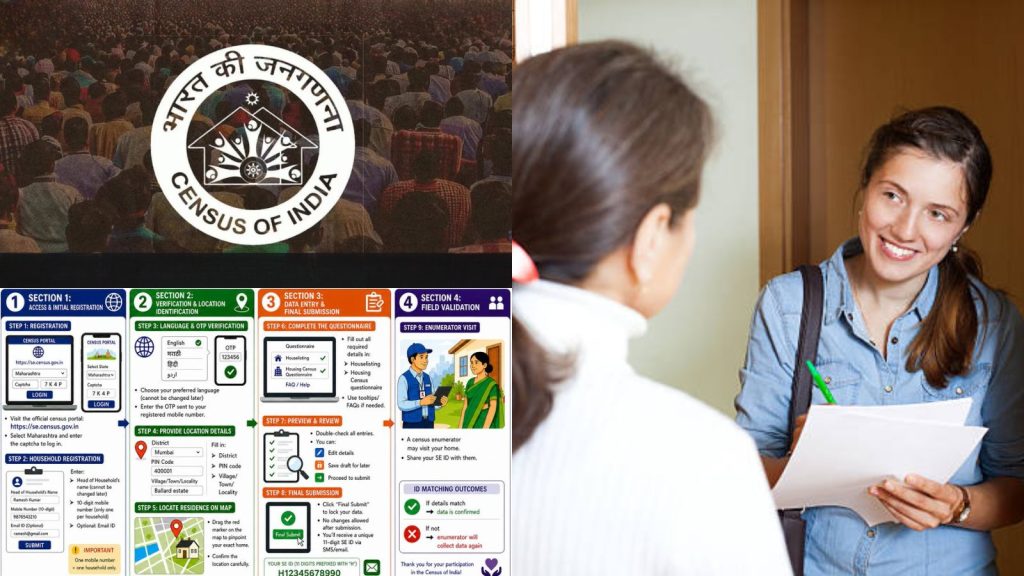

The Census of India has transitioned into a digital-first era, launching a streamlined online portal designed to make household registration quick, secure, and user-friendly. By allowing citizens to self-enumerate, the government aims to increase data accuracy while reducing the time required for physical door-to-door visits.

The new process is divided into four distinct phases, guiding users from initial registration to final field validation.
(Scroll down to see the all-in-one infographic)
Phase 1: Access and Household Registration
Citizens are directed to the official census portal at se.census.gov.in. Upon selecting their state and completing a captcha-based login, users begin the Household Registration. This step requires the name of the Head of Household, which becomes a fixed entry that cannot be altered later. Importantly, each household must be linked to a unique 10-digit mobile number.
Phase 2: Verification and Geolocation
To ensure data integrity, the system utilizes a two-factor authentication process. Users must select their preferred language, options include English, Marathi, Hindi, and Urdu, and verify their identity via an OTP (One-Time Password) sent to their registered mobile.
Following verification, residents provide precise location details, including District, PIN code, and Locality. The portal features an interactive map where users must drag a red marker to pinpoint their exact residence, a critical step for ensuring logistical accuracy for the next stage.
Phase 3: Data Entry and Submission
The core of the census involves two primary digital forms: the Houselisting questionnaire and the Housing Census questionnaire. The portal provides tooltips and a dedicated FAQ section to assist users in completing these details.
Before the final commitment, a “Preview & Review” stage allows users to edit details or save a draft for later. Once the “Final Submit” button is clicked, the data is locked. Successful applicants will receive a unique 11-digit SE ID (prefixed with “H”) via SMS or email.
Phase 4: Field Validation
The digital process concludes with a physical touchpoint. A census enumerator may visit the home to verify the submitted data. Residents are advised to have their SE ID ready for matching. If the details align, the data is confirmed; if discrepancies are found, the enumerator will collect the data manually to ensure the record is corrected.
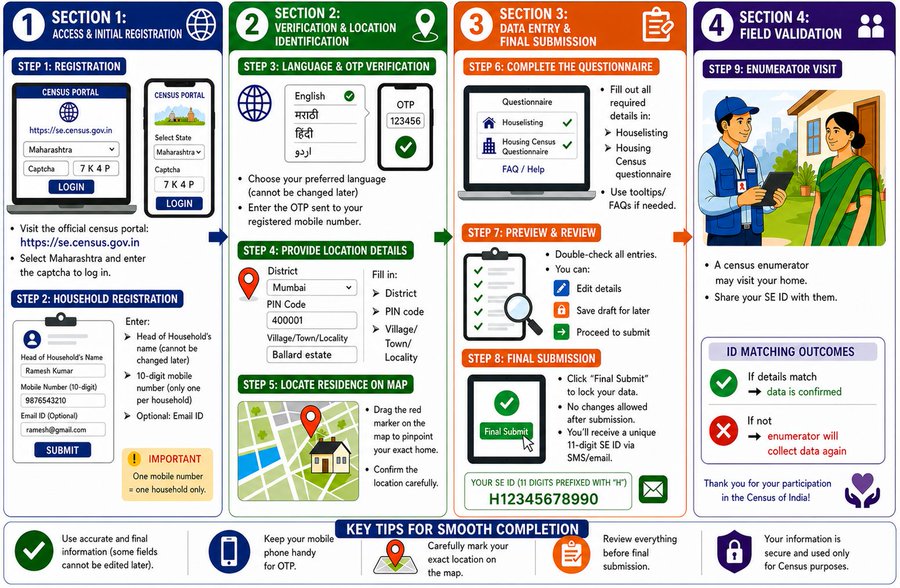
Authorities emphasize that all information shared is secure and used exclusively for census purposes. Citizens are encouraged to keep their mobile phones handy and double-check all entries to ensure a “hassle-free” participation in this national exercise.
Disclaimer: This guide is based on the official 2026 Census of India infographic. While every effort is made to ensure accuracy, readers are advised to visit se.census.gov.in for the latest updates and official protocols.