Pune Metro Line 3: PMRDA Confident of May Launch for Hinjawadi Metro’s First Phase, But Will It Help Commuters?

The long-awaited Pune Metro Line 3 connecting Hinjawadi to Shivajinagar may finally see trains running by May 2026. However, the first operational stretch is expected to be limited, raising questions about how useful the initial phase will be for daily commuters.

The Pune Metropolitan Region Development Authority (PMRDA) has indicated that the metro could begin operations between the Maan car depot and Station No. 12 by the end of May 2026. While this marks a major milestone for the project, the partial launch means the line may initially serve only a limited section of the corridor.
First Phase Likely to Cover 12 Stations
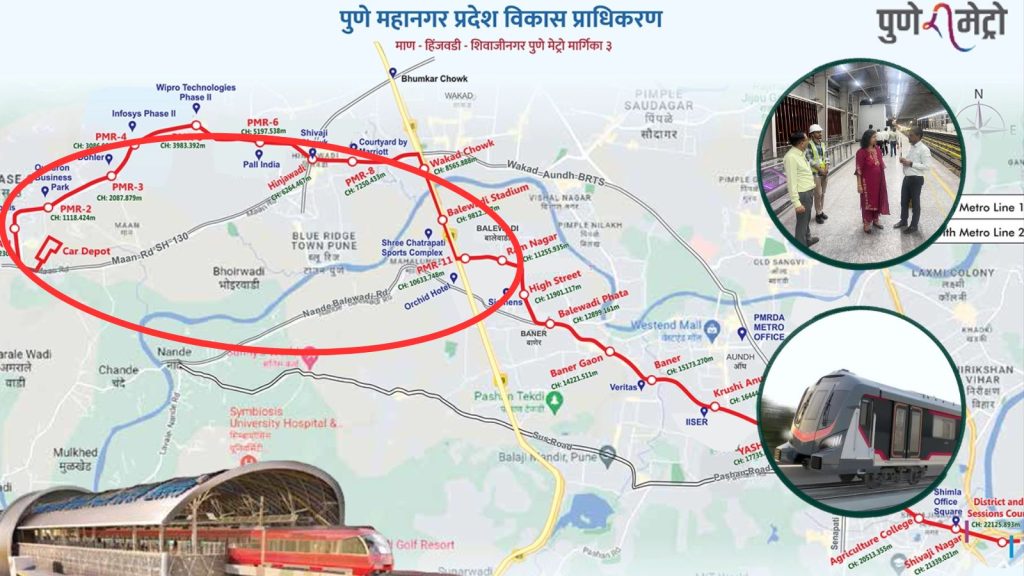
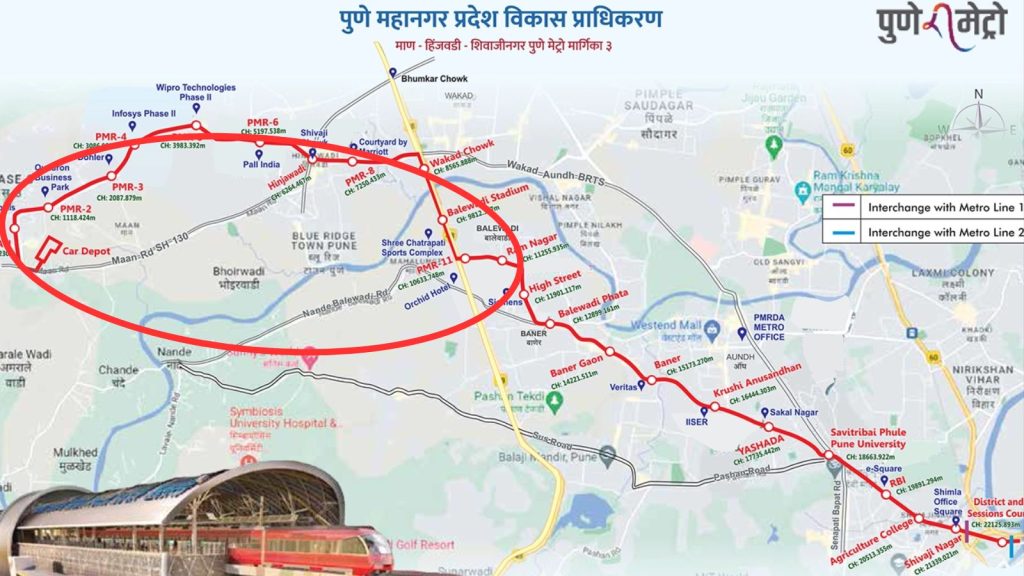
PMRDA has not officially released the list of stations that will be served by the service in first phase. However, based on the plan to start services from the Maan car shed up to Station No. 12, the first trains are expected to cover the following stations:
- Megapolis Circle
- Embassy Quadron Business Park
- Dohler
- Infosys Phase II
- Wipro Phase II
- Pall India
- Shivaji Chowk
- Hinjawadi
- Wakad Chowk
- Balewadi Stadium
- NICMAR
- Ram Nagar
While this stretch covers several major IT offices and residential zones in Hinjawadi and Wakad, it stops short of key junctions further towards the city.
Balewadi High Street May Not Be Included Initially
One of the main concerns is that the first operational stretch may not extend to Balewadi Phata or the popular Balewadi High Street area. These locations are important traffic nodes and activity centres for commuters traveling between the Hinjawadi IT hub and central Pune.
Without reaching these major junctions, the initial metro segment may have limited impact on reducing traffic congestion in the area. For many commuters, especially those heading towards Aundh, Baner, or Shivajinagar, the metro may not yet serve as a practical alternative to road travel.
Still, many observers believe that even a partial launch is a positive step. Once operations begin, additional stations can be added as construction progresses, gradually expanding the usefulness of the line.
PMRDA Pushes Work on “Superfast” Track
PMRDA says work on Pune Metro Line 3 is now moving at a rapid pace.
In a public statement issued on April 6, the authority said efforts are underway to ensure that metro services begin between the car depot and Station No. 12 by the end of May 2026.
As part of this effort, PMRDA Chief Engineer Rinaj Pathan recently conducted an on-site inspection at Station No. 9 to review the project’s micro-planning and construction progress. During the visit, she emphasised maintaining construction quality while ensuring the project adheres to its planned timeline.
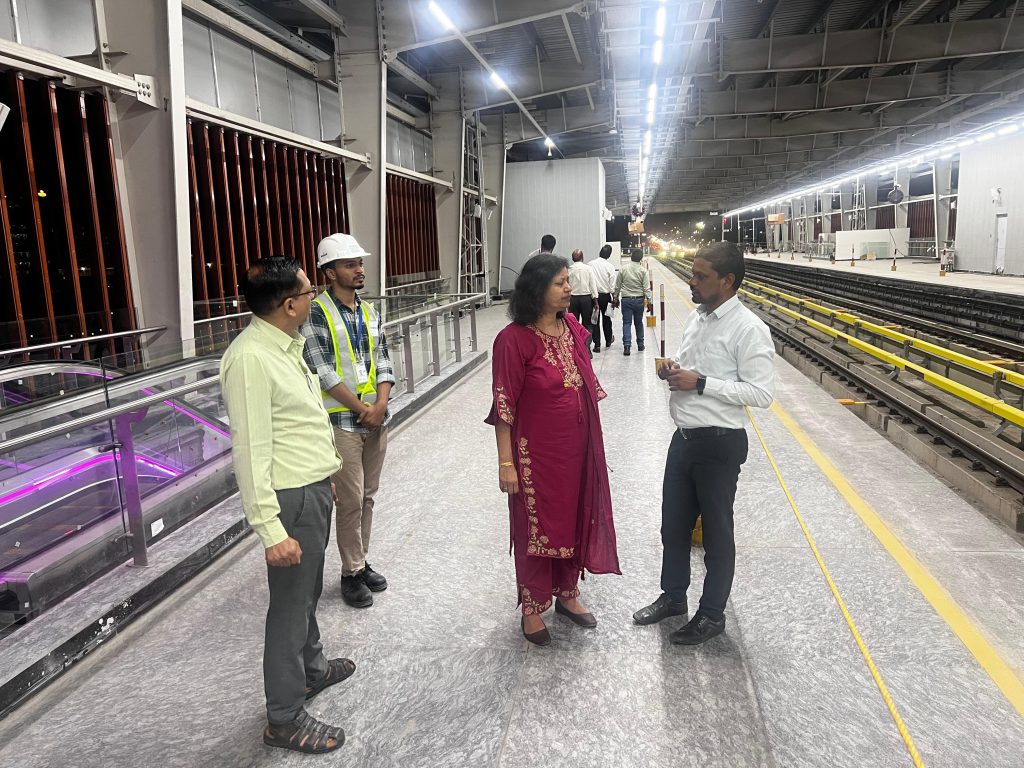
Senior officials from PMRDA and representatives of the metro concessionaire company were also present during the inspection. According to the authority, the administration is working continuously to meet the deadline and deliver the first operational stretch as planned.
About Pune Metro Line 3
Pune Metro Line 3 is designed to connect the Rajiv Gandhi IT Park in Hinjawadi with Shivajinagar, one of Pune’s key transport hubs. The project aims to address the severe traffic congestion experienced daily along the Hinjawadi–Baner corridor.
The elevated metro corridor will stretch for 23.2 kilometres and include a total of 23 stations once fully completed.
The project is significant because it is the first metro project in India to be implemented under the Central Government’s New Metro Rail Policy 2017 on a Public Private Partnership model. It is being developed under the Design, Build, Finance, Operate and Transfer (DBFOT) framework.
The project has been awarded to a joint venture between TRIL Urban Transport Pvt Ltd and Siemens Project Ventures GmbH. A special purpose vehicle named Pune IT City Metro Rail Limited has been created to execute the project.
The total project cost, including land acquisition and utility shifting, is estimated at ₹8,313 crore.
Expected Long-Term Benefits
Once fully operational, the metro line is expected to significantly reduce travel time between Hinjawadi and central Pune. Thousands of IT professionals commute daily to the Rajiv Gandhi IT Park, and the metro is expected to provide a faster and more reliable alternative to road transport.
Authorities say the project will also help reduce fuel consumption, lower noise and air pollution, and improve overall road safety. By easing traffic congestion and improving connectivity, the metro is expected to enhance the overall livability of the Pune Metropolitan Region and support further economic growth.
For now, commuters in Hinjawadi will be watching closely to see whether the planned May 2026 launch becomes a reality. Even if the first phase is limited, it could mark the beginning of a long-awaited transformation in how people travel between Pune’s IT hub and the rest of the city.