Pune: LPG Shortage Starting to Impact Corporates, PGs and Student Hostels

Updated: March 11, 2026, 08:45 PM IST
The ripple effects of a geopolitical supply disruption have reached Pune’s doorstep, causing a severe shortage of commercial LPG cylinders. The crisis has forced student messes to shut down, eateries to hike prices, and even IT giants like Infosys to scale back cafeteria services, raising fears of a student exodus from the city.

Pune: A disruption in the supply chain of commercial Liquefied Petroleum Gas (LPG), triggered by the ongoing conflict in West Asia, has created a palpable crisis across Pune. The city, home to lakhs of students and a massive IT workforce, is witnessing a cascading impact as hostels, mess services, and corporate cafeterias struggle to secure fuel for cooking.
With commercial cylinders in short supply, several student messes and small eateries have been forced to either shut down temporarily or increase food prices drastically. The situation has sparked concern among the student community, with many fearing a return to the hardship days of the COVID-19 pandemic.
Students Face Hunger as Messes Shutter
For outstation students, many of whom are in Pune for competitive exam coaching and higher education, the crisis is immediate and personal. Several mess operators have informed residents about a suspension of services or a steep hike in meal charges after being compelled to purchase gas cylinders at inflated rates from the black market.
“Because of the disruption in gas supply, many eateries and mess services are on the verge of shutting down. Hotels and mess operators who are buying gas cylinders at high prices have increased the cost of meals. This is creating a situation where students may face hunger,” said student leader Nitin Andhale.
He urged the government to establish public food centres (‘Poli-Bhaji’ centres) for needy students and to reserve a dedicated gas quota for educational institutions.
Nitin Mete, a competitive exam aspirant, highlighted the severity of the situation. “If this continues, inflation will increase drastically, and students will find it difficult to afford to live in Pune. A situation similar to the COVID period may arise where students may have to return to their hometowns.”
Devendra Arun Thakre, a student of Abhinav Kala Mahavidyalaya, added that the disruption is affecting students’ health during the crucial examination period. “Lack of proper nutrition can affect both health and studies. Authorities should urgently make alternative arrangements.”
Mess operators echoed these sentiments. Ganesh Khatane, who runs a student mess, stated, “Many students who come to Pune for education rely on our mess. If the gas supply remains disrupted, it will become difficult to provide food on time. This can directly impact students’ health and their studies.”
IT Hub Feels the Heat: Infosys Campus Affected
The crisis is not limited to student housing. Pune’s vital IT sector is also feeling the pressure. According to a communication received by employees at the Infosys Pune campus, the LPG supply disruption has led to:
- A limited menu in cafeterias.
- Food being sourced from external kitchens.
- Employees being advised to bring food from home.
- A request for teams to avoid events requiring catering.
The Forum for IT Employees (FITE) Maharashtra highlighted the irony of the situation on X (formerly Twitter): “While the situation may be beyond the company’s control, thousands of employees are still required to attend office under strict return-to-office policies. In such situations, companies should consider flexible options like Work From Home to reduce inconvenience for employees.”
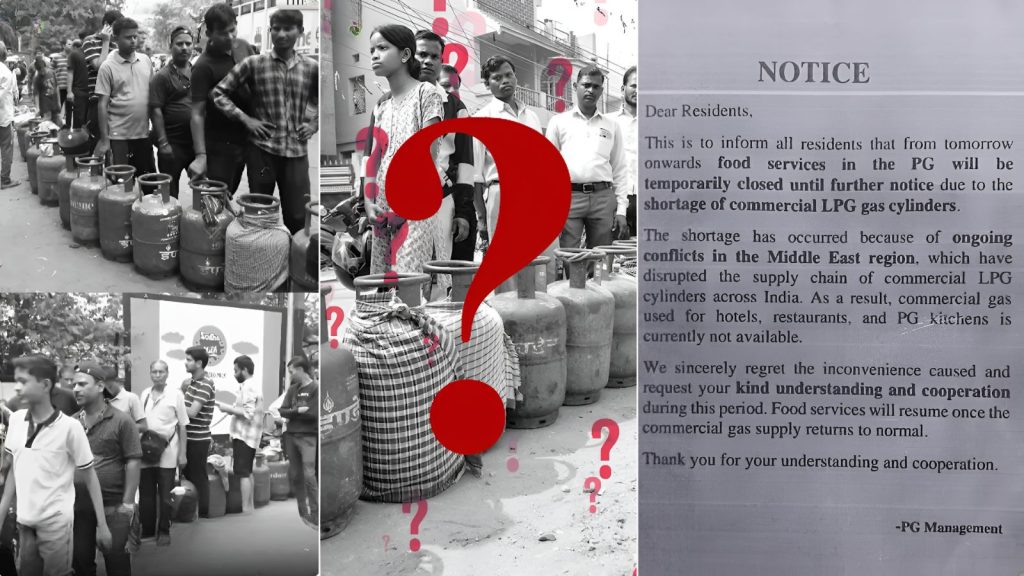
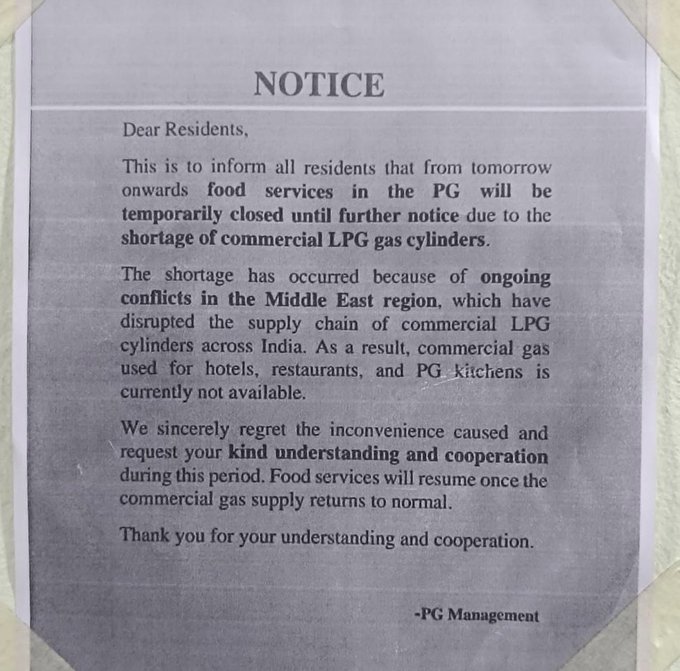
A notice from a Paying Guest (PG) accommodation in the city, which has gone viral, simply stated: “Due to the shortage of commercial LPG gas cylinders… food services in the PG will be temporarily closed until further notice.”
Government Rations Supplies, Boosts Domestic Production
In response to the crisis, which stems from a blockade on LPG imports, the Indian government has sprung into action to prioritize essential needs.
On March 8, the government issued an order directing refineries and petrochemical complexes to ramp up domestic LPG production, leading to a significant 25% increase in output. Crucially, the government has stated that all of this additional production is being directed toward domestic household consumers.
To manage the scarce commercial supply, a high-level committee comprising three Executive Directors from the major Oil Marketing Companies (OMCs), BPCL, IOCL, and HPCL, has been formed. This committee is tasked with reviewing and approving LPG allocations for restaurants, hotels, and other commercial users, with hospitals and educational institutions being given top priority among non-domestic users.
In a social media post, Bharat Petroleum explained, “Due to the current geopolitical situation and blockade on LPG imports, available supplies are being carefully rationed to ensure wider coverage, with domestic households being the top priority.”
💠To manage disruptions affecting natural gas shipments through the Hormuz route in the Middle East, the Government has issued a Natural Gas Supply Regulation Order, setting clear priorities to ensure essential supply
— PIB India (@PIB_India) March 11, 2026
💠Under this order, 100% assured supply continues for… pic.twitter.com/isCzhoMgGL
No Need for Panic, Says Centre
Amidst the growing concern, the central government has moved to reassure household consumers. Sujata Sharma, Joint Secretary (Marketing & Oil Refinery) at the Ministry of Petroleum, stated emphatically: “No need for panic buying, LPG cylinders to be delivered in 2.5 days of booking.”
This assurance aims to prevent a run on domestic cylinders, which could exacerbate the shortage for households. The government has noted that it is making all diplomatic efforts to ensure the free passage of LPG import parcels and hopes that normal supply conditions will resume soon.
For now, Pune’s commercial sector, its students, its small businesses, and its IT corridors, waits with bated breath, hoping that the committee’s reviews and diplomatic channels can restore normalcy before the situation escalates further.