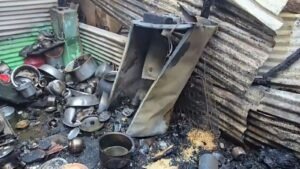
Pune LPG Crisis Deepens: 100 Eateries Shut, Black Market Booms as Commercial Supply Dries Up


Pune, March 11, 2026: Pune’s food and hospitality industry is staring at an unprecedented crisis as a severe commercial LPG shortage, triggered by the West Asia conflict and a central government directive to prioritise domestic gas, has forced nearly 100 eateries to either shut down or scale back operations. With no new stock arriving since March 9, restaurants are cutting menus, online food delivery has taken a hit, and a black market for cylinders has emerged, with prices skyrocketing to as high as ₹6,000.

Pune Eateries Shut Down as LPG Stock Runs Dry
The impact on the ground in Pune is severe. According to the National Restaurant Association of India (NRAI), Pune chapter, nearly 100 of the city’s estimated 1,200 restaurants have already been affected. Many are operating at half capacity, while smaller eateries, bakeries, and snack joints have been forced to close their kitchens temporarily.
Saili Jahagirdar, chapter head of NRAI Pune, described the gravity of the situation. “Many small eateries, bakeries and snack joints have already closed today. Several are operating at 50% capacity, and by the end of the day, some will exhaust whatever cylinders they have,” she told The Times of India. She added that the shortage is now impacting online platforms, with Swiggy and Zomato orders faltering as restaurants cannot fulfil them.
Hoteliers warn that without immediate intervention, the situation will worsen. Gaurav Duvedi of Vishnu Ji Ki Rasoi stated that while they may manage for two to three days, operations beyond the weekend look bleak despite having weekend bookings. Sanat Sarpotdar, secretary of the NRAI Pune chapter, noted that most restaurants have stock for only a few days and are desperately exploring alternatives like induction cooking, though it cannot fully replace LPG for high-volume kitchens.
LPG Black Market Prices Soar in Pune
Amidst the official supply crunch, citizens have alleged rampant black marketing of cylinders. Reports from across the city indicate that both domestic and commercial cylinders are being sold at inflated prices, exploiting the panic.
According to residents who spoke to the Free Press Journal, a domestic LPG cylinder, which normally costs around ₹900, is being sold illegally for ₹2,000 to ₹2,500. The situation is even more dire for commercial users. A 19-kg commercial cylinder, with a standard price of ₹1,800–1,900, is reportedly being sold for ₹3,500 to ₹6,000 in the open market.
Residents have alleged that the shortage is being artificially worsened by dealers stockpiling cylinders. “Some dealers have kept large numbers of cylinders in stock. Instead of supplying them through proper booking, they are selling them secretly at higher rates,” said Sandesh Borate, a resident of Kondhwa Khurd.
Crematoriums Shut, Industries Hit as Crisis Widens
The ripple effects of the LPG shortage extend beyond restaurants. To conserve gas for domestic use, the Pune Municipal Corporation (PMC) has ordered the temporary closure of 18 LPG-based crematoriums, including three furnaces at Vaikunth Dham. Municipal Commissioner Naval Kishor Ram confirmed that alternative electric crematoriums will remain operational to ensure no public inconvenience.
Furthermore, Pune’s industrial belt is feeling the pressure. Small and medium industries in Pimpri Chinchwad and Chakan, particularly those in fabrication, galvanising, and automotive component painting, are facing severe supply cuts. Dilip Batwal of the Federation of Chakan Industries stated that supply to industries has effectively stopped, threatening to choke the supply chain for larger Original Equipment Manufacturers (OEMs).
Government Directive, Geopolitics, and the Road Ahead
The crisis stems from a central government directive on March 5, which instructed oil companies to prioritise propane and butane for domestic household LPG amid global supply chain disruptions. India meets 62% of its LPG demand through imports, and the escalating conflict in West Asia has disrupted maritime traffic through the Strait of Hormuz, a critical route for imports from Saudi Arabia and Qatar.
Maharashtra ministers have acknowledged the situation. While Revenue Minister Chandrashekhar Bawankule warned of strict action against hoarders, Civil Supplies Minister Chhagan Bhujbal confirmed that commercial supply is likely to be reduced. The Centre has also extended the minimum gap for domestic LPG bookings to 25 days to curb panic booking and hoarding.
Mumbai: Maharashtra Minister Chhagan Bhujbal says, ''The people who came to the hotel owner said that if we shut down the gas, the hotel will be shut down. The hotel in Karnataka is going on strike. So we said that at least 25% we should reduce, don't reduce it completely… I… pic.twitter.com/eg5QzP4ZH9
— IANS (@ians_india) March 10, 2026
Fact Check: Viral Social Media Claims Misleading
Amidst the growing crisis, social media has been flooded with claims that commercial LPG supply in Maharashtra has been completely halted. The Directorate General of Information and Public Relations (DGIPR) has issued a fact check, clarifying that these viral claims are misleading.
According to the official statement, the central government has directed all states to prioritise domestic LPG supply amid the prevailing geopolitical situation. This has resulted in a temporary shift in priority regarding commercial LPG allocation. However, the claim that commercial LPG supply has been completely stopped is incorrect.
While the ground reality in Pune reflects a severe shortage that has functionally disrupted supply to hotels and industries, the government maintains that the directive is a temporary reallocation of resources rather than a blanket ban.
As the NRAI has appealed to the Petroleum Minister for rationed supply rather than a complete halt, Pune now waits to see how long its kitchens can stay open. With the government emphasising that the measure is temporary and priority remains with domestic users, the coming days will determine whether Pune’s famed food scene can survive this unprecedented gas crunch.