Pune’s Air Quality Drops to Poor, Many Places Register Above 300 AQI – Precautions Advised
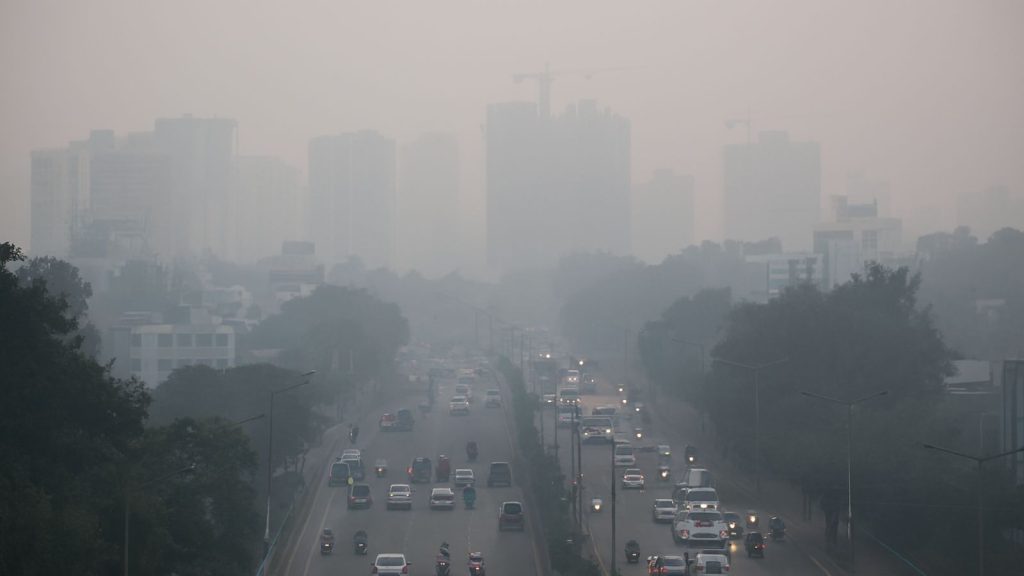
AI-Generated Image for Representation

Pune, December 05, 2025: Pune’s air quality took a sharp hit on Thursday, slipping into the poor category as several pockets of the city reported alarming pollution levels. At 4 pm on December 5, the overall AQI stood at 211, indicating poor air quality.

Key stations in Shivajinagar, Lohegaon and Bhumkar Nagar crossed the 300 mark, putting them in the very poor zone. Data from the Central Pollution Control Board’s Sameer App showed the citywide AQI at 213 around 9 pm. This is the second major spike in the first week of December. On December 1, Pune had recorded an AQI of 202.
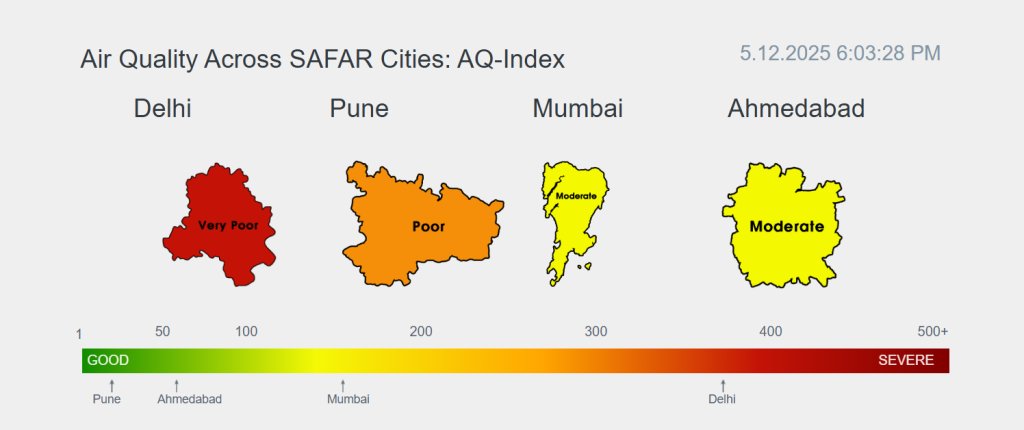
According to the latest readings, Bhumkar Nagar reported an AQI of 309, MHADA Colony in Lohegaon recorded 304 and Shivajinagar topped the chart with 311. Despite an unusually cold November, the city mostly stayed in the moderate category. But the start of December has pushed up pollution levels sharply, with particulate matter rising across several monitoring points.
Other stations across Pune and Pimpri Chinchwad also saw higher readings, though they remained below the worst-hit areas. Experts say more spikes could follow as winter deepens unless stricter measures are taken to control dust on roads, manage traffic flow and stop open waste burning.
AQI at 9 pm on Thursday
• Bhumkar Nagar: 309
• MHADA Colony, Lohegaon: 304
• Shivajinagar: 311
• Wakad: 224
• Hadapsar: 164
• Katraj Dairy: 128
• Pashan: 173
• Savitribai Phule Pune University: 153
• Nigdi: 174
AQI categories and what they mean for health
• Good (0–50): Clean air and no impact on health
• Satisfactory (51–100): Minor discomfort for a few sensitive people
• Moderate (101–200): Mild breathing issues for asthma and heart patients
• Poor (201–300): Breathing discomfort for most people
• Very Poor (301–400): Long exposure can trigger respiratory problems
• Severe (401–500): Health effects even for healthy individuals
When Should You Use an Air Purifier?
An air purifier can significantly reduce indoor pollution levels, especially when outdoor air quality worsens. Here’s when you should consider using one:
- AQI above 100 (Moderate or higher): Use an air purifier at home, particularly in bedrooms and living areas.
- If you live near busy roads or construction sites: Dust and exhaust can raise indoor PM2.5 levels even when windows are closed.
- For children, elderly, or those with respiratory issues: Continuous use of a purifier helps reduce the risk of irritation and long-term damage.
- During festivals or winter months: Air quality often drops due to firecrackers, crop burning, or low wind movement, making purifiers essential.
Precautions to Take During Poor Air Quality
• Try to stay indoors during peak pollution hours, especially early morning and late evening.
• Keep windows closed when AQI is high to stop outdoor air from entering your home.
• Use an air purifier if available, or keep indoor plants that help improve air quality.
• Avoid heavy outdoor exercise like running or cycling, as it increases inhalation of pollutants.
• People with asthma, heart issues or respiratory conditions should keep medicines and inhalers handy.
• Wear an N95 mask if you need to step out for long periods.
• Keep yourself hydrated and include warm fluids to ease throat irritation.
• Limit exposure to dust by avoiding construction-heavy areas.
• Avoid burning waste or using firewood, as it can worsen pollution in your area.
How to Check AQI of Your Area
Sameer App on phone Provides the hourly updates of the National Air Quality Index (AQI) published by Central Pollution Control Board (CPCB). Air Quality Index is a tool for effective communication of air quality status to people in terms, which are easy to understand. It transforms complex air quality data of various pollutants into a single number, nomenclature and color.
For more live updates on Pune, visit our Pune News Today page.