What Happened at Panshet Dam on 12th July, 65 Years Back that Pune Can Never Forget
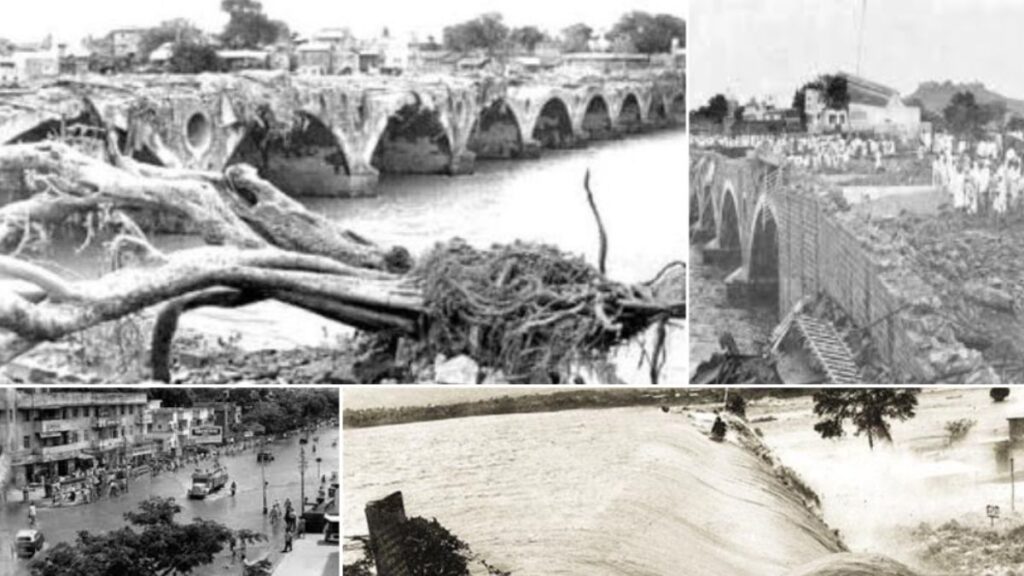
Photo Credit: Amit Paranjape @aparanjape

The sky over Pune in the first week of July 1961 did not just rain; it dissolved. For a relentless fortnight, the Sahyadri catchments poured millions of gallons of water into the Ambi River, filling the basin of the newly built, under-construction Panshet Dam. Up in the hills, the water level was rising with terrifying speed, testing an earthen wall that was never meant to face such a trial so soon.

This is the story of July 12, 1961, a day of compromise, incredible military valor, administrative silence, and a deluge that permanently broke and remade the city of Pune.
The Seed of the Disaster: A Fatal Shortcut
To understand why Panshet broke, one has to look back to 1957. Built to secure drinking water and irrigation for a booming Pune alongside Khadakwasla, Varasgaon, and Temghar dams, the Panshet project (Tanajisagar Dam) was a symbol of regional pride. However, following the post-Samyukta Maharashtra Movement, political and policy pressures forced authorities to aggressively accelerate the construction timeline. Originally slated for completion by 1962–63, the project was pushed through years ahead of schedule.
Then came the fatal constraint: a crippling nationwide shortage of steel.
Faced with mounting deadlines and no steel, engineers made a compromise that would prove catastrophic. Inside the heart of the earthen dam lay the critical outlet conduit, the primary tunnel meant to release water safely. Instead of lining this conduit with strong, flexible Reinforced Cement Concrete (RCC), they substituted it with plain, unreinforced concrete blocks. It was an engineering gamble against the monsoons, and in July 1961, nature called the bet.
The Midnight Battle in the Dark
By July 11, the heavy downpours had pressurized the reservoir to its absolute limit. High up on the embankment, engineers watched in horror as deep, ominous cracks began to split the earth. Water was no longer just discharging; it was piping through the structure, eroding the internal soil around the unreinforced concrete conduit. The dam was hollowing itself out from the inside.
As panic gripped the site, administrative indecision paralyzed the local leadership. No official warnings were sent to the city below. The defense of Pune fell entirely on a contingent of Indian Army jawans who rushed to the failing structure.
Through pitch-black darkness, howling winds, and driving rain, the soldiers launched a desperate, heroic battle. Passing heavy boulders and stacking thousands of sandbags by hand, they fought to stabilize the collapsing conduit. They knew they could not hold the mountain back forever, but they fought for time.
Because of the jawans’ defiance, the dam did not collapse in the middle of the night while Pune slept. Their sandbags delayed the ultimate breach by several crucial hours, pushing the disaster back until the break of dawn. It was a delay that saved tens of thousands of lives.
Dawn: The Day the Dams Broke
As daylight broke on July 12, the earth gave way. With a deafening roar that echoed through the valleys, the Panshet Dam embankment shattered completely. In an instant, 44 billion liters of trapped water surged down the Ambi River channel, a violent wall of water tearing toward the plains.
But the mountain had a second domino to throw.
The roaring crest of the Panshet deluge slammed directly into the older, smaller Khadakwasla Dam downstream. Khadakwasla’s sluice gates were engineered for standard river inflows, not a tidal wave. Overwhelmed by a hydraulic surge estimated to be three times its maximum capacity, Khadakwasla’s embankment failed by 7:30 AM, doubling the volume of the churning torrent heading straight for the city.
10:30 AM: The Submersion of an Ancient City
Down in Pune, the morning began with bizarre surrealism. Riverside residents were being quietly evacuated by local police, but the city’s primary mass communication tool, All India Radio, completely failed to broadcast emergency warnings. Instead of sounding alarms, the radio stations continued playing their regular morning music programming even as the waters breached the city limits.
By 10:30 AM, the Mutha River exploded over its banks.
A monstrous wall of water raced through the historic, low-lying central Peths, Shaniwar Peth, Narayan Peth, and Sadashiv Peth. Traditional mud-and-timber residential wadas, which had stood for generations since the Peshwa era, dissolved and collapsed like matchboxes under the hydrodynamic force.
The floodwaters swallowed the commercial heart of Deccan Gymkhana and swept down Karve Road. At the MES Abasaheb Garware College, the entire first floor disappeared underwater. On Fergusson College Road, where students usually walked, actual rescue boats were now rowing through the currents to pluck families off rooftops. Every single bridge spanning the river was submerged and torn apart, save for one structural survivor: the historic Bund Garden Bridge.
By the time the surge peaked, over 1,000 people had lost their lives, lakhs were rendered homeless, and the city’s power and water infrastructure were completely obliterated, plunging Pune into a cold, muddy darkness.
Out of the Mud: Rebirth and Legacy
When the waters finally receded late that night, they left behind an apocalyptic landscape blanketed in thick, suffocating black mud and debris. With both the Panshet and Khadakwasla reservoirs entirely emptied, Pune faced an immediate secondary crisis: a severe lack of clean drinking water.
In a beautiful twist of historical irony, the modern city survived by looking to its past. The administration and citizens revived the ancient, gravity-powered Katraj aqueduct built during the Peshwa era, along with private wells. Traditional wadas that possessed functioning wells prominently displayed signs on their street-facing walls, welcoming strangers inside to draw clean water.
The long-term recovery changed Pune’s geography forever. The sheer scale of displacement forced the city to expand outward, far beyond its old, congested historic core. The vibrant suburbs that modern Punekars navigate daily, Sahakarnagar, Lokmanya Nagar, and Gokhale Nagar, were born directly out of the grid blueprints drawn up to rehabilitate the survivors of 1961.
The linguistic memory of that day remains just as permanent. In the local Marathi language, the tragedy gave birth to the phrase “Panshet zala” (meaning a complete, irreversible catastrophe), holding the same devastating weight as the historic military defeat of Panipat.
Today, the rebuilt Panshet Dam stands strong at 63.56 meters high and 1,039 meters long, safely holding 303,000 m³ of water to feed the sprawling IT and educational metropolis below. But if you walk through the older quarters of the city today, you can still find faint, chilling red markings painted high up on the stone walls of old buildings. They mark the exact line where the river rose on July 12, 1961, a silent, permanent reminder of the day the mountain broke, the day the army stood firm, and the day Pune changed forever.