

Pune’s Declining Air Quality Raises Health Concerns; Should Residents Consider Indoor Air Purifiers?
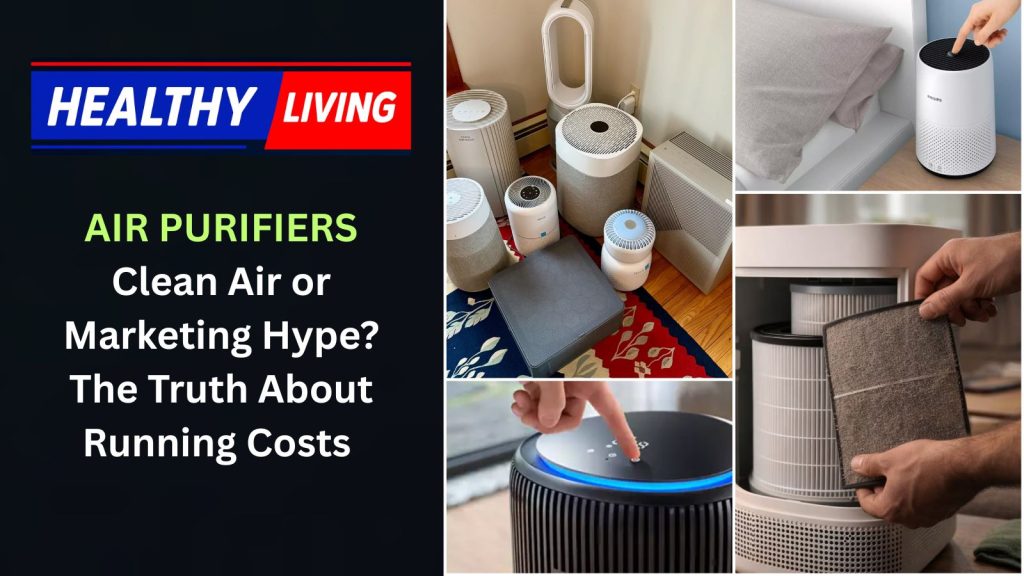

Pune’s declining air quality is bringing renewed attention to the risks of prolonged exposure to air pollution, including inside homes and offices. With particulate matter, vehicle emissions and construction dust among the major urban pollutants, residents may need to look beyond outdoor precautions and pay closer attention to the quality of air they breathe indoors.

Air pollution in Indian cities is primarily associated with particulate matter such as PM2.5 and PM10, along with nitrogen dioxide (NO₂) and sulphur dioxide (SO₂). Of particular concern is PM2.5, which consists of extremely fine particles that can pass through the body’s natural defences, reach deep into the lungs and enter the bloodstream.
Prolonged exposure to polluted air can increase the risk of respiratory illnesses, asthma, chronic obstructive pulmonary disease (COPD), lung cancer and heart disease. Short-term exposure can also cause irritation of the eyes, nose and throat, headaches, dizziness and fatigue. Children and elderly people are among the groups particularly vulnerable to the effects of poor air quality. (Pune News)
According to data from the Energy Policy Institute (EPIC), air pollution reduces the average life expectancy of Indians by more than 3.5 years. The estimated loss rises to 8.2 years in severely polluted areas such as Delhi.
The National Air Quality Index (AQI), administered by the Central Pollution Control Board (CPCB), provides a numerical measure of air quality based on eight pollutants: PM10, PM2.5, nitrogen dioxide, sulphur dioxide, carbon monoxide, ozone, ammonia and lead. The highest pollutant sub-index determines the overall AQI.
An AQI between 0 and 50 is classified as Good, while 51–100 is Satisfactory. Readings between 101 and 200 fall under Moderate, 201–300 under Poor, 301–400 under Very Poor and 401–500 under Severe. Health concerns increase as the AQI moves into the higher categories, with prolonged exposure to Poor and Very Poor air potentially causing breathing difficulties and respiratory illness.
For Pune residents, monitoring daily AQI readings is an important first step. Live air quality information is available through the System of Air Quality and Weather Forecasting and Research (SAFAR) at safar.tropmet.res.in and the Indian Institute of Tropical Meteorology (IITM) at tropmet.res.in.
However, outdoor air quality is only part of the problem. Indoor air can also contain dust, smoke, pet dander and other airborne particles. Air purifiers are designed to remove these pollutants by drawing room air through filtration systems and circulating cleaner air back into the room.
A good air purifier generally combines a pre-filter, a HEPA filter and an activated carbon filter. The pre-filter captures larger particles such as hair and lint, while a True H13 HEPA filter can capture 99.97% of particles as small as 0.3 microns. An activated carbon filter helps remove smoke, odours and certain gases that HEPA filters alone cannot eliminate.
One important performance measure when selecting an air purifier is its Clean Air Delivery Rate (CADR), which indicates how much filtered air the machine delivers. Buyers should match the purifier’s capacity with the size of the room rather than relying only on its advertised features.
Several models are available in India across different price ranges. The Honeywell Air Touch V1, priced at approximately ₹5,100, offers basic filtration for rooms measuring 200–235 sq. ft. The Honeywell Air Touch V3, at around ₹9,500, covers approximately 450 sq. ft. and includes H13 HEPA filtration.
The Levoit Core 300, priced at approximately ₹10,500, is designed for rooms measuring 450–500 sq. ft., while the Xiaomi Smart Purifier 4, costing around ₹13,000, offers coverage of approximately 400–450 sq. ft. The Philips Smart Air Purifier AC1711/15, priced at around ₹12,500, covers approximately 300–380 sq. ft.
For buyers considering premium models, the Coway AirMega 150 Professional costs approximately ₹14,500 and covers around 350 sq. ft. Dyson’s Hot+Cool Gen1, priced at approximately ₹56,000, combines air purification with heating and cooling functions.
A 60-day field test of the Levoit Core Mini conducted in Pune by Jayant Mahajan, a PuneNow contributor and founder of the Change Before Climate Change initiative, offers an example of why choosing the right purifier matters.
The tabletop purifier has a CADR of approximately 78 cubic metres per hour and is effective primarily within a three-to-five-foot breathing zone. It may suit a desk or bedside table but is not capable of adequately purifying a standard 12-by-12-foot Indian bedroom or living room.
The device uses an H13 True HEPA filter, consumes 7 watts of power and operates at approximately 25 dB on its lowest setting. However, its main filter cannot be washed, and replacement may be required approximately every four months in dust-heavy cities such as Pune. The test also found that its aroma pad offered little practical benefit.
Air purifiers and humidifiers should not be confused. While humidifiers add moisture to the air and may help relieve dryness, they do not remove airborne allergens. Air purifiers, particularly those with good HEPA filtration, are more useful for removing pollen, dust and pet dander. Excessive indoor humidity can encourage mould growth and dust mite proliferation.
Operating and maintaining an air purifier correctly is equally important. Doors and windows should generally remain closed while the machine is running to prevent polluted outdoor air from continuously entering the room. During peak pollution months, particularly between October and February, continuous operation on Auto mode can help maintain indoor air quality.
The purifier should be positioned approximately one to two feet away from walls and furniture to allow proper air circulation. Pre-filters should be cleaned every two weeks, while HEPA and activated carbon filters should be replaced according to the manufacturer’s recommendations and local pollution conditions. HEPA filters should never be washed.
Residents should also avoid outdoor exercise during periods of poor air quality and consider wearing N95 masks when outdoor AQI levels are Poor or Severe. Keeping windows closed during periods of high pollution, regular cleaning and monitoring daily AQI readings can help reduce exposure.
For Pune households, the choice of an air purifier should ultimately depend on room size, filtration quality, CADR, replacement filter costs and operating requirements. A small tabletop device may offer personal protection near a workstation, but it should not be mistaken for a whole-room purification solution. (Pune News)
ALSO READ: Mumbai–Pune Travel Time Could Drop By Up To 90 Minutes With New Elevated Connector