No Overhead Wires on Pune Metro Line 3: How Does the Train Get Its Power?
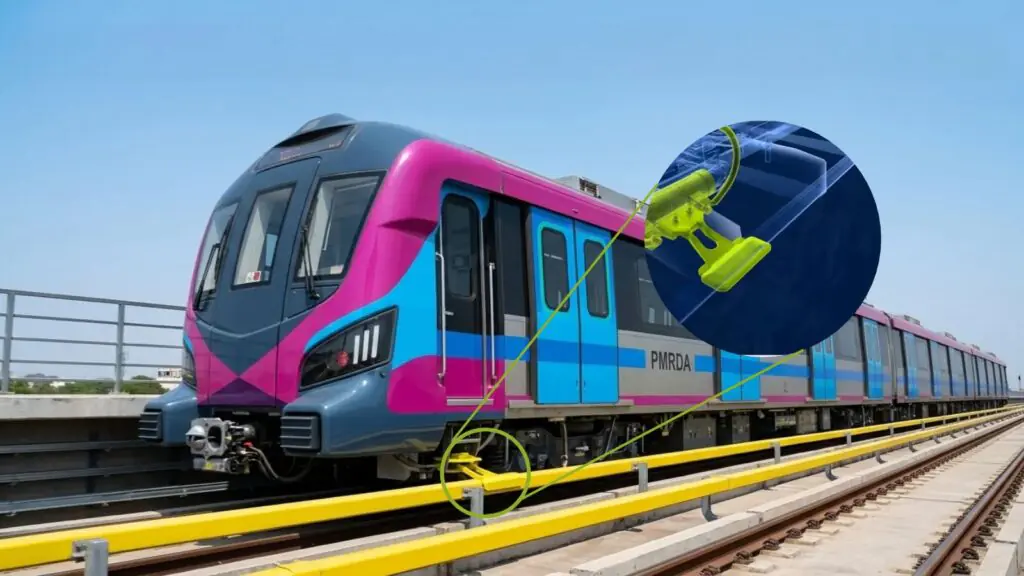

Unlike conventional metro trains that draw electricity from overhead wires, Pune Metro Line 3 uses a third-rail power supply system. So, where does the train get its electricity from if there are no wires above the tracks?

The answer lies in an additional rail installed alongside the two tracks on which the metro train runs. This third rail supplies electricity to the train through special devices called ‘collector shoes’ fitted underneath the coaches.
As the train moves, the collector shoes remain in contact with the third rail, drawing electricity and transferring it to the train. This ensures a continuous power supply while the metro is in motion.
The third rail carries a continuous 750-volt direct current (DC) supply and is therefore also known as a ‘live rail’. Since it carries electricity, the rail is covered with a strong, non-conductive protective cover to prevent accidental contact. The steel busbar is mounted on high-capacity, weather-resistant insulators to prevent electrical leakage into the ground or neighbouring tracks.
By eliminating overhead electric wires and their supporting structures, the system also gives the metro corridor a cleaner, less cluttered appearance. The technology is expected to make operations more efficient and travel smoother and more reliable.
Pune Metro Line 3, connecting the Hinjawadi IT hub with the District Court, will be the first metro line in Maharashtra to use this third-rail power supply technology.