Maharashtra Wage Rules 2026: 48-Hour Workweek, Weekly Rest and Double Overtime Pay Notified
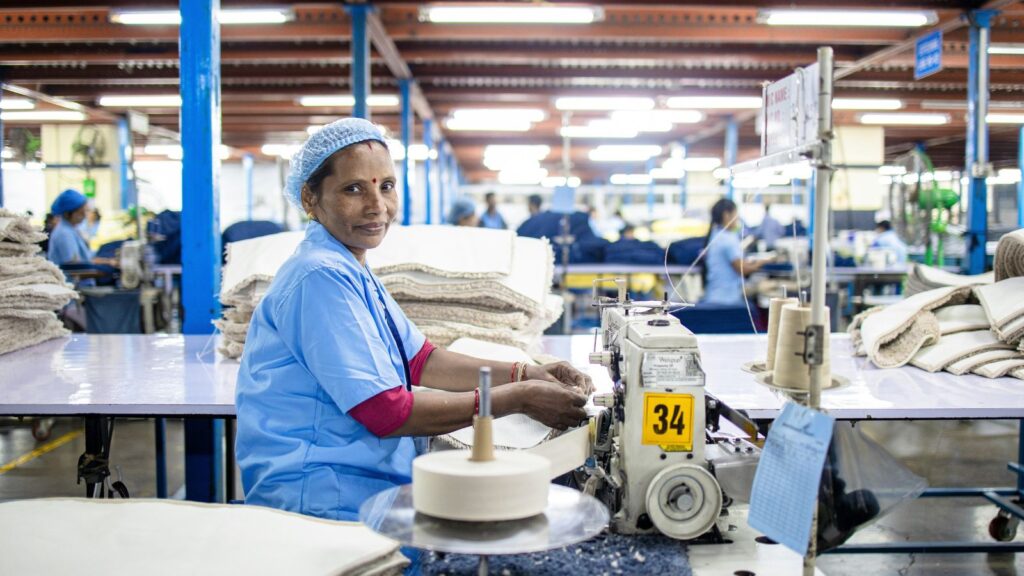

The Maharashtra government has notified the Maharashtra Wage Rules, 2026, introducing uniform provisions for working hours, weekly rest, overtime payments, wage calculations and deductions for employees across the state.

The rules were notified on November 5, 2026, under the Code on Wages, 2019, and came into effect from the date of their publication in the official gazette. Labour Minister Aakash Fundkar announced the notification on Wednesday.
The new rules supersede the Maharashtra Minimum Wages Rules, 1963, and the Maharashtra Payment of Wages Rules, 1963. However, they do not apply to the determination of minimum wages for state government employees.
Under the rules, a normal working day for employees paid daily wages will comprise eight hours. For employees paid under other wage periods, total working hours cannot exceed 48 hours a week.
Employers must provide employees with at least one rest day every week. Sunday will ordinarily be the weekly rest day for employees working a six-day week, while employees working fewer days will ordinarily receive Saturday and Sunday as rest days. Employers can also designate other days as weekly rest days.
Employees required to work on a weekly rest day must be given a substitute rest day. In specified circumstances, payment for working on a rest day must be at the overtime rate, which cannot be less than twice the normal wage rate.
The rules also standardise the calculation of minimum wages. The state government will determine minimum wage rates on a daily basis. The hourly rate will be calculated by dividing the daily rate by eight, while the monthly rate will be calculated by multiplying the daily rate by 26.
Occupations have been classified into four categories: highly skilled, skilled, semi-skilled and unskilled.
The variable dearness allowance will be revised twice a year, before April 1 and October 1, based on the average Consumer Price Index for Industrial Workers published by the Labour Bureau, Ministry of Labour and Employment.

The rules also prescribe a 50% ceiling on deductions from an employee’s wages during a wage period. Any excess amount must be carried forward and recovered in instalments during subsequent wage periods, without exceeding the prescribed limit.
Employers intending to impose penalties or recover losses through wage deductions must follow the prescribed procedure, including issuing a written or electronic notice and giving the employee an opportunity to respond.
Employers must maintain employee registers, wage and overtime registers, and attendance records in physical or electronic formats. These records must be preserved for five years from the date of the last entry. Employers must also issue wage slips to employees on or before payday.
The rules provide for employees to nominate persons to receive amounts payable to them. Unpaid dues that remain undistributed under specified circumstances must be deposited with the Assistant Commissioner of Labour concerned within the prescribed timelines.
Employees, registered trade unions and Inspectors-cum-Facilitators can file applications, physically or electronically, before the notified authorities to seek resolution of claims relating to minimum wages, weekly rest payments, overtime, unlawful deductions, minimum bonus and gender-based wage discrimination.
Source: Maharashtra Government Gazette, Extraordinary, Part I-L, No. 98, dated November 5, 2026.

Jayant Mahajan is a writer and contributor at PuneNow, covering the intersection of technology, climate action, and urban governance across Pune. With an extensive background in business management, digital transformation, and academia, Jayant brings real-world insight to local sustainability issues, from civic infrastructure to smart city data ethics. As an educator and founder of the Change Before Climate Change mission, he focuses on how Pune’s institutions and businesses can build future-ready, sustainable systems. Through his columns, Jayant bridges policy, technology, and practical action to help Punekars navigate a rapidly changing urban climate.