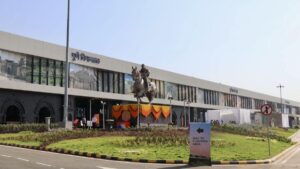
Pune Airport Tops AAI Rankings with 4.98 Passenger Satisfaction Score in Q3 2026


Pune Airport has secured the first position among 16 Airports Authority of India (AAI)-operated airports in the latest Airports Council International (ACI) Airport Service Quality (ASQ) survey for the third quarter of 2026 (July-September), recording a passenger satisfaction score of 4.98 out of 5.

The score marks a marginal improvement over its Q2 2026 rating of 4.97, keeping Pune ahead of all other airports in the AAI network. Chennai and Patna jointly secured second place with scores of 4.94 each.
Pune’s rating is also higher than the AAI network average of 4.90 and the global ASQ average of 4.36 for the quarter. However, despite improving its score, Pune Airport slipped one position in the global rankings, from 57th in Q2 to 58th in Q3, as other international airports recorded rating improvements.
The ACI-AAI survey covers nearly 500 airports worldwide under the ‘Best Airport by Size’ category. Passengers rate various aspects of their airport experience, including check-in, security screening, terminal cleanliness, wayfinding, staff courtesy, food and beverage facilities, and overall journey experience.
Pune Airport’s performance is notable given that it handles more than 10 million passengers annually while operating within a space-constrained defence enclave facility. Of the 31 survey parameters, 28 recorded scores above 4.60, while 30 were rated excellent. (Pune News)
However, 14 operational indicators recorded a decline during Q3. Ease of making connections registered the biggest drop of 0.25 points, while overall cleanliness declined by 0.05 points. Internal terminal circulation, seating capacity, washroom maintenance and flight information dissemination remain key areas requiring improvement.
The latest ratings come as Pune Airport enters the fourth control period (2026-2031) under the Airports Economic Regulatory Authority of India (AERA). The regulator determines the airport’s aggregate revenue requirements and key charges, including landing and parking fees and User Development Fees (UDF).
During the previous control period, domestic departure UDF at several AAI airports had reached as high as Rs 745.
However, under AERA’s proposed service-quality-linked tariff framework, declining scores in specific areas, including connection ease and cleanliness, could trigger financial rebate mechanisms.
Any approval for higher UDF will depend on whether the airport’s business plans clearly demonstrate that the additional revenue will be used to address infrastructure constraints. Priorities include expanding seating capacity, improving washrooms, easing passenger movement within the terminal and addressing circulation bottlenecks. (Pune News)
ALSO READ: Pune to Identify Potholes Using Data From 24000 Connected Ather Scooters