ICMR-NIN Dietary Guidelines for Indians: Healthy Cooking Practices for Maximum Nutrition
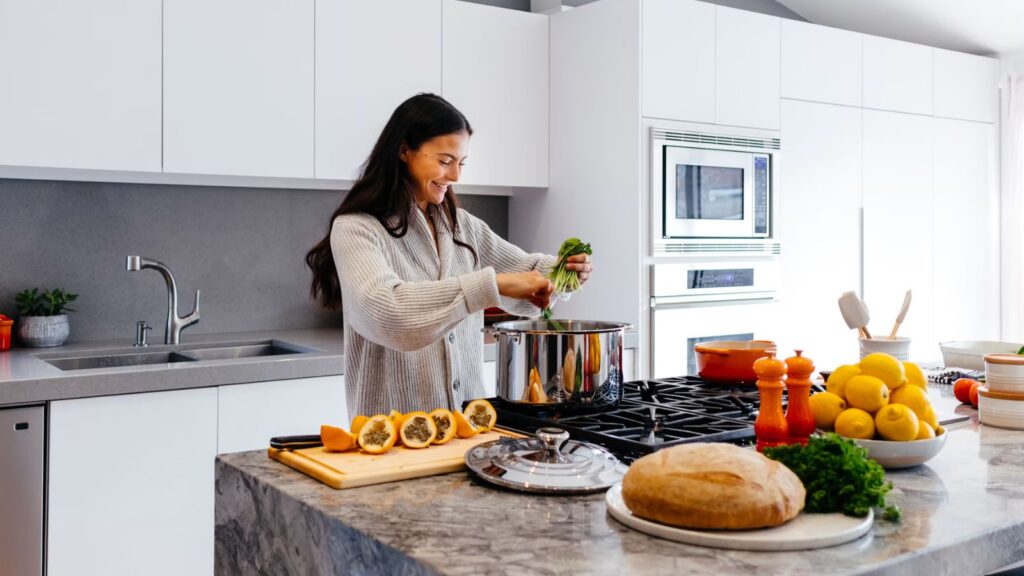

The Dietary Guidelines for Indians by the ICMR-National Institute of Nutrition offer detailed recommendations to maintain optimal health, prevent malnutrition, and reduce the burden of diet-related chronic diseases across all life stages.

One of the most important areas of these guidelines is cooking. Details on food preparation and pre-cooking, cooking methods, cookware choices and methods to preserve food nutrition are covered in these guidelines.
Here is how you can get the best out of these guidelines and follow a healthy cooking routine:
Pre-Cooking Practices
Washing & Cutting: Always wash fruits and vegetables thoroughly before cutting or peeling. Washing after cutting or soaking cut vegetables in water leaches away water-soluble vitamins and minerals. Avoid chopping vegetables into overly small pieces, as greater surface exposure causes nutrient loss through oxidation.
Grains & Legumes: Avoid repeatedly washing rice and pulses, which strips away essential B-complex vitamins.
Enhancing Bioavailability: Methods like germination (sprouting) and fermentation (e.g., idli, dosa, dhokla) significantly improve digestibility, increase nutrient bioavailability, and boost vitamin levels.
Recommended Cooking Methods
Pressure Cooking & Boiling: Ideal for pulses and legumes because heat destroys anti-nutritional factors (digestive enzyme inhibitors) and reduces phytic acid, making minerals like iron, zinc, calcium, and magnesium easier to absorb. Always use only the required amount of water and avoid discarding the cooking water to preserve water-soluble vitamins.
Steaming: Highly recommended over blanching or boiling in excess water because direct contact with water is avoided, preventing nutrient leaching and preserving antioxidants, polyphenols, beta-carotene, and lutein.
Closed-Lid Cooking: Cooking with a closed lid is faster and retains more nutrients compared to open-lid cooking, where air exposure accelerates vitamin breakdown.
Microwave Cooking: One of the best methods for retaining nutrient quality due to short cooking times and minimal water use. Always use glass or microwave-safe ceramic vessels rather than plastic.
Stir-Frying & Slow Cooking: Stir-frying quickly seals in nutrients and fat addition helps absorb fat-soluble vitamins. Slow cooking breaks down plant cell walls to release antioxidants (e.g., in tomatoes and spinach) and lowers harmful end-products (AGEs) in meat.
Air Frying: Provides a lower-fat, lower-calorie alternative to deep frying, though air-frying fish can reduce healthy omega-3 fatty acids unless cooked with herbs.
Cooking Methods to Limit or Avoid
Frying & Shallow Frying: Causes moderate loss of heat-sensitive vitamins and significantly increases caloric and fat density. Shallow frying exposes oil to high oxygen levels, accelerating fat degradation.
Grilling & Barbecuing: While grilling lets excess fat drip off, continuous barbecuing over charcoal generates Polycyclic Aromatic Hydrocarbons (PAHs), carcinogenic compounds, and high-heat grilling increases Advanced Glycation End products (AGEs), which trigger inflammation.
Adding Baking Soda: Do not add baking soda when cooking legumes or vegetables, as it adds unnecessary sodium.
Oil Reuse Recommendation
Never repeatedly heat or reuse oils used for frying, nor mix old oil with fresh oil. Repeated heating generates toxic oxidized compounds that increase the risk of cardiovascular diseases and cancer.
Recommended and Safe Cookware
Earthen pots are considered the safest cookware as heat circulates evenly, preserving nutrients while requiring minimal oil. Granite stone cookware is also considered safe provided it does not contain Teflon-based chemicals like Perfluorooctanoic acid (PFOA), PFOS, or polytetrafluoroethylene (PTFE).
Stainless Steel Cookware is generally safe and widely recommended due to its durability, corrosion resistance, and non-reactivity with foods. It does not leach or react with acidic or alkaline foods, avoiding metallic flavors or harmful chemical transfers.
Avoid storing acidic foods (pickles, chutneys, sambar) in aluminum, iron, or unlined brass/copper vessels to prevent harmful chemical leaching.
Glass & Microwave-Safe Ceramics are recommended specifically for microwave cooking over plastic vessels to ensure safety and prevent chemical leaching.
Teflon non-stick pans should never be preheated empty above 170°C to prevent toxic fumes, and must be discarded when worn out.
Disclaimer: This article has been written completely on the basis of the information shared in The Dietary Guidelines for Indians by the ICMR-National Institute of Nutrition. It is strictly meant for general information purposes and in no way it is to be treated as nutritional or medical advice.
Readers should consult with a certified medical practitioner or a nutrition expert before making any dietary changes based on the information provided in the article.