Rare Flowers That Bloom Only Once in 8 Years Are Turning Hill Slopes Purple and Yellow This Year Near Mumbai and Pune
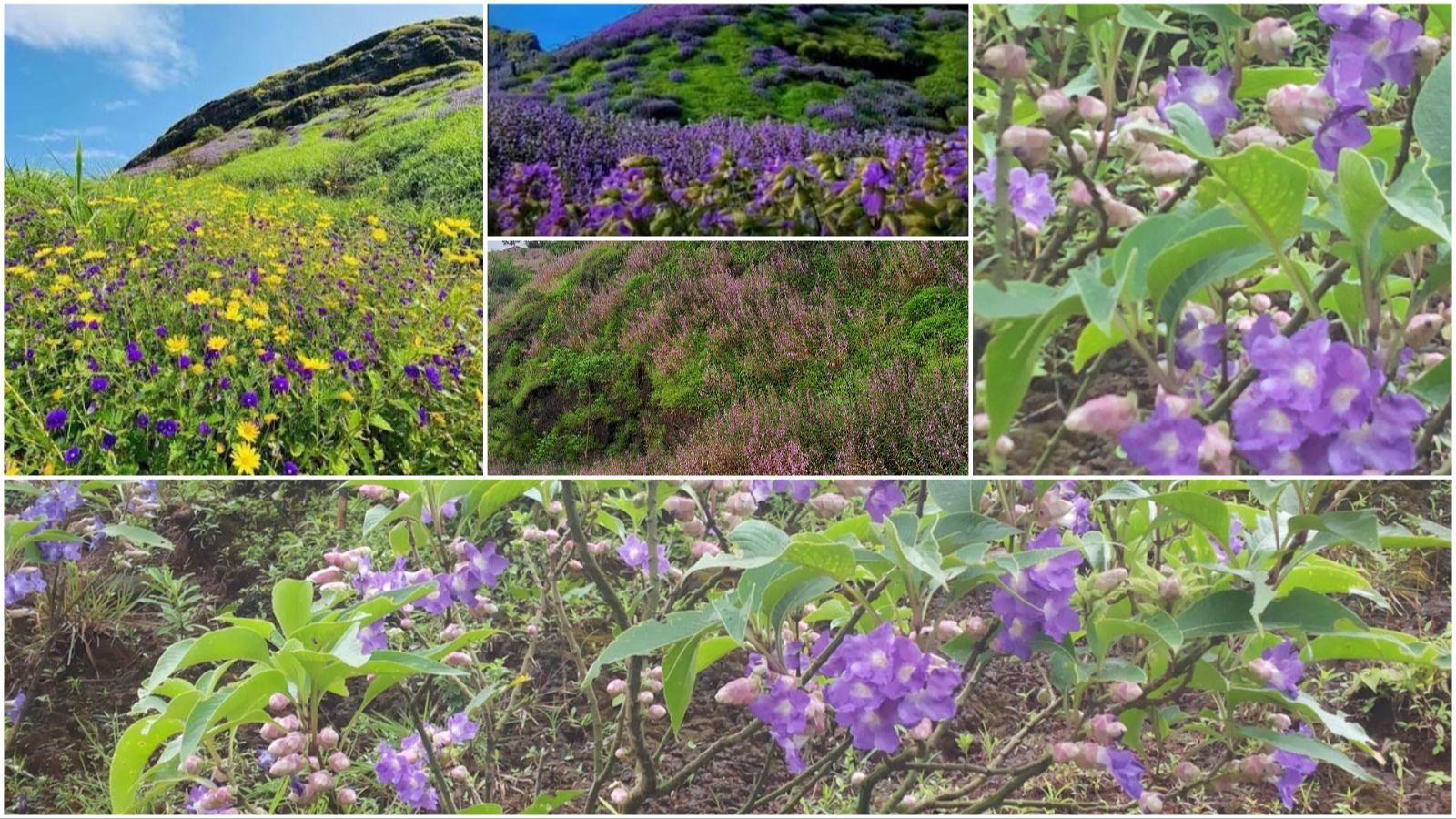

If you travel to the outskirts of Pune or Mumbai, chances are you will witness a rare bloom of Karvi and Sonki flowers, turning the hill slopes and plateaus into vibrant purple and yellow meadows.

The Karvi (Stratobilanthes callosa) is a rare flowering plant that does not bloom every year. It follows a flowering cycle lasting up to seven to eight years. However, when it does, it turns the landscape into purple-violet riot. This native shrub is native to Sahyadri range, particularly in Maharashtra and some parts of Karnataka.
Many people have witnessed Karvi flowers in full bloom on the hill slopes around Pune and Mumbai in 2026. Lavasa, a hill station located at about 40 km from Pune is particularly famous for Karvi blooms during the late or post monsoon period.
Kaas Plateau, located near Satara, also gets its share of Karvi bloom, adding to its charming beauty, created by wild flowers during this period. Other places where you can witness acres of Karvi blooms are Malshej, Panchgani, and Lonavala.
Another wild flower, the Yellow Sonki, blooms right along side Karvi flowers and produces yellow hues. When these two flowers bloom together next to each other, they create vibrant purple-yellow landscapes on the hill slopes and forts near Pune and Mumbai. For a short duration, the landscape turns mesmerizing, only to return after many years.
Photographers wait for this opportunity to capture the beauty of the nature’s canvas on film and tourists don’t want to let go of this opportunity to witness the blossoming bounty.
After the blooming season, the Karvy plants produce seeds and die. The seeds lay embedded in the soil, waiting for the next blooming season, which could be years away.
However, trekkers, nature lovers and tourists are advised to walk only the designated trails or paths already created to prevent the seeds getting trampled on getting too deep into the soil.