Pune Metro Line 3 Between Maan-Hinjawadi-Shivajinagar to Use Solar Energy to Meet Third of its Power Requirements
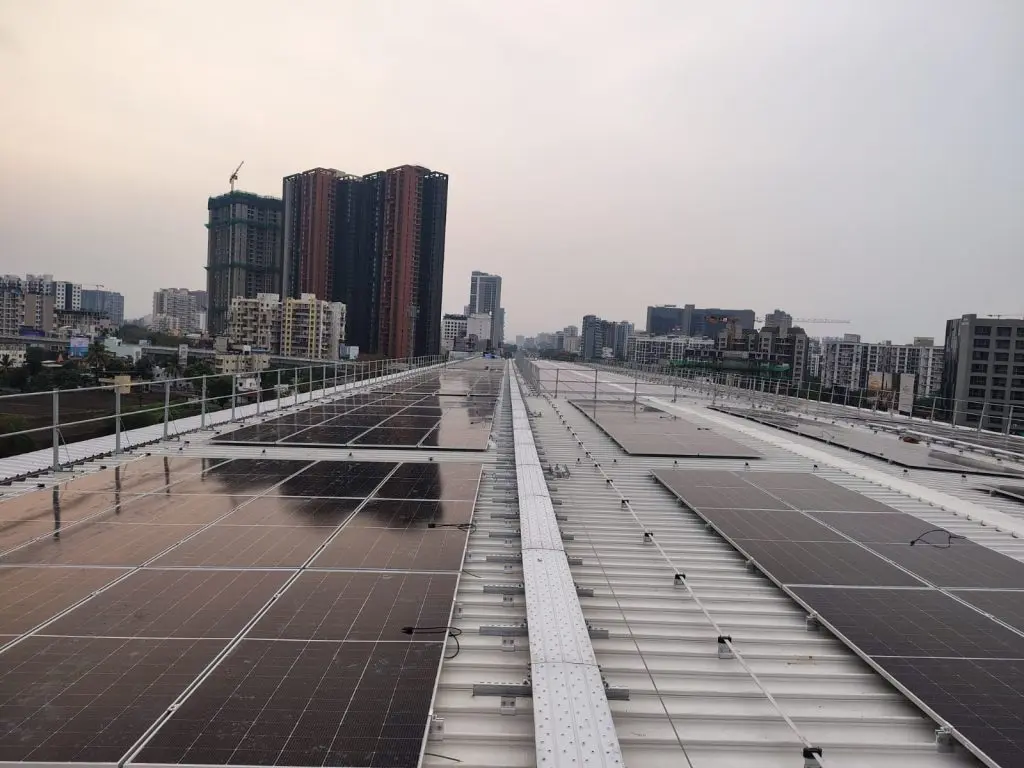

The upcoming Pune Metro Line 3 (Puneri Metro) between Maan-Hinjawadi-Shivajinagar will source close to one-third of its energy requirements from solar power.

The Pune IT City Metro Rail Limited (PITCMRL) announced it is installing a 7.67 MWp rooftop solar power system across all 23 stations and the main depot. Work is moving fast and the crews have already set up solar plants at nine stations and the depot over the last three months alone.
Once the entire 23-kilometer elevated corridor is up and running, these solar panels are expected to produce roughly 1 crore units (14 million kWh) of clean electricity every single year. By turning station roofs and depot buildings into mini-power plants, the metro will drastically cut its dependence on the main grid, and as per officials, it will keep long-term operating costs down.
The solar initiative is part of a larger tech blueprint designed to keep the Puneri Metro highly efficient. The line will feature advanced 750 V DC third-rail electrification, energy-saving train cars, and high-tech Communication-Based Train Control (CBTC) signaling.
More importantly for residents, the finish line is finally in sight. End-to-end trial runs have been completed across the entire route connecting the Hinjawadi IT Park to Shivajinagar. The project is now in its final phase of preparations, waiting on standard regulatory and statutory clearances before opening to the public.
To start the passenger services as quickly as possible, the metro will open in stages:
Phase 1: A 13.3-km stretch running from Maan to the R. K. Laxman Museum, covering 12 operational stations.
Phase 2: An extension reaching all the way to the District Court, which will allow commuters to smoothly transfer over to the existing Maha Metro network.
For locals used to struggling in heavy traffic, the real benefit will the time savings. Once fully operational, a trip between Shivajinagar and Hinjawadi will shorten to just 45 minutes, cutting the current 1.5-hour grueling commute right in half.