Pune: As Dams Hit Rock Bottom, PMC Considering Artificial Rain to Boost Reservoir Levels
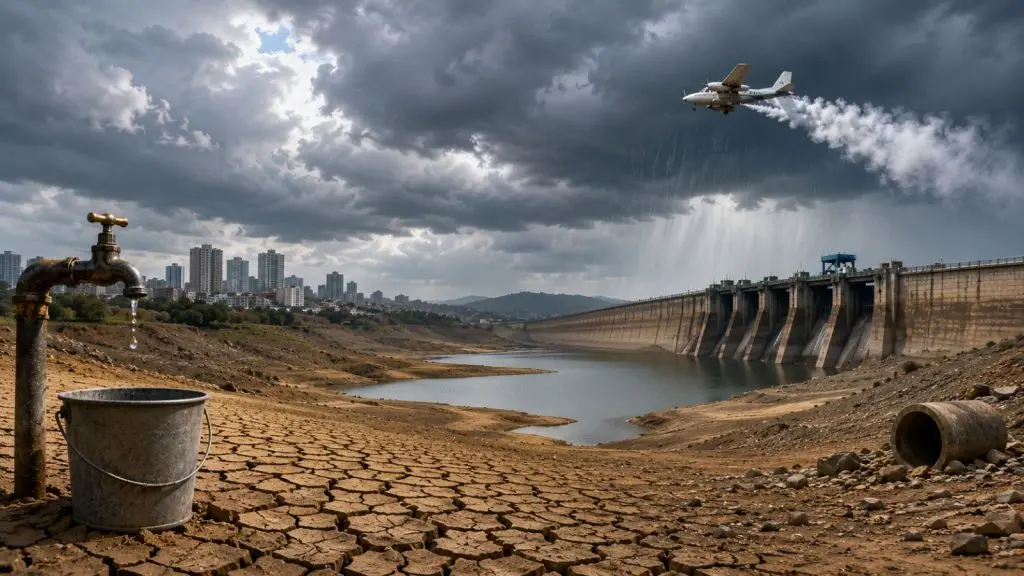

Facing a severe rainfall deficit at the end of June, the Pune Municipal Corporation (PMC) is actively exploring the feasibility of inducing artificial rain (cloud seeding) to boost reservoir levels.

The cloud seeding experiment is planned specifically for the catchment areas of the major dams supplying water to Pune, focusing on zones where natural cloud accumulation is high.
The initiative was discussed on Monday, June 29, 2026, during an all-party committee review meeting led by Mayor Manjusha Nagpure, Standing Committee Chairman Shrinath Bhimale, and Leader of the House Ganesh Bidkar.
The Severity of the Water Crisis
Dwindling Reservoirs: As of late June, the dams supplying Pune hold a combined storage of just 3.6 TMC (thousand million cubic feet) of water. Officials state this stock is critical and barely enough to last the city for two months.
Delayed Monsoon Impacts: Although June is coming to a close, the monsoon has failed to pick up pace in the Khadakwasla dam catchment area.
Current Restrictions on Water Usage
To conserve the remaining water, PMC has already implemented drastic measures since June 15, including:
- Providing water supply only on alternate days.
- Banning the use of drinking water for construction activities and gardens.
- Ordering the complete closure of vehicle-washing centers and swimming pools.
Financials & Operational Plan
- Estimated Cost: The project is projected to cost approximately ₹6 crore.
- Funding Model: Instead of straining the civic budget, PMC proposes to completely fund the experiment through Corporate Social Responsibility (CSR) funds.
- Expert Consultation: The civic administration has been directed to immediately contact reputable scientific organizations, such as the Indian Institute of Tropical Meteorology (IITM) Pune, which has extensive past research data on cloud seeding protocols (like the CAIPEEX campaign), to assist with technical execution.
Demand vs. Supply Strain (The Bigger Picture)
Sanction Shortfall: Pune’s rapid urban expansion has grown its jurisdiction from 125 sq km to 508 sq km, pushing the population to an estimated 77.76 lakh. Based on government norms, Pune requires 21.03 TMC of water annually, but the state Water Resources Department has sanctioned only 16.36 TMC.
Tanker Reliance: The shortfall has significantly spiked the city’s dependence on private water tankers. However, falling groundwater levels have reduced well water availability, compounding the overall shortage.
The Road Ahead
The Municipal Commissioner’s office has been directed to prepare and submit a urgent, detailed report covering the technical viability and expected success rates of cloud seeding. This is going to be backed by a study of previous artificial rain experiments conducted in India (specifically pointing to historical trials in regions like Baramati), followed by formal recommendations on how soon a pilot run can be initiated if the monsoon continue to stall.