When the Sea Moves Inward

My Story from Kerala – during my cycling journey for change before climate change

Cycling teaches you one important thing very quickly: you can plan routes, but you cannot plan encounters.
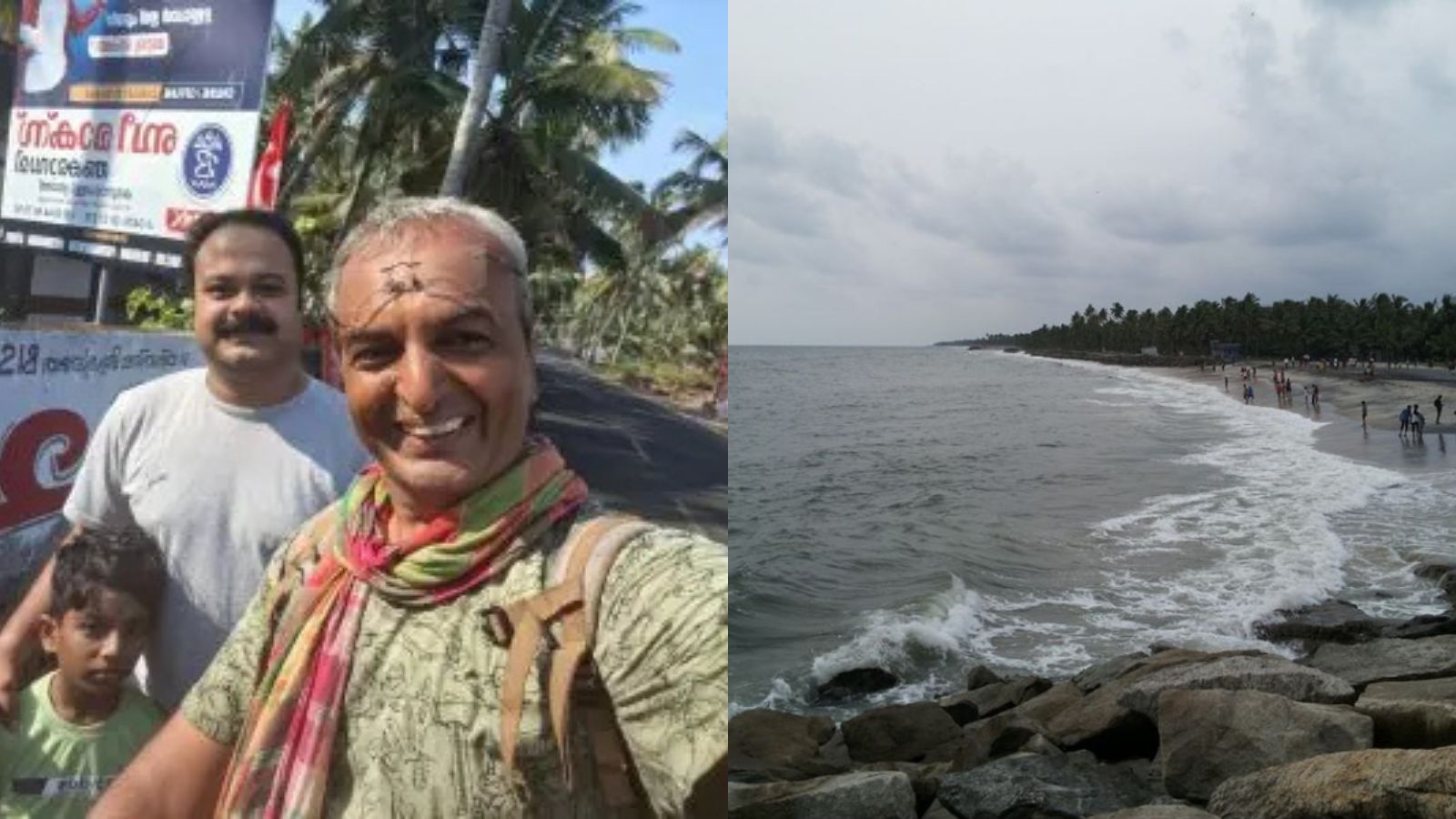
After finishing a short but beautiful halt at Alappuzha / Allapy , thanks to Amrit Appeden , my former student, now a celebrated name in mountaineering and culinary arts, I resumed my southward ride toward Thiruvananthapuram as part of my Change Before Climate Change cycling journey.

With Amrit in Allapy Kerala
The plan was to halt at a church in Kovalam. But it was Easter. Pastors were busy. Doors were closed. And so, like many evenings on this journey, I was cycling without knowing where I would sleep.
What I did know was this:
to my right, the Arabian Sea stretched endlessly;
to my left, Kerala’s backwaters flowed quietly.
Somewhere between uncertainty and awe, I kept pedalling.
A Pause That Became a Home
Near Valyazheekkal, close to a bridge and lighthouse marking the transition between districts, I stopped to drink water. I wasn’t looking for shelter, just catching my breath and absorbing the view.
That’s when a gate opened.
A middle-aged man stepped out with a small boy. His questions were simple, curious, and kind:
Where are you travelling? Why are you cycling?
When I spoke about my journey and the Change Before Climate Change mission, he smiled and said something that every tired cyclist silently hopes to hear:
“Please come in for tea.”
This was Mr. Anish Shaji.
What followed was not hospitality … it was human warmth.
A House Between Two Ecosystems
Shaji’s home is rare in a way no luxury resort can replicate.
- The front door opens to the Arabian Sea, waves carrying generations of fishing stories.
- The back door opens to Kerala’s backwaters, calm, fertile, and deeply alive.
Around the house stood trees that were not decorative but deliberately planted and preserved , coconut palms, shade trees, coastal vegetation that cools the air and shelters life.
This house does not dominate nature.
It belongs to it.
Shaji’s mother went into the kitchen and returned with tea, warm, unhurried, comforting. His nephew, a cheerful little boy studying at a nearby school, sat close by, curious and quietly observant.
Soon, Shaji’s father joined us in the angan (courtyard), the open front space of the house. He is in his late seventies, a lifelong fisherman. Not retired. Fishermen don’t retire; they stop when the sea stops allowing them.
A Fisherman’s Climate Report
What followed was meant to be a 15–20 minute conversation. It became more than two hours.
Shaji’s father spoke of the sea the way only someone who has spent a lifetime listening to it can. As a young man, he said, fish were abundant and diverse even close to shore. The sea was generous. Predictable.
Today, that certainty is gone.
Fish stocks have declined. Variety has disappeared. Sea temperatures are rising. Currents have changed, altered by ports and coastal interventions. Even going deeper into the sea no longer guarantees a catch.
This was not theory.
This was traditional ecological knowledge, lived data that predates scientific reports and increasingly confirms them.
By the time darkness fell, Shaji insisted I stay the night. I accepted …not out of convenience, but gratitude.
Dinner, the Way It’s Meant to Be
Dinner was unforgettable in its simplicity:
- Multiple varieties of fish, cooked in traditional Kerala styles
- Fresh vegetables
- Red rice, earthy and nourishing
- And, as is customary in Kerala homes, warm water to drink, a small detail that quietly says, “We care about you.”
This wasn’t hospitality performed.
This was hospitality lived.
After dinner and coffee, the three of us, Shaji, his nephew, and I, went for a walk.
Black Sand, Lighthouse, and Friendship
We walked toward the black sand beach, rare and striking even under the night sky. Shaji explained everything gently as we walked, about the tides, the sand, the lighthouse, the bridge.
He spoke so naturally that I forgot we had met only hours earlier. It felt like walking with an old friend, not a stranger. His nephew walked a few steps ahead, occasionally turning back to make sure we were following.
The Valyazheekkal Bridge arched behind us, carrying traffic above waters where boats quietly moved between sea and backwaters. The lighthouse stood tall and silent, a reminder of generations guided home.
That walk stayed with me.
Because it showed what is at stake.
The Morning That Hit Harder
The next morning, I crossed the same bridge on my cycle. I was thirsty and stopped at a small stall for coconut water, standing there admiring the calm sea.
As he cut open the coconut, the vendor said, almost casually:
“The sea has come inside by almost four kilometers.”
I smiled, assuming exaggeration.
Then I realised he wasn’t exaggerating.
Over the last 35–40 years, he explained, relentless sand mining had altered the coastline. Villages had vanished. A temple and a church now lay submerged, not because of a storm, but because of human intervention.
Four kilometers.
His words reconciled instantly with the previous night’s conversation, with Shaji, with his father. As I cycled further, several others confirmed the same story. Different voices. Same truth.
The vendor spoke of activists too, some genuinely fighting for the land, others operating under the disguise of activism, mobilising people, threatening companies, taking money, and disappearing. In that chaos, the real losers are the local communities.
If the sea merges into the backwaters, he warned, an entire ecosystem will collapse, along with livelihoods evolved over centuries. People will be forced into cities they don’t understand, into work they were never meant to do.
These are not distant risks.
These are early warnings.
Later that day, cycling past a mining site, I saw it clearly: a once-living beach reduced to an industrial wound.
This is not climate change arriving someday.
This is climate change being engineered today.
Why This Night Matters
What stayed with me most was not the damage, but the dignity.
A fisherman sharing wisdom.
A mother feeding a stranger.
A son walking beside me like an old friend.
A child growing up between two waters.
From Kerala to stories echoed by fellow cyclists like Rupesh Rai, and even parallels from places like Somalia, the pattern is the same:
destroy livelihoods first, criminalise survival later.
Shaji, Aunty, Uncle, and little one,
Thank you for opening your home and hearts to a cycling stranger. Thank you for the tea, the food, the walk, the conversations, and the trust.
Your home, facing the Arabian Sea and backed by the backwaters, embodies exactly what this journey stands for.
This article is not just a story.
It is a thank-you note.
And a warning.
#_Change_Before_Climate_Change is not a slogan.
It is a responsibility … one kilometre, one conversation, one home at a time. 🚲🌊
Black Sand Beach of Valiyazheekal, kerala
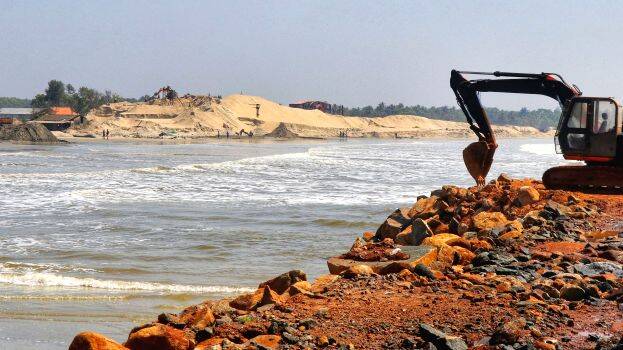
Beach Sand Mining Illustration
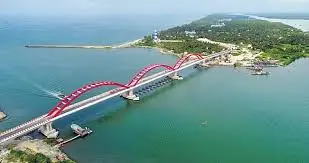
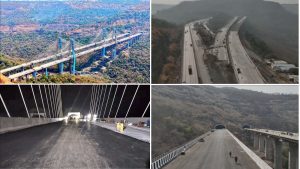
South India’s longest bowstring bridge at Valiyazheekkal, to shorten Alappuzha-Kollam distance
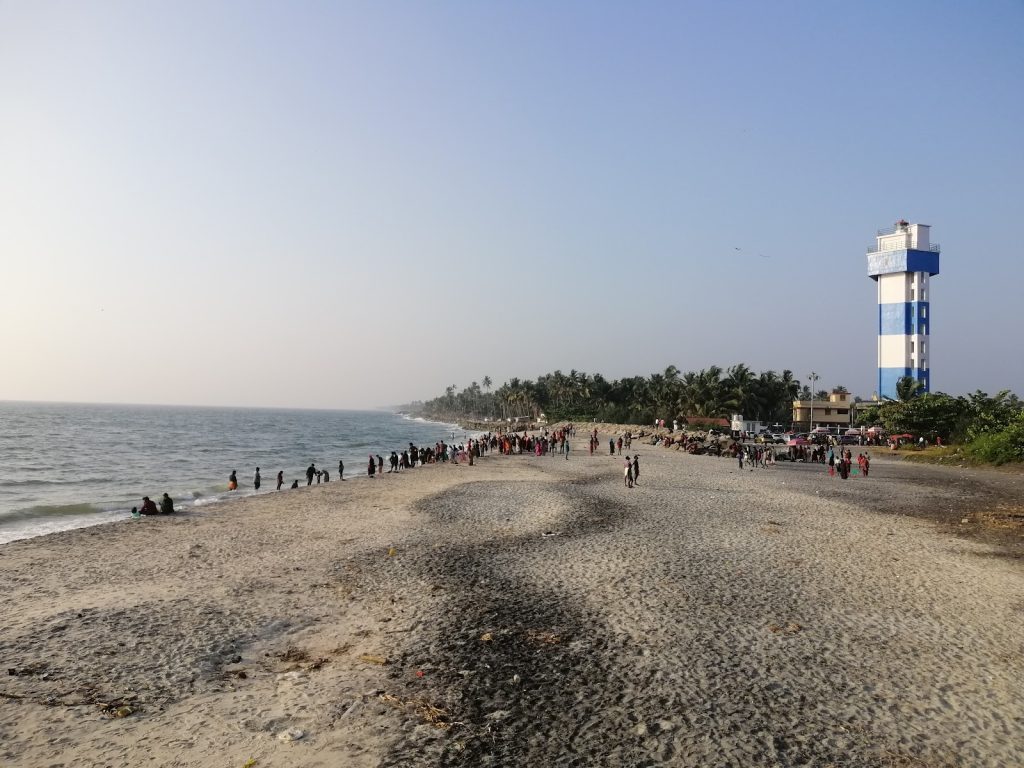
Valiyazheekal Black Sand Beach and Light House
Jayant Mahajan works where Management, technology, and sustainability meet, usually right before things get complicated. With industry experience in business management and digital transformation, he brings real-world messiness into the classroom (on purpose). As an educator, he designs future-ready curricula around data thinking, governance, and ethics, because technology without judgment scales mistakes faster. Through his Change Before Climate Change mission, Jayant helps institutions act early by fixing skills and incentives, so climate action becomes good management, not emergency management. Bridging policy, practice, and purpose, one syllabus at a time.