Third Expressway Between Mumbai and Pune Approved: Work on 130Km Greenfield Corridor Begins March 2026; Route Map, Connectivity & Timelines
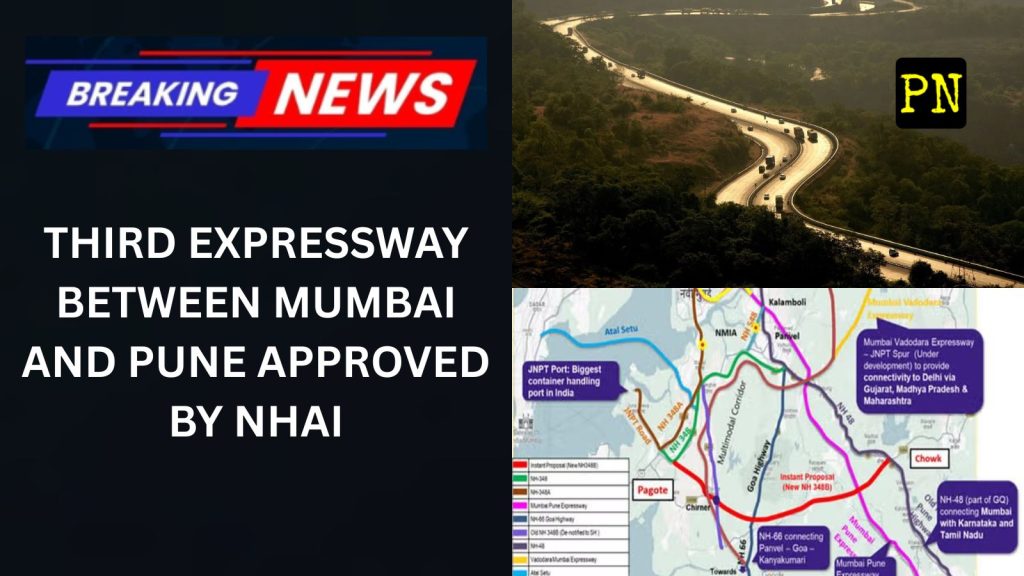

The wait for a seamless, congestion-free commute between Maharashtra’s twin powerhouses is nearly over. The National Highways Authority of India (NHAI) has officially moved the Third Mumbai-Pune Expressway from the drawing board to reality, clearing the Detailed Project Report (DPR) for a massive 130-km greenfield corridor.

As the existing Yashwantrao Chavan Expressway reaches its saturation point, this ₹15,000-crore project is poised to become the new lifeline for Western Maharashtra, promising to slash travel time to just 90 minutes.
Why a ‘Third’ Expressway?
The moniker “Third Expressway” stems from its role as a strategic alternative to the two existing arteries: the Yashwantrao Chavan Mumbai-Pune Expressway and the old NH-48 highway.
More importantly, this corridor serves as the missing link in the larger Mumbai–Pune–Bengaluru Express Corridor. While work on the Pune-Bengaluru stretch is already in progress, this new 130-km extension creates a high-speed gateway directly into the heart of Mumbai’s newest infrastructure hubs.
Route and Strategic Alignment
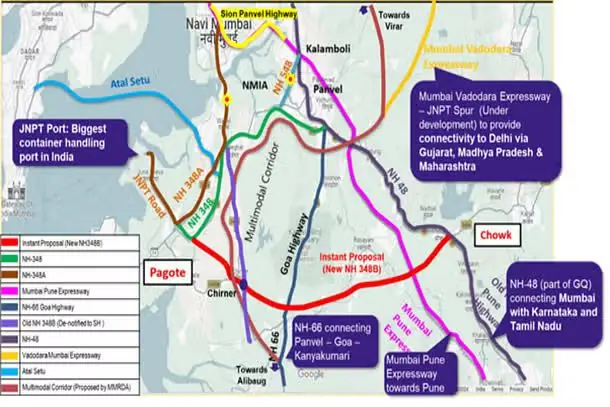
Starting near the Atal Setu (MTHL) in Mumbai, the six-lane greenfield highway will navigate a sophisticated route through the Sahyadri mountain range. According to NHAI officials, the design includes an extensive network of tunnels and elevated bridges to maintain high speeds without compromising safety in the treacherous hilly terrain.
The expressway is strategically aligned to serve three major economic pillars:
- Navi Mumbai International Airport (NMIA): Providing instant access for air passengers.
- JNPT (Jawaharlal Nehru Port Trust): Streamlining heavy commercial logistics.
- Pune Ring Road: Terminating at Shivare Junction (Bhor taluka), allowing Bengaluru-bound traffic to bypass Pune city entirely.
NHAI’s Perspective: Combatting Saturation
Sanjay Kadam, Project Director, NHAI Pune, emphasized the urgency of the project. “The existing Pune–Mumbai e-way has reached saturation due to a sharp rise in traffic volume, leading to congestion and safety concerns. This new expressway is planned as a high-capacity alternative,” Kadam stated.
The corridor is engineered to handle a staggering 3 lakh vehicles per day, ensuring that the “90-minute dream” remains a reality even as regional traffic continues to grow.
Construction Timelines and Land Acquisition
Progress on the ground is already visible. NHAI has successfully completed 70% of land acquisition for the critical Pagote–Chowk (30 km) section.
- Tendering Status: The bidding process is in its final stages, with contractors expected to be named within weeks.
- Groundbreaking: Physical construction is slated to begin in March 2026.
- Completion Goal: Officials have set a targeted construction window of three years, aiming for a 2029 opening.
The Verdict for Commuters
For Pune residents, the project represents a final solution to the unpredictable delays at the Khandala and Lonavala ghats. By diverting heavy transit and Bengaluru-bound freight to this new greenfield path, the “Third Expressway” will not only speed up travel but also significantly improve safety on the existing routes.
As ground is broken this coming March, the transformation of the Mumbai-Pune-Bengaluru corridor will officially mark a new chapter in India’s infrastructure story.