
The 10-Minute Maid: A Convenience Too Good to Last, Because the Math Isn’t Adding Up
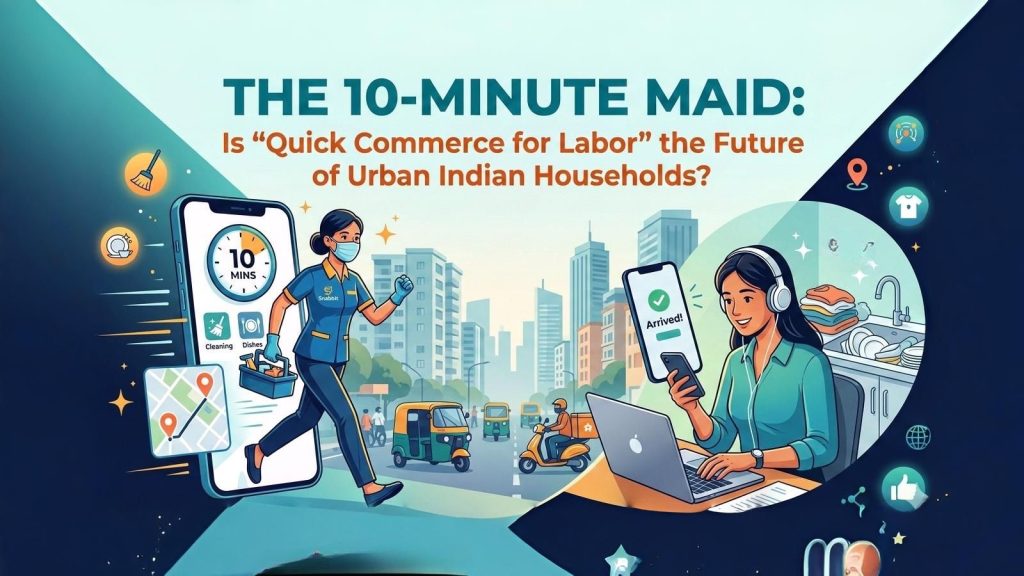
The 10-Minute Maid | A Sustainable Convenience or or a VC-Funded Dream - AI Generated Image

It’s 8:00 AM in a bustling urban high-rise. Suhaani is rushing to clear her morning checklist, desperate to log on early for a day of back-to-back meetings. But as she stares at a sink overflowing with last night’s dinner plates, her phone buzzes with the notification every Indian household dreads, a WhatsApp message from her help: “Didi, aaj nahi aaungi” (Didi, I won’t come today).

Sounds familiar?
In 2024, this would have meant a ruined day. In early 2026, it’s just a three-tap problem. Welcome to the era of Quick Commerce for Domestic Labor, where apps like Snabbit, Pronto, and Urban Company’s InstaHelp promise a verified house help at your doorstep in under 10 minutes.
As the sector crosses 50,000 daily bookings, a critical question arises: Is this the permanent solution for India’s 40% dual-income urban households, or is the “math not math-ing” for the long term?
The Rise of the “Instant Maid”: Platforms and Pan-India Availability
The digital roster of essentials, Zomato for food, Blinkit for groceries, and Zepto for everything else, has officially expanded to include human capital. These platforms focus on “emergency” chores that keep a modern household running.
1. Urban Company (InstaHelp)
Launched as a pilot in early 2025, InstaHelp has become a juggernaut. On February 22, 2026, it hit a record 51,520 daily bookings.
- Availability: Currently dominating micro-markets in Mumbai, Bengaluru, Delhi-NCR, Hyderabad, and Pune.
- Specialty: Standardized cleaning, dishwashing, and basic kitchen prep (kneading dough, peeling garlic).
2. Snabbit
The aggressive specialist that recently moved its HQ to Bengaluru. Snabbit has scaled from 1 lakh to 10 lakh monthly orders in record time.
- The Fleet: Operates a 100% women-led fleet of 5,000 “Experts” who stay logged in for fixed shifts.
- Specialty: Quick “reset” services, cleaning after a party or folding a mountain of laundry.
3. Pronto & Broomees
Pronto has captured the budget-conscious segment with a shift-based model that guarantees worker availability. Meanwhile, Broomees, a veteran in the space, has pivoted to offer “instant” variants to compete with the 10-minute giants.
Pricing: The “Too Good to be True” Phase
The current rates are causing a stir in neighborhood WhatsApp groups from Gurgaon’s Cyber City to Mumbai’s Powai.
- Standard Rates: You can book an hour of service for as low as ₹99 to ₹149.
- The “Bundle” Hack: Snabbit offers packages where three 1-hour visits cost roughly ₹149 total, bringing the cost per hour down to an unbelievable ₹50.
To put this in perspective: A traditional maid in a metro high-rise usually charges ₹2,000–₹3,500 per month for a single chore. The apps are essentially offering a “premium, on-call professional” for the price of a packet of chips.
Real User Reviews: What the Customers are Saying
While the apps look sleek, user experiences on platforms like Reddit (r/India) and various App Stores suggest a “teething phase” for the industry. Here is the breakdown of the ground reality:
The Positives
- Safety First: Integrated SOS features and rigorous background verification provide significant peace of mind, especially for women or students living alone.
- Professionalism: Unlike the unorganized sector, these “Experts” arrive in uniform, follow a strict digital checklist, and often carry their own basic cleaning kits.
- No Negotiations: The clinical nature of the transaction eliminates awkward arguments over sudden holidays, “advance” salary requests, or festive bonuses.
The Negatives
- The 10-Minute Myth: In high-traffic metros like Mumbai or Bengaluru, the “10-minute” arrival promise is frequently broken, with users reporting wait times stretching to 40 minutes.
- Service Quality Issues: Some users have voiced concerns that workers intentionally “slow down” their pace to ensure the entire paid hour is consumed with minimal actual output.
- Refund Woes: Newer entrants, particularly Pronto, have faced criticism for poor customer support and delayed refunds, sometimes taking 7–14 days to process, when a booking is canceled by the platform.
Critical Evaluation & The Verdict
At PuneNow, we decided to look past the convenience and crunch the numbers for the Indian market.
The Verdict: These apps are a godsend for emergencies and ad-hoc needs, but they are not yet a replacement for your regular house help.
The Hidden Reality: The Burn
Urban Company reported a ₹61 crore EBITDA loss in its InstaHelp vertical last quarter. Companies are burning venture capital to pay workers ₹22,000–₹30,000 per month while charging customers peanuts. This is a classic “land grab” strategy.
Once the focus shifts to profitability, as it did with ride-hailing:
- Prices will Surge: The sustainable rate for an hour of professional help is likely closer to ₹250–₹300.
- Service Friction: As incentives drop, we may see the same inconsistencies and strikes that plague the gig economy today.
The Future: A Formalized Labor Market?
Despite the shaky economics, the shift is permanent. We are witnessing the formalization of India’s domestic labor market.
For workers, the apps provide health insurance, fixed hours, and “choice of shift”, luxuries the unorganized sector never offered. For the consumer, the “Genie-like” convenience is addictive. As we move toward late 2026, expect these apps to move into Tier-2 cities and introduce AI-driven scheduling to reduce arrival times further.
The “Maid-as-a-Service” (MaaS) model is here to stay, even if the ₹50/hour price tag isn’t.
Final Tip for Readers:
Enjoy the ₹99 rates while they last! Use them for your “emergency” days, but keep your regular help’s number handy.