Rare ‘Nine-Colored’ Himalayan Monal Spotted in Flight Over Bhutan: Stunning Viral Photo Captures ‘Jewel of the Himalayas’
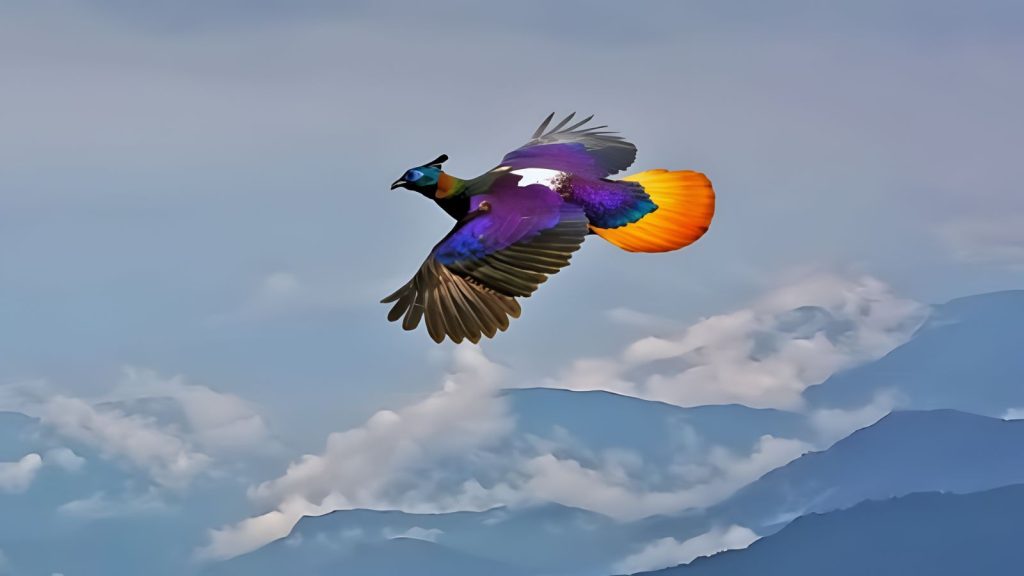
Image: hasamnisdrsudhir/Instagram

In a rare and breathtaking moment that has captivated wildlife enthusiasts globally, a male Himalayan Monal, often described as the “nine-colored bird,” was recently spotted and photographed in a majestic flight over the snow-capped peaks of Bhutan.
The Jewel of the Himalayas: A Rare Sight in Flight
The Himalayan Monal (Lophophorus impejanus), a member of the pheasant family, is renowned for the iridescent plumage of the male. While the bird is relatively well-known in high-altitude regions of India, Nepal, and Bhutan, seeing one in flight is an extraordinarily rare event. Primarily ground-dwelling foragers, these birds usually traverse the alpine meadows of the Himalayas on foot, making this mid-air capture a significant milestone for wildlife photography in 2026.
The viral image, which surfaced in mid-February, showcases the bird’s structural coloration, a biological marvel where microscopic structures in the feathers reflect sunlight to create a shimmering rainbow effect. From metallic greens and deep blues to radiant copper and purple, the “nine colors” of the Monal appeared in full brilliance against the stark Himalayan backdrop.
Bhutan’s Tharpaling Monastery: A Sanctuary for the Iridescent Pheasant
Reports indicate that the sighting occurred near the Tharpaling Monastery in Bhutan’s Chumey Valley. Located at an altitude of approximately 11,800 feet, this sacred site has become a sanctuary for the species. Because of the peaceful presence of Buddhist monks, the wildlife in this region, including the elusive Monal, tends to be less fearful of human presence, allowing for closer observation than in other parts of its range.
Wildlife photographers often spend weeks in sub-zero temperatures, sometimes as low as 21°F (-6°C), hoping to catch a glimpse of this “Jewel of the Himalayas.” The patience required is immense, as the birds are known for their shy nature and tendency to disappear into the dense coniferous forests at the first sign of danger.
Conservation and Cultural Significance
The Himalayan Monal holds a prestigious status across the mountain range. It is the national bird of Nepal (where it is known as the Danphe) and the state bird of Uttarakhand, India. In Bhutan, it is revered as a symbol of the pristine and untouched beauty of the high-altitude ecosystem.
While currently listed as ‘Least Concern’ by the IUCN, the Monal faces persistent threats:
- Habitat Loss: Increasing human encroachment into high-altitude meadows.
- Poaching: Historically hunted for its colorful crest feathers, which were used to decorate traditional hats.
- Climate Change: Shifting snowlines affecting their natural foraging grounds.
Why the ‘Nine-Colored Bird’ is Trending
The recent surge in interest is partly driven by the technical difficulty of the shot. Capturing a Monal in flight requires high-speed shutter synchronization to freeze the motion of its heavy-set wings while maintaining the correct exposure for its reflective feathers. Experts note that the brilliance of the colors is not due to pigment but “physics and evolution at work,” as the sunlight interacts with the feather layers to produce different hues at different angles.
For nature lovers, this sighting serves as a vivid reminder of the biodiversity tucked away in the remote corners of the Himalayas and the importance of preserving these fragile mountain ecosystems.