Pune’s Traffic Solution: “Paatal Lok” Yerawada-Katraj Underground Tunnel Moves to Next Phase

PUNE – In a move that could redefine urban mobility for India’s IT and manufacturing hub, the Pune Metropolitan Region Development Authority (PMRDA) has officially completed the pre-feasibility report for the ambitious Yerawada-Katraj underground tunnel.

This proposed 20-km twin-tube corridor is the cornerstone of a massive ₹32,000 crore Pune underground road network designed to bypass the city’s saturated surface infrastructure.
A “Paatal Lok” Solution for a Land-Starved City
Chief Minister Devendra Fadnavis, while reviewing the project in early January 2026, described the initiative as a “Paatal Lok” model of connectivity. The CM highlighted a stark reality: while Pune’s vehicular population has doubled over the last decade, surface roads account for a mere 9% of the city’s land area.
“We have reached a structural saturation point where widening surface roads is no longer a viable option in most parts of the city,” Fadnavis stated. The “Paatal Lok” vision focuses on utilizing the space beneath the city to create a high-speed, 54-km subterranean grid.
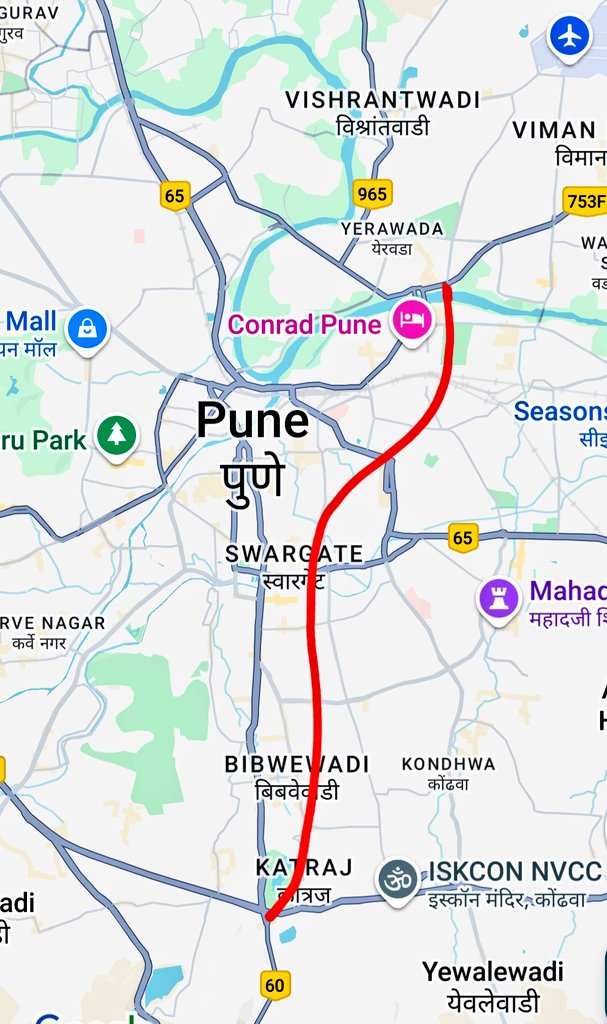
Yerawada-Katraj Tunnel: Route and Strategic Impact
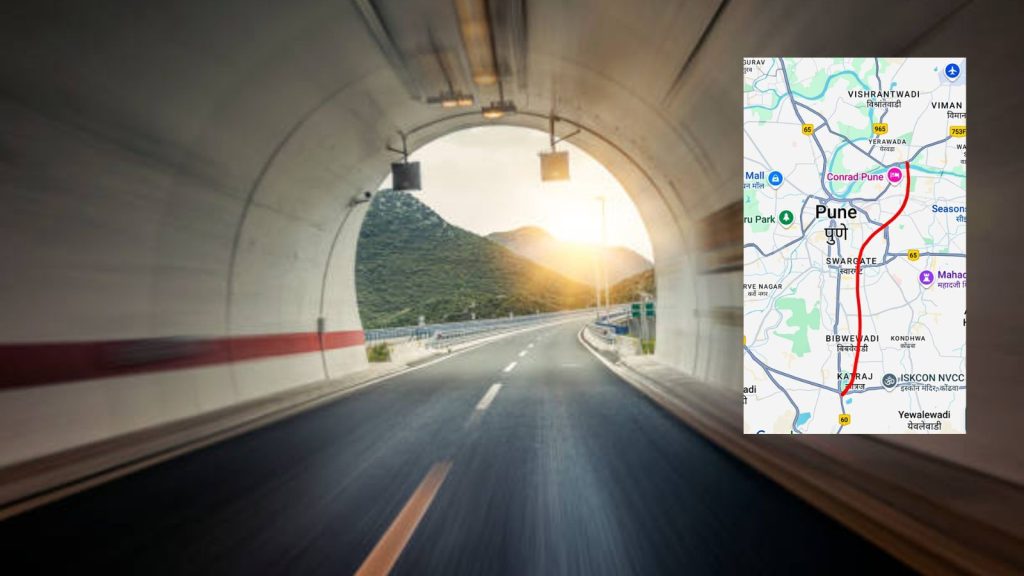
The Yerawada-Katraj tunnel is designed as a direct north-south artery, connecting the eastern gateway of Yerawada to the southern suburbs of Katraj.
- Distance & Time: The tunnel is expected to slash travel time between these two hubs by over 30 minutes, effectively cutting the current commute in half.
- Decongestion: By moving long-distance transit underground, the project will provide immediate relief to chronic bottlenecks on Shankar Sheth Road, Satara Road, and Nagar Road.
- Network Integration: The tunnel will feature multiple entry and exit points, linking key residential and commercial hubs including Kothrud, Aundh, Baner, Sinhagad Road, and Khadki.
Technical Specifications and Estimated Costs
According to the PMRDA pre-feasibility report, the project is estimated to cost approximately ₹7,500 crore for the Yerawada-Katraj stretch alone.
- Total Length: Approximately 20 km for the Yerawada-Katraj stretch.
- Structure: A sophisticated twin-tube tunnel system, featuring three lanes on each side to ensure smooth traffic flow.
- Depth: Excavation will reach approximately 30 metres underground, specifically designed to bypass and protect existing Pune Metro foundations.
- Segment Cost: The Yerawada-Katraj corridor is estimated at ₹7,500 crore.
- Total Network Investment: The entire 54-km subterranean grid is projected to cost ₹32,000 crore.
The engineering plan ensures the tunnels remain at a depth that does not compromise the structural integrity of the existing and upcoming Pune Metro lines.
Next Steps: PUMTA Approval and Funding
The project is currently in a “holding pattern” due to the local body election model code of conduct. Once the code is lifted, the PMRDA will present the report to the Pune Unified Metropolitan Transport Authority (PUMTA).
Following PUMTA’s nod, the proposal will move to the State Cabinet for final financial allocation. While earlier versions of the plan faced skepticism from the Pune Municipal Corporation (PMC) regarding financial viability, the current pre-feasibility study has addressed technical concerns, clearing the path for a full feasibility report and land acquisition assessments.
Future Outlook for Pune Infrastructure
If executed, this underground network will link directly with the Pune Ring Road, allowing freight and inter-city traffic from the Mumbai-Pune Expressway to bypass the city center entirely. For the residents of Pune, the Yerawada-Katraj tunnel represents more than just a road, it is a necessary evolution to keep the city moving.
For more live updates on Pune, visit our Pune News Today page.