Pune’s Air Crisis: Balewadi Residents Sound Alarm as City’s AQI Compared to Delhi

PUNE – After suffering rapidly deteriorating air quality, the Balewadi Welfare Federation (BWF) has formally moved the Pune Municipal Corporation (PMC), demanding urgent intervention as air quality in the suburb hits “hotspot” levels. The push from residents has hit a chord, with the Municipal Commissioner acknowledging that Pune’s air pollution levels are now increasingly comparable to those seen in Delhi.

The representation, submitted by the federation to the Hon’ble Commissioner, highlights a grim reality: residents are “choking” due to a lack of enforcement of the Air (Prevention and Control of Pollution) Act and the National Clean Air Programme (NCAP) guidelines.
Residents Demand “Right to Clean Air”
Citing Article 21 of the Constitution, the BWF pointed out that the right to life includes the right to clean air. Despite a 2023 directive from the Maharashtra Pollution Control Board (MPCB), the federation alleges that no structured action has been implemented on the ground.
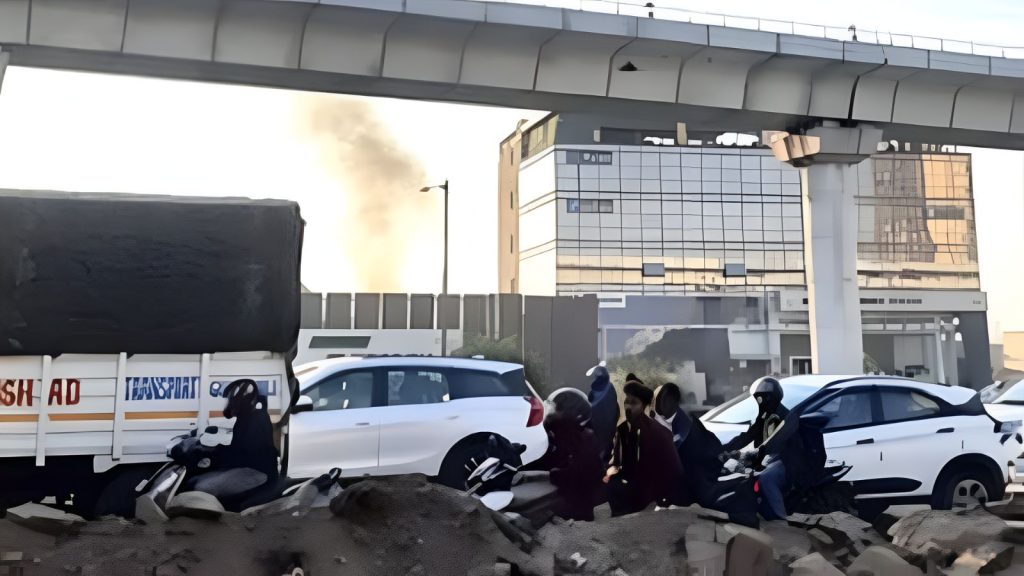
“Pune has become a hotspot of air pollution. Road dust, construction debris, RMC plants, and rampant waste burning are making our homes unsafe,” said Vandana Chaudhary, a Balewadi resident. “The deteriorating AQI is harming children and elders, with chronic respiratory illnesses on the rise.”
After @bwfpune Balewadi’s push, PMC acknowledges #Pune's air pollution urgency & #commits to a scientific roadmap with IITM support for whole Pune. Detailed representation matters. #action #progress@mpcb_official @CPCB_OFFICIAL #cleanair @Warriormomsin https://t.co/U5dfvA7JfS pic.twitter.com/Txb5w587Zx
— Vandana Chaudhary (@vandymini) February 16, 2026
The “Balewadi Roadmap” for Clean Air
The federation has laid out a specific, science-based charter of demands to curb the rising PM2.5 and PM10 levels:
- Real-time Monitoring: Immediate installation of a Continuous Ambient Air Quality Monitoring Station (CAAQMS) in Balewadi to document undocumented pollution spikes.
- Dust Suppression: Mandatory use of sprinklers, misting machines, and wheel-washing facilities at all Metro and large-scale construction sites.
- Construction Barriers: Enforcement of dust-proof enclosures at demolition and renovation sites.
- Green Buffers: Planting of dense hedgerows and native shrubs to act as physical barriers against airborne dust.
- Strict Penalties: Immediate action against open waste burning through empowered ward squads.
PMC and IITM to Form Joint Action Group
The outcry from Balewadi coincides with a high-level workshop on “Urban Environmental Challenges” organized by the PMC Environment Department and the Indian Institute of Tropical Meteorology (IITM).
Acknowledging the severity, the Municipal Commissioner stated that rapid urbanization and traffic congestion have pushed Pune toward an environmental crisis. To combat this, the PMC and IITM have agreed to form a joint working group involving scientists, NGOs, and housing societies.
A scientific action plan is currently being drafted with clear implementation targets set for the next three, six, and twelve months. This plan will focus on data-driven management, electric vehicle promotion, and the rejuvenation of Pune’s natural water bodies and green spaces.
“We need action and not just promises,” remarked a resident. For the citizens of Balewadi, the hope is that this new partnership between the PMC and IITM translates into breathable air rather than just more committees.