Pune is Now the Helicopter Capital of India: Boasts Largest Fleet of Rotary Aircraft and Maximum Kilo Routes, Surpassing Mumbai
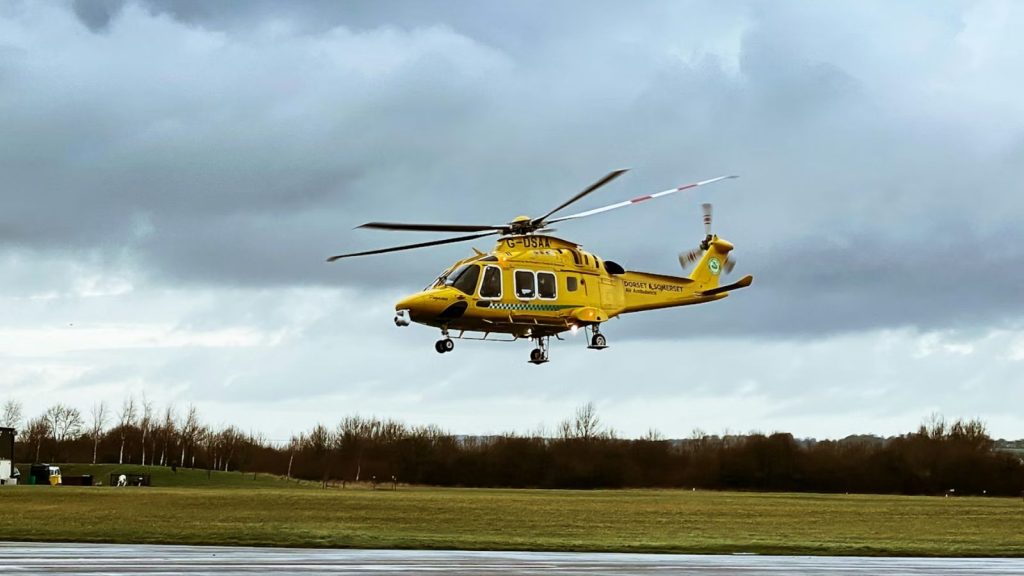
INDIA’S CHOPPER HUB 22 Helis. New K-Routes. Pune Leads | Representative IMage

Pune, February 19, 2026: In a landmark shift for Indian urban air mobility, Pune has officially staked its claim as the Helicopter Capital of India. With a staggering fleet of 22 helicopters now stationed in the city, surpassing even the civilian-available fleet in Mumbai, Pune has transformed into the primary hub for private and commercial rotary-wing operations in the country.

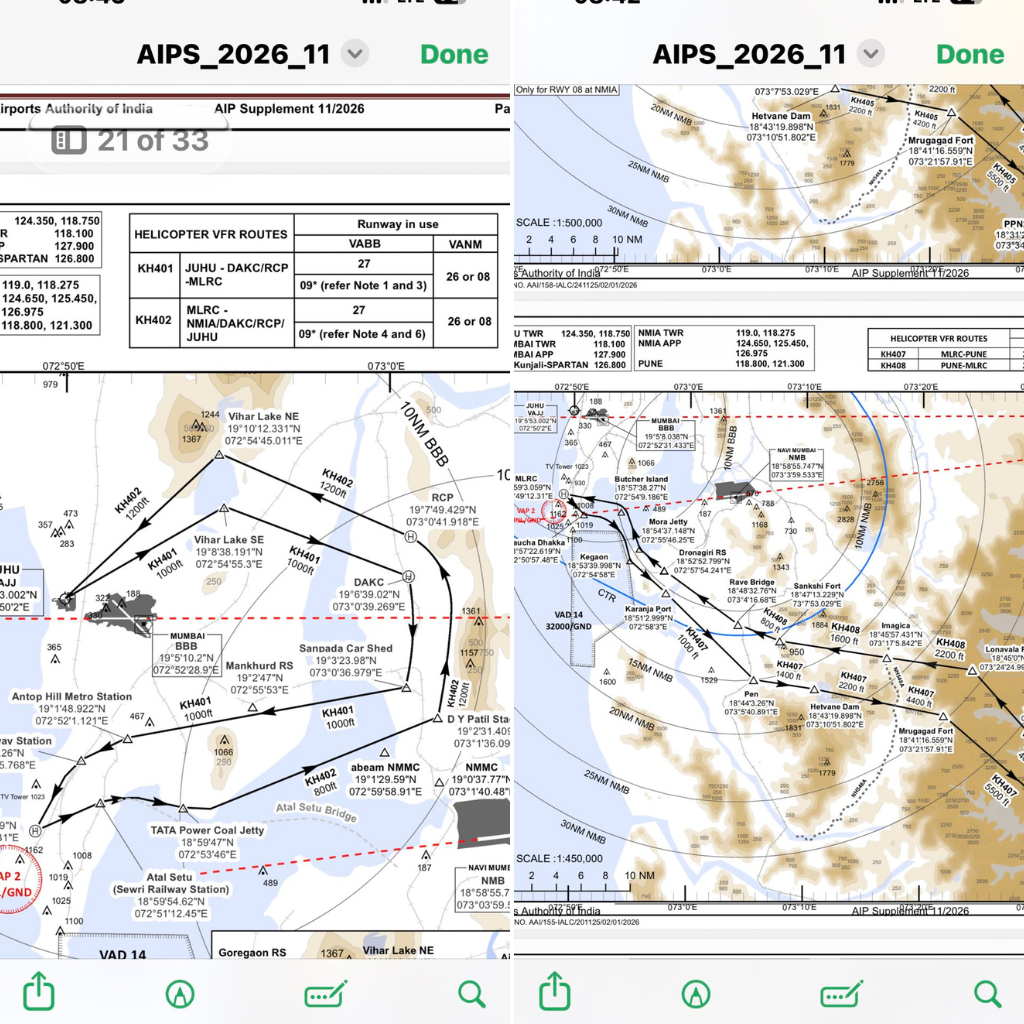
The milestone coincides with the official commencement of the highly anticipated “Kilo routes,” a specialized network of low-altitude flight paths designed to maintain seamless connectivity between Pune and Mumbai. These routes are the culmination of an 18-month strategic collaboration between the Airports Authority of India (AAI) and a core committee of veteran pilots, aimed at resolving the airspace complexities introduced by the newly operational Navi Mumbai International Airport (NMIA).
The Rise of the Helicopter Capital: Why Pune?
While Mumbai historically held the highest number of registered aircraft, the majority of its fleet is dedicated to offshore ONGC operations. Pune, however, has seen a democratized explosion in helicopter usage. From high-net-worth individuals (HNIs) and corporate leaders to a burgeoning market for religious tourism (temple visits) and medical evacuations, the demand in Pune is purely civilian-driven.
“Pune boasts 22 helicopters today and can rightly be called the Helicopter Capital of India,” stated Group Captain Nitin Welde (Retd), an Air Veteran and Presidential Gallantry Award recipient who served as a key consultant for the project. This fleet growth reflects the city’s status as a premier global technology and manufacturing hub that demands high-speed, point-to-point connectivity that road and rail simply cannot match.
Understanding the “Kilo Routes”: Solving the NMIA Crisis
The launch of commercial operations at the Navi Mumbai International Airport in late 2025 initially posed a significant threat to the Mumbai-Pune air corridor. Standard flight paths for helicopters from Juhu and Pune frequently intersected with the landing and take-off funnels of NMIA.
Without a dedicated solution, Air Traffic Control (ATC) instructions would have forced helicopters into holding patterns, adding 10 to 15 minutes of flight time and significantly increasing fuel costs and charter rates.
The Technical Solution
The new Kilo routes (K-routes) act as “dedicated lanes in the sky.” They allow helicopters to fly at specific altitudes and along geographical landmarks, such as the Lonavala railway station, Kharghar, and the Atal Setu corridor, ensuring they remain clear of the heavy commercial jet traffic at NMIA.
The successful implementation of these routes means that a flight from Pune to Mumbai’s Juhu Aerodrome can maintain its efficient 40–45 minute window, bypassing the congestion of one of India’s busiest new airspaces.
18 Months of Collaboration: The Men Behind the Mission
The operationalization of these routes wasn’t an overnight feat. It was the result of a 18-month core committee effort that brought together the technical expertise of the AAI and the practical experience of seasoned pilots.
Group Captain Welde highlighted the “inclusion, dialogue, and collaboration” that defined the process. Key stakeholders included:
- AAI Leadership: Mr. Ajit Verma, Mr. Anand Singh, and Mr. Ashish Rajan, who were instrumental in integrating helicopter needs into the national airspace plan.
- The Pilot Core: A team comprising Capt. Chinmay, Capt. Marathe, Capt. Vijay, and Gp Capt. Welde himself, who provided the ground-level data on operational challenges.
“For me, the best part was the feeling of being heard and acknowledged,” Welde noted. “Our challenges were accepted, and the product thereof can now be replicated in most parts of the country.”
Economic Impact: Beyond Luxury Travel
The “Helicopter Capital” tag isn’t just a vanity title for Pune; it has deep economic implications.
1. Integration with Global Manufacturing
The timing of Pune’s aviation boost aligns with the recent inauguration of the Tata-Airbus H125 Final Assembly Line in India. As India moves toward becoming a global exporter of civil helicopters, cities like Pune serve as the primary “living laboratory” for how these machines can be integrated into daily urban life.
2. Regional Connectivity and Logistics
With FedEx recently breaking ground on a massive cargo hub at NMIA, the ability for Pune-based businesses to transport high-value components or personnel quickly to the Mumbai industrial zone is vital. The Kilo routes ensure that Pune remains “logistically tethered” to Mumbai’s new global gateway without the friction of ground traffic.
Future Outlook: A Blueprint for India
The “Pune Model” of collaboration between stakeholders is being viewed by the Ministry of Civil Aviation as a template for other metropolitan regions. As India’s helicopter industry enters a new phase of growth, the focus is shifting from “sporadic flights” to “scheduled urban mobility.”
The joint effort in the Mumbai-Pune corridor proves that with the right technical understanding and stakeholder alignment, general aviation and major international airports can coexist.
As the first “Kilo routes” flights took to the skies this week, the message from Pune’s aviation community was clear: Safe Flying, Happy Flying, and Happy Kilo Routes.

Vineet Gupta is the Founder and Managing Editor of PuneNow, where he oversees local news delivery and explores mindful living, parenting, and personal growth. An alumnus of the University of Wales, Vineet has travelled extensively and worked across hospitality, finance, and academia. Now based in Pune, his diverse global background informs his hyper-local perspective, helping the community find meaning, balance, and connection in everyday life.