
Pune Breathes Easy: City Ranks Among India’s Cleanest as AQI Drops to Near-Record Lows
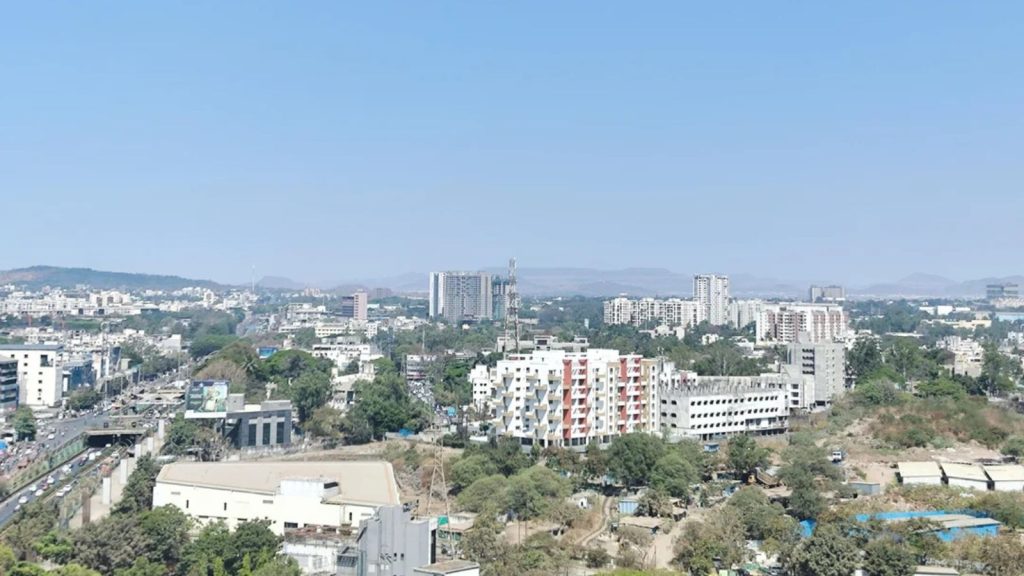

Pune, February 27, 2026: Residents across the city woke up to a rare sight this week: crystal-clear horizons, sharp visibility, and air that actually feels “breathable.” In a surprising turn of events, Pune has climbed the ranks to become one of the cleanest cities in India, despite a lack of recent rainfall and ongoing construction projects.

According to the Air Quality Early Warning and Decision Support System for Pune, a joint project by C-DAC and the Indian Institute of Tropical Meteorology (IITM), the Air Quality Index (AQI) stood at a refreshing 58 as of 8:30 AM on February 27. This puts the city right on the borderline of the ‘Good’ and ‘Satisfactory’ categories.
“4K Visibility” Across the City
The shift hasn’t gone unnoticed by locals. Social media platforms, particularly Reddit, have been buzzing with “weather-watching” enthusiasts. One resident near Chinchwad Chowk noted that mountains usually hidden behind a veil of haze were suddenly visible in “4K clarity,” while others expressed relief at the sudden drop from the stifling triple-digit AQI levels seen just a month ago.
Why the Sudden Change?
While many attribute poor air quality solely to construction dust and vehicle emissions, experts suggest a different driver for this week’s blue skies.
Abhijit Modak, a prominent weather expert, noted that Pune, alongside Mumbai and Thane, recently featured in the top 10 cleanest cities list in India. He emphasizes that “meteorological conditions” are currently doing the heavy lifting.
“This clearly shows how meteorological conditions play a dominant role in air quality,” Modak explained. “Despite intense urbanization, air quality has improved significantly due to stronger winds and better atmospheric mixing caused by an active weather system, which dispersed accumulated pollutants.”
The Science of “Ventilation”
The current phenomenon highlights a crucial scientific reality: emissions are only half the story. When “ventilation” improves, meaning wind speeds pick up and the atmosphere allows for vertical mixing, pollutants are swept away rather than trapped near the ground.
In contrast, several smaller non-metro towns with far less construction are currently appearing on the highly polluted lists because their local weather remains “stable” and “calm,” essentially acting as a lid that traps smog.
For now, Punekars are encouraged to head outdoors and enjoy the rare, crisp February air before the summer heat and typical atmospheric stagnation return.