
India To Launch Vehicle-To-Vehicle Communication Technology to Reduce Accidents: How The System Works
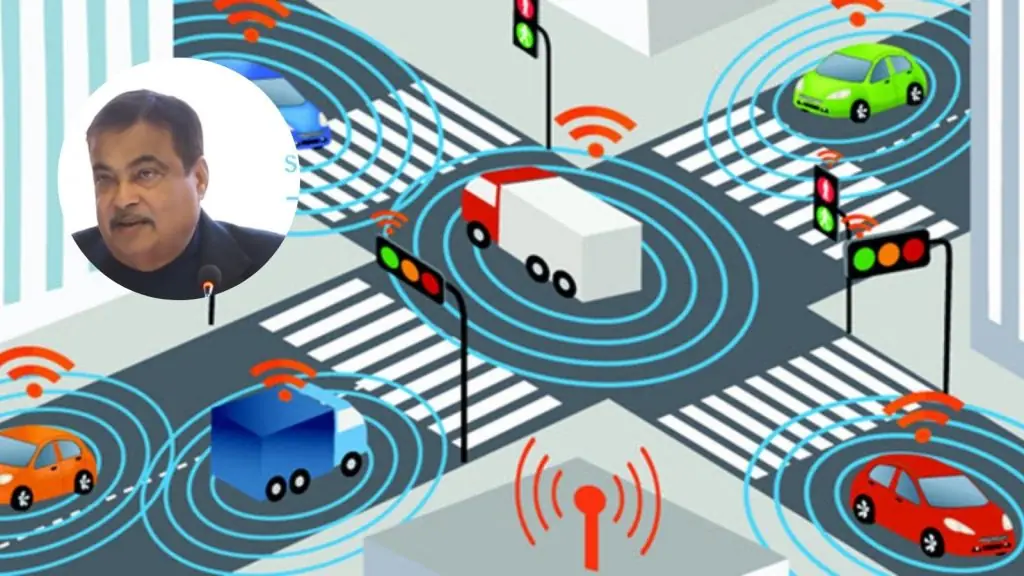

In a revolutionary move to transform road safety, the Government of India is set to implement V2V communication India 2026 standards by the end of next year. Union Minister for Road Transport and Highways, Nitin Gadkari, announced that all new vehicles will soon be equipped with internet-free communication devices designed to prevent collisions and save thousands of lives.

The End of Highway Pileups? How V2V Communication Works in India
The newly proposed vehicle-to-vehicle technology India is a wireless communication framework that allows cars, trucks, and buses to “talk” to each other in real-time. Unlike current connected car features that rely on 4G or 5G mobile networks, this system is entirely internet-free.
The technology uses a dedicated 30 MHz spectrum (5.875–5.905 GHz band) approved by the Department of Telecommunications (DoT). Vehicles will be fitted with an On-Board Unit (OBU), a device similar in size to a SIM card, that transmits signals in a 360-degree radius.
Key Features of the V2V System:
- Fog & Low Visibility Alerts: Prevents multi-vehicle pileups by alerting drivers of stationary vehicles ahead, even when they are invisible to the naked eye.
- Collision Warnings: Provides instant alerts for sudden braking, high-speed approaches at intersections, and blind-spot hazards.
- No Data Required: Operates independently of mobile towers, making it reliable in remote Himalayan passes or rural highways.
Nitin Gadkari V2V Announcement: A “Zero Fatality” Vision
During the Transport Development Council meeting in New Delhi, Gadkari emphasized that the Nitin Gadkari V2V announcement is a cornerstone of the “Zero Fatality Districts” initiative. The government has identified 100 high-accident districts for targeted intervention, aiming to reduce road deaths by 50% by 2030.
“This is a revolutionary measure. For the first time, we are introducing technology that can eliminate nearly 80% of road accidents,” Gadkari stated. He noted that the Ministry (MoRTH) is currently finalizing standards with automobile manufacturers (OEMs).
'Vehicle-to-Vehicle Communication System (V2V)' वाहनों के बीच संवाद स्थापित कर ड्राइवर को सतर्क करेगी।#RoadSafety #SadakSurakshaAbhiyaan #सड़कसुरक्षाअभियान pic.twitter.com/ipM79GTctn
— Nitin Gadkari (@nitin_gadkari) January 9, 2026
V2V Communication Device Cost India: What Owners Need to Know
While the technology will initially be mandatory for all new vehicles manufactured from late 2026, the government is also considering a roadmap for older vehicles.
Expected Pricing and Implementation
| Feature | Details |
| Estimated Cost | ₹5,000 to ₹7,000 per unit |
| Mandatory For | All new vehicles post-2026 rollout |
| Retrofitting | Provisions for older cars expected later |
| Spectrum | 30 MHz (Free of cost for safety) |
The V2V communication device cost India is expected to be borne by the consumer, but the government argues the safety trade-off is invaluable. The ₹5,000-crore project will also see V2V working in tandem with existing Advanced Driver Assistance Systems (ADAS) to provide a multi-layered safety net.
Legislative Overhaul: 61 Amendments to the Motor Vehicles Act
To support this massive tech rollout, the government plans to introduce 61 amendments to the Motor Vehicles Act during the upcoming Budget session. These reforms will not only cover V2V communication India 2026 mandates but also include:
- Standardized safety codes for sleeper coach buses.
- Mandatory fire detection and driver drowsiness alerts.
- A nationwide rollout of the Cashless Treatment Scheme for accident victims.
As India moves toward smarter, connected infrastructure, this V2V rollout marks the country’s transition from passive safety (seatbelts and airbags) to active, predictive safety technology.