Inclusive Climate Action Takes Shape at Mumbai Workshop for Visually Impaired Women
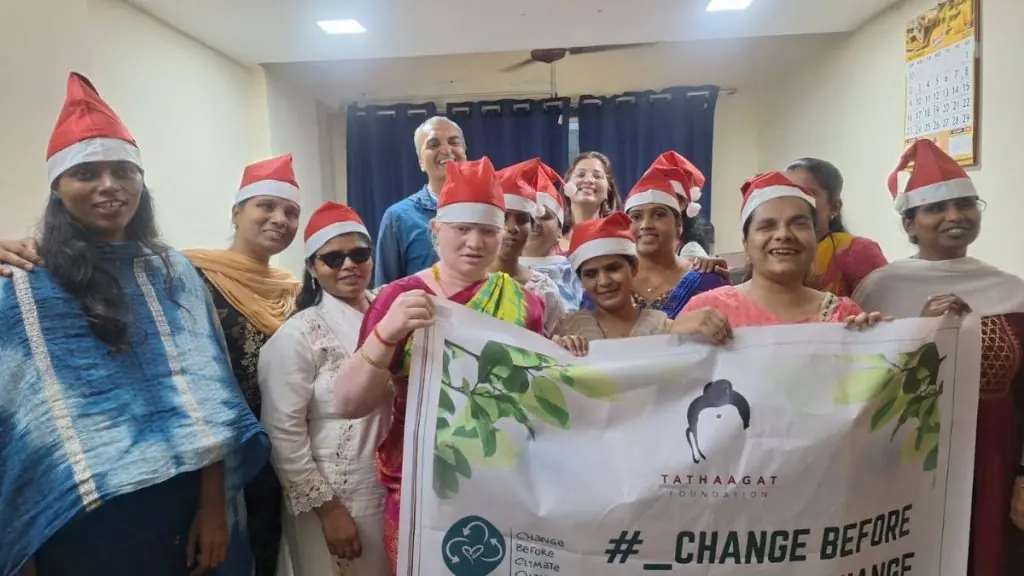

Mumbai: A unique workshop held in Mumbai recently highlighted how climate action, inclusion, and confidence-building can come together to create meaningful social impact.

A three-hour workshop titled “The Power of Touch: Our Personality, Our Radiance, Our Environment” was jointly organised by Thathaagat Foundation and the Blind Persons Association (Mumbai) at the BPA office in Tilak Nagar. The programme brought together 15 visually impaired women, each of whom is independent, economically active, and engaged in education or work.
Participants included women working with Indian Railways, entrepreneurs involved in jewellery and retail businesses, and students pursuing higher education. While all participants were visually impaired, organisers noted that none of them lacked confidence or capability. Instead, discussions revealed a shared concern about navigating interactions in a world largely designed for the sighted.
One question emerged repeatedly during the sessions: “How do we connect better with the sighted world?”
The workshop aimed to address this concern by focusing on practical skills that enhance confidence, communication, and social participation.
Focus on Soft Skills and Personal Development
A significant portion of the workshop was dedicated to soft skills, grooming, and personality development, specially designed for visually impaired participants using touch, sound, and sensory awareness instead of visual cues.
These sessions were conducted by Meghana Jalgaonkar, whose doctoral research focuses on developing training modules for visually impaired individuals. Through hands-on, tactile methods, participants learned fabric identification, clothing care, occasion-appropriate dressing, and simple verbal techniques for colour coordination.
The grooming modules included guided, safe demonstrations on personal care and basic self-makeup, enabling participants to build independence and self-assurance. Communication sessions focused on voice clarity, posture, body language, and confident movement, skills critical for professional and social settings.
Organisers emphasised that the objective was not cosmetic change, but agency, dignity, and confidence, which are essential for meaningful inclusion in education, work, and public life.
Linking Confidence with Climate Responsibility
The workshop also featured a dedicated session on climate awareness led by Jayant Mahajan, founder of the Change Before Climate Change (CBCC) initiative. The session framed climate change as a lived, everyday reality and highlighted the role of individual action in addressing environmental challenges.
Participants discussed practical sustainability measures and collectively committed to adopting the 5 R’s, Refuse, Reduce, Reuse, Repurpose, and Recycle, in their daily lives. Many participants also proposed taking part in tree plantation drives and expressed interest in continued climate-action workshops.
According to organisers, this response demonstrated that when individuals are empowered with confidence and skills, ownership of environmental responsibility follows naturally.
A Call for Inclusive Spaces
Beyond the immediate outcomes, the workshop underscored a broader message: the need for inclusive education systems, workplaces, and social spaces. Despite growing awareness around diversity and inclusion, many environments remain sight-centric, limiting participation not due to lack of ability but due to lack of inclusive design.
From a CSR and ESG perspective, the workshop offered a practical example of how capacity building and inclusion can create sustainable social and environmental impact.
Encouraged by the success of the programme, the organisers plan to conduct similar workshops across schools for the differently abled in Mumbai, with the intention of expanding to other cities in the future.
As the workshop demonstrated, climate action does not require sight, only intent, empathy, confidence, and action.
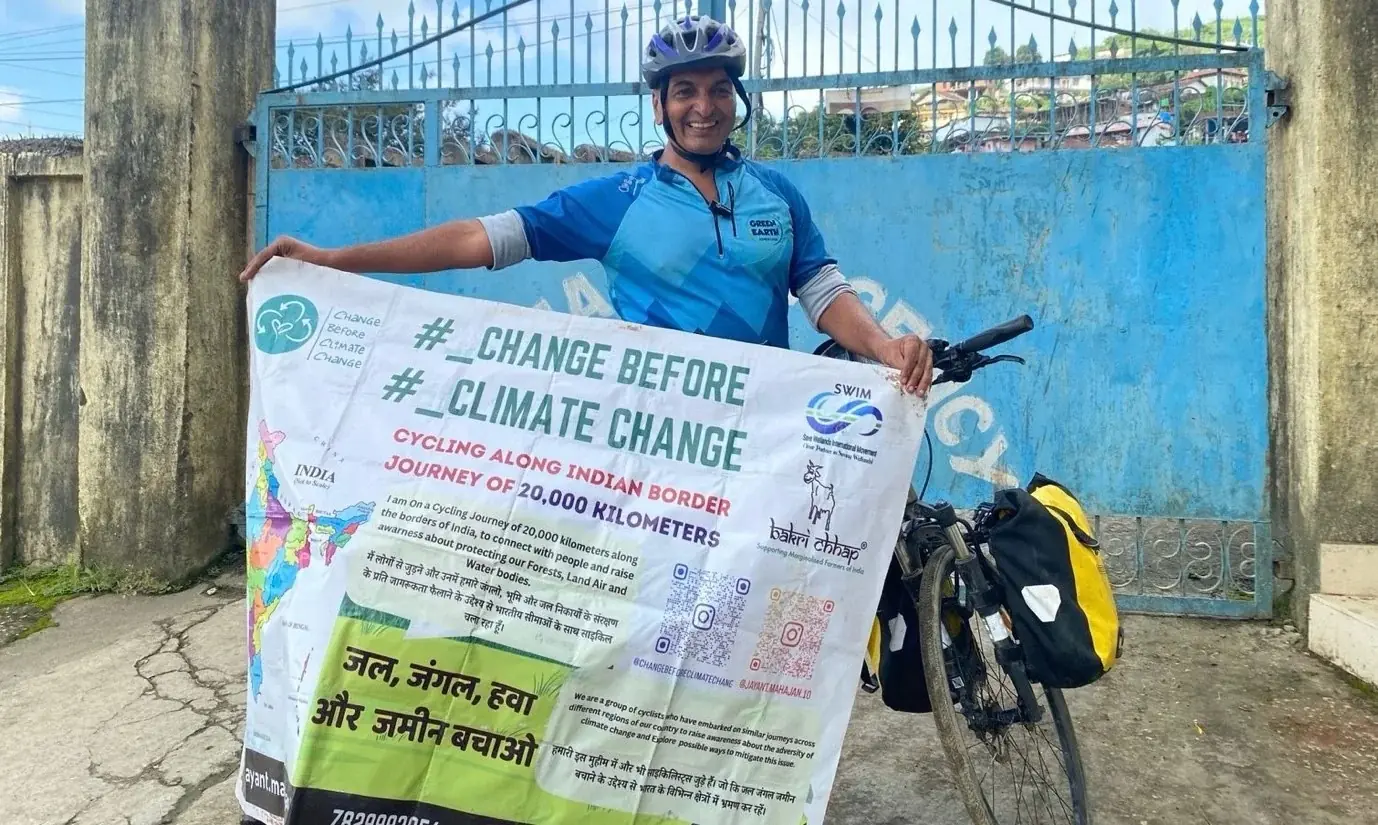
Jayant Mahajan works where Management, technology, and sustainability meet, usually right before things get complicated. With industry experience in business management and digital transformation, he brings real-world messiness into the classroom (on purpose). As an educator, he designs future-ready curricula around data thinking, governance, and ethics, because technology without judgment scales mistakes faster. Through his Change Before Climate Change mission, Jayant helps institutions act early by fixing skills and incentives, so climate action becomes good management, not emergency management. Bridging policy, practice, and purpose, one syllabus at a time.