“Exit India If You Can’t Follow Our Constitution”: Supreme Court’s Ultimatum to Meta in WhatsApp Privacy Case
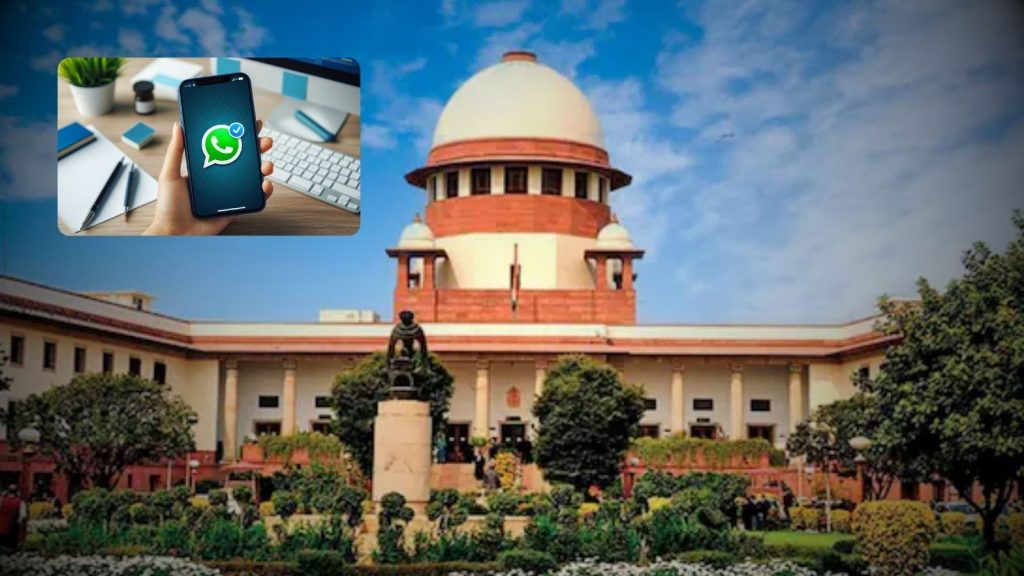

In a landmark confrontation that could redefine the digital landscape of India, the Supreme Court has issued a scathing ultimatum to Meta Platforms Inc.: comply with the Indian Constitution or prepare to exit one of its largest global markets. The court’s intervention marks a critical juncture in the years-long battle over WhatsApp’s 2021 privacy policy, which judicial authorities now describe as a “decent way of committing theft of private information.”
“Theft of Private Information”: CJI Surya Kant Slams Meta
Presiding over a three-judge bench, Chief Justice of India (CJI) Surya Kant did not mince words during the Tuesday hearing. The bench, which also includes Justices Joymalya Bagchi and Vipul Pancholi, was hearing Meta’s appeal against a ₹213.14 crore penalty imposed by the Competition Commission of India (CCI).
The court’s primary grievance lies in the “take-it-or-leave-it” nature of WhatsApp’s 2021 update. The CJI highlighted that the policy effectively coerces users into sharing data for commercial purposes.
“You can’t play with the right of privacy of this country in the name of data sharing. We will not allow you to share a single word of the data… You are making a mockery of the constitutionalism of this country,” the CJI remarked.
The Monopoly Dilemma: Can Indians Truly Opt Out?
A significant portion of the hearing focused on Meta’s claim that users have the “choice” to opt out. The bench rejected this argument, pointing to the platform’s overwhelming market dominance.
The CJI brought a grounded perspective to the legal debate, asking whether a “roadside vendor” or a “domestic help” in rural areas could ever understand the complex legal jargon buried in Meta’s terms of service. The court noted that because WhatsApp has become an essential utility, comparable to a monopoly, users are “addicted” and have no realistic alternative if they disagree with the privacy terms.
The ₹213.14 Crore CCI Penalty and the NCLAT Verdict
The current legal battle stems from a November 2024 order by the Competition Commission of India. The CCI found that WhatsApp abused its dominant position by:
- Forcing mandatory data sharing with Meta subsidiaries (Facebook, Instagram) for advertising.
- Eliminating the opt-out option that was available in previous versions of the policy.
While the National Company Law Appellate Tribunal (NCLAT) previously upheld the financial penalty, it had granted Meta some relief regarding the five-year ban on data sharing. However, the Supreme Court has now signaled it may reinstate even stricter controls to protect Indian sovereignty over user data.
Next Steps: The February 9 Interim Order
The Supreme Court has directed Meta to file a comprehensive affidavit by the end of the week. This document must contain a clear, legally binding undertaking that Meta will not share WhatsApp user data for advertising purposes within India.
Furthermore, the Court has impleaded the Ministry of Electronics and Information Technology (MeitY) as a party to the case to ensure that the final ruling aligns with India’s upcoming data protection framework.
An interim order is expected to be delivered on Monday, February 9, 2026.