DeepSeek V4: 20 Times Cheaper Multimodal AI Challenges OpenAI and Nvidia’s Dominance

March 6, 2026 | 10:30 AM IST
The Chinese AI startup is set to release its first major update in over a year, featuring native image and video generation while strategically pivoting to domestic chips from Huawei, directly challenging the established order of Sam Altman’s OpenAI and Jensen Huang’s Nvidia.
New Delhi, March 6, 2026: The artificial intelligence landscape is bracing for another seismic shift. Hangzhou-based DeepSeek is poised to launch its next-generation flagship model, DeepSeek V4, as early as next week, marking its most significant release since the R1 reasoning model stunned global markets in January 2025 .
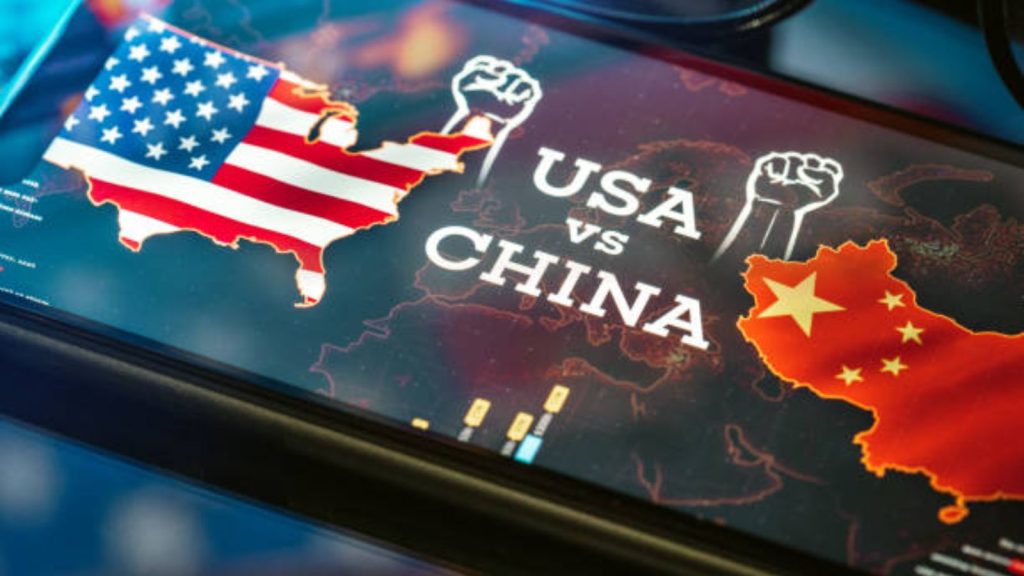
According to multiple media reports and industry analysis, the upcoming V4 is not merely an incremental update. It represents a strategic triple-threat: a leap in multimodal capabilities, a radical reduction in costs, and a geopolitical pivot away from US hardware giants toward a self-sufficient Chinese AI ecosystem .
What is DeepSeek V4? Native Multimodal and Smarter Coding
Unlike its predecessor, which focused primarily on text and reasoning, DeepSeek V4 is being positioned as a native multimodal model. Sources indicate it will natively support the generation of images, video, and text, allowing for complex tasks like video analysis and visual content creation directly from a single model .
This move directly challenges the proprietary offerings from OpenAI (GPT-4 with DALL·E) and Google’s Gemini, but with a distinctly open-source approach. The model is also expected to feature a groundbreaking architecture, potentially based on the “mHC: Manifold Constrained Hyperconnection” framework detailed in a late-2025 paper, which promises to solve issues like catastrophic forgetting in large models .
Furthermore, DeepSeek V4 boasts a context window expanded to 1 million tokens, roughly eight times larger than its previous version. This allows it to process entire books, complex contracts, and massive codebases in a single session with 98.2% accuracy . Industry insiders suggest its programming capabilities have already surpassed those of Anthropic’s Claude and OpenAI’s GPT series in internal benchmarks, a critical advantage in the era of AI-assisted coding .
The ‘Cheaper’ Revolution: 20x Cost Advantage Over OpenAI
The core of DeepSeek’s market disruption has always been cost, and V4 continues this legacy. The “DeepSeek vs ChatGPT cost” comparison is becoming a deciding factor for developers worldwide.
DeepSeek’s economic advantage is rooted in its Mixture-of-Experts (MoE) architecture, which activates only a fraction of its parameters per task, drastically reducing computational load . While training GPT-4 cost an estimated $100 million, DeepSeek has consistently driven training costs down to the low millions.
For end-users and enterprises, this translates to API pricing that is reportedly 20 to 50 times cheaper than OpenAI’s equivalent models . A recent analysis by WaveSpeedAI showed that with features like prompt caching (offering 90% discounts on repeated prefixes) and off-peak usage (up to 75% off), a medium-scale application could run on DeepSeek for roughly $4.20 per month, compared to significantly higher bills on proprietary Western platforms . As one developer noted, the low cost turns AI from a “watched meter” into a forgettable utility .
The Hardware War: DeepSeek and Huawei Challenge Nvidia
Perhaps the most significant strategic shift in the V4 rollout is on the hardware front. In a move described as a “technology equalization” strategy, DeepSeek has reportedly denied early access to its V4 model to US chip giants Nvidia and AMD .
Instead, the company has prioritized collaboration with domestic Chinese manufacturers, working closely with Huawei and Cambricon to optimize V4 for their Ascend and MLU-series chips . This breaks the long-standing industry惯例 (convention) where major model launches are synchronized with Nvidia for maximum performance.
This pivot is a direct response to US export controls aimed at curbing China’s access to advanced semiconductors like Nvidia’s H100 and Blackwell. While a Reuters report cited a US official claiming DeepSeek may have used Blackwell chips for training, a potential violation of US rules, the company’s public-facing strategy is now firmly rooted in building a “Chinese chips + Chinese model” closed loop .
The implications for Nvidia are profound. While the company still dominates the training market, DeepSeek’s shift could accelerate the move of inference workloads, the process of running trained models, toward domestic alternatives in China, potentially eroding Nvidia’s market share in the world’s second-largest economy .
Open Source as a Geopolitical Tool
DeepSeek’s open-source ethos is also reshaping the global AI race. According to analysis in the Chinese Academy of Sciences journal, DeepSeek’s model of “compensating for hardware with software” and its comprehensive open-source strategy is turning large models from proprietary assets into a public resource .
This has ignited a global shift. Reports indicate that Chinese developers now account for the majority of new open-model downloads, with an estimated 80% of new AI startups building on Chinese open-source stacks . As US players scramble to respond through architectural transparency, DeepSeek V4’s launch next week is poised to further solidify China’s role not just as a participant, but as a leader in defining the future of accessible, cost-effective AI .

Dr. Anshul Saxena is an educator, researcher, and consultant who writes on business, technology trends, and applied artificial intelligence. He explains how new digital tools are changing strategy, operations, and decision-making in organisations. His research focuses on practical and responsible AI adoption, including analytics, automation, and agent-based systems, with attention to governance, risk, and measurable impact. As a consultant and trainer, he works with academic and industry stakeholders to design learning frameworks and translate complex ideas into clear, usable guidance. His writing connects evidence from research with real business needs, helping readers understand what is changing, why it matters, and how to respond effectively.