What the Black Box Reveals: The Final Moments of Ajit Pawar’s Fatal Baramati Flight
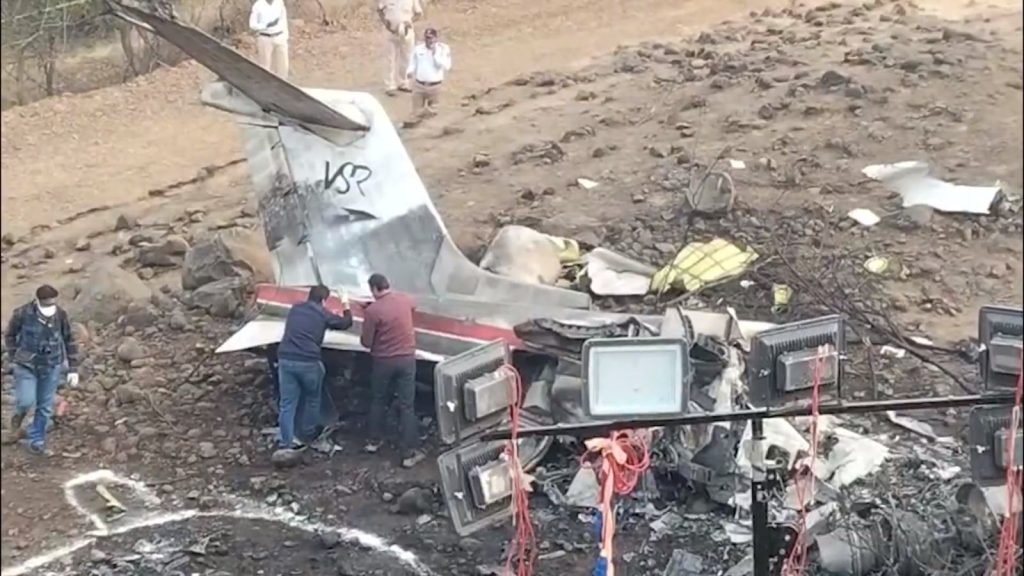

A shocking crash at Baramati claimed the life of Maharashtra’s Deputy CM Ajit Pawar and four others. Beyond the tragedy, the incident raises urgent questions about aviation safety, pilot decision-making, and systemic preparedness in India’s regional airports.
On January 28, 2026, the skies over Baramati turned into the stage of a national tragedy. A routine flight carrying Maharashtra’s Deputy Chief Minister Ajit Pawar ended in disaster when the Bombardier Learjet 45 crashed during its second landing attempt, killing all five onboard. The incident has not only shaken the political landscape of Maharashtra but also reignited urgent questions about aviation safety, infrastructure readiness, and the protocols that govern India’s skies.
Why This Crash Matters Beyond Politics
Plane crashes involving high-profile leaders are rare, but when they occur, they expose vulnerabilities that affect every passenger who boards an aircraft. This was not just a political tragedy; it was a stark reminder that aviation safety is a shared concern. For readers across India, the Baramati crash is more than breaking news, it is a case study in how systems respond when the unthinkable happens.
Unanswered Questions in the Final Minutes
Eyewitnesses reported that the aircraft aborted its first landing attempt before circling back for a second. Communication reportedly ceased minutes before the crash, leaving investigators to piece together what went wrong. Was it a technical malfunction? A pilot miscalculation? Or a systemic gap in airport preparedness? These questions are not just speculative, they are central to understanding how India can prevent future tragedies.
A Transparent, Time-Bound Investigation
The Ministry of Civil Aviation confirmed that the black box, the cockpit voice recorder and flight data recorder, has been recovered. This device will provide critical insights into the final moments of the flight. A team of three officers from the Aircraft Accident Investigation Bureau (AAIB) in Delhi and three from the Directorate General of Civil Aviation (DGCA) in Mumbai reached the site within hours. The Director General of AAIB himself arrived the same day, underscoring the seriousness of the probe. The Ministry has assured that the investigation will be conducted under Rules 5 and 11 of the AAIB Rules, 2025, with strict adherence to Standard Operating Procedures (SOPs).
Why This Analysis Matters
Unlike surface-level reporting, this post aims to go deeper. Drawing on official statements, aviation protocols, and comparative case studies, we will analyze:
- The timeline of the crash and its immediate aftermath.
- The role of the black box in uncovering the truth.
- The frameworks guiding India’s aviation investigations.
- Possible causes under scrutiny, from technical failures to systemic gaps.
- Lessons for aviation safety and infrastructure in India.
By combining factual reporting with analytical depth, this article positions itself as more than news, it is a resource for readers who want to understand the why behind the headlines.
For readers across India, this post offers clarity in the midst of speculation. It explains not just what happened, but what it means for aviation safety, governance, and public trust. Whether you are a concerned citizen, an aviation enthusiast, or someone following Maharashtra’s political developments, this analysis will help you see the bigger picture.
Section 1: The Crash Timeline and Immediate Response
The Flight That Ended in Tragedy
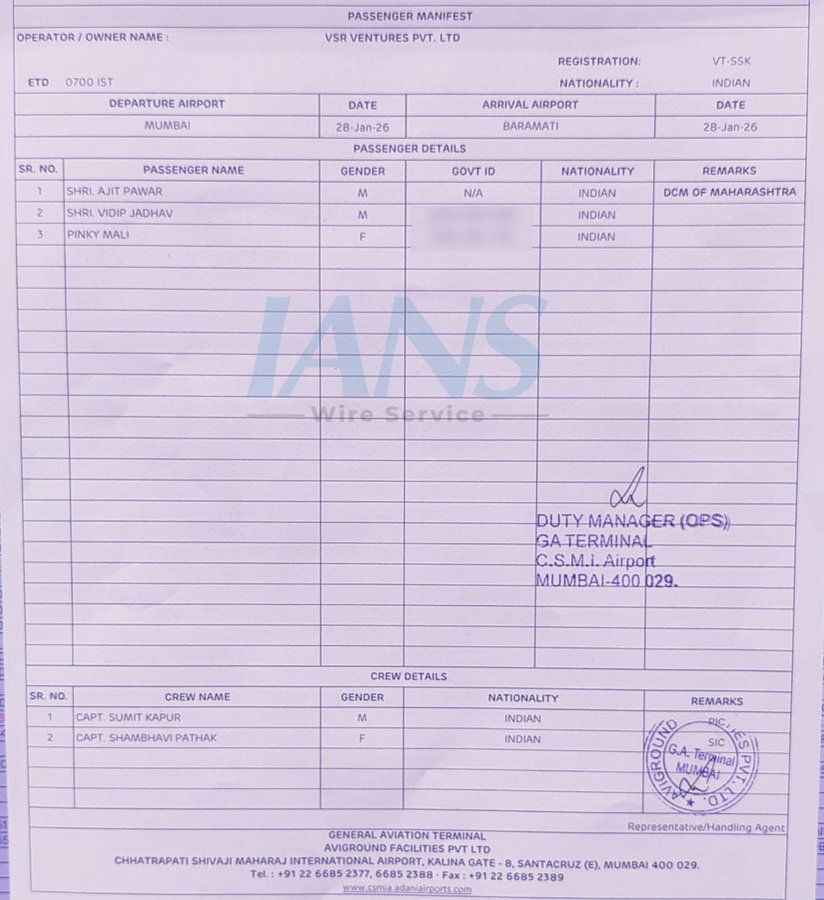
On the morning of January 28, 2026, a Bombardier Learjet 45 carrying Maharashtra’s Deputy Chief Minister Ajit Pawar departed for Baramati airport. The aircraft, registered as VT-SSK, was a familiar sight in political and administrative circles, often used for short-haul VIP travel. Onboard were five individuals: Ajit Pawar himself, a personal security officer, an attendant, and two crew members including the pilot.
The flight appeared routine until its final approach. Witnesses and preliminary reports confirm that the jet attempted to land once but aborted the maneuver. Aborted landings are not uncommon in aviation, they can occur due to runway obstructions, unstable approaches, or technical alerts. However, what followed was catastrophic. On the second attempt, the aircraft lost control, struck the runway, and burst into flames. Communication with air traffic control reportedly ceased minutes before impact, leaving investigators with a narrow window of uncertainty that only the black box can clarify.
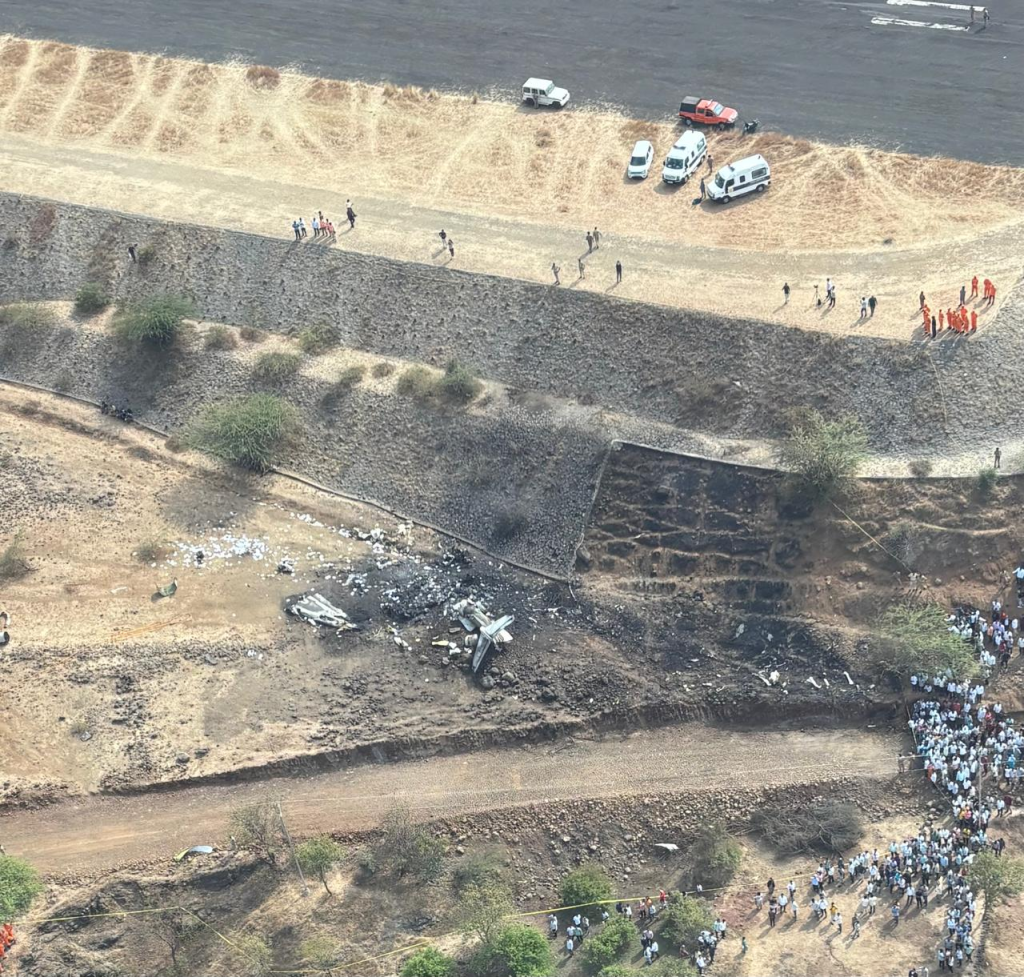
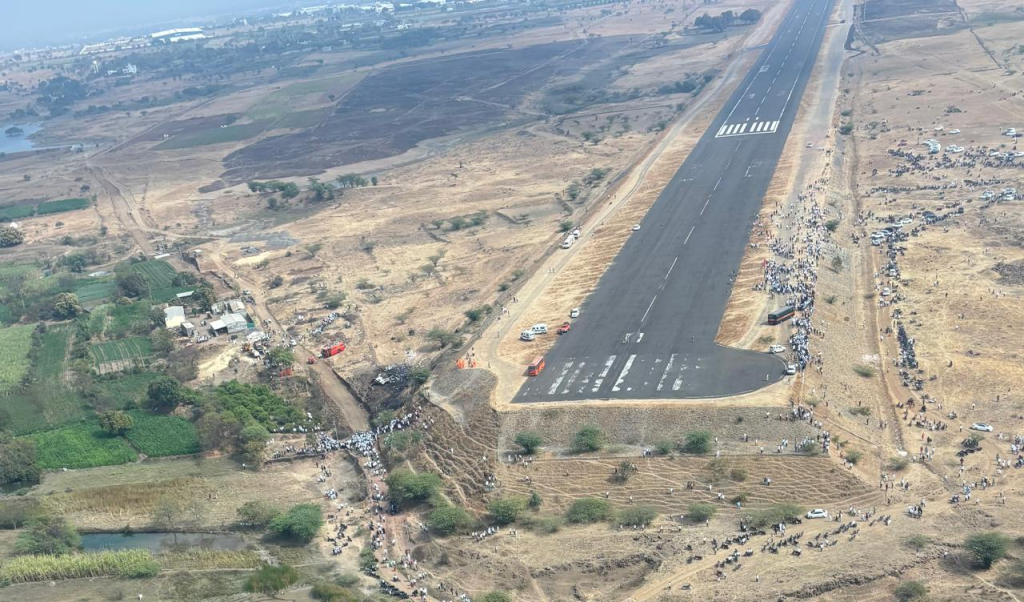
The DGCA press note confirms that the Learjet 45 aircraft (VT-SSK), operated by M/s VSR Ventures Pvt Ltd, crashed at Baramati Airport on January 28, 2026, during a flight from Mumbai with five occupants, including Maharashtra Deputy CM Ajit Pawar. The aircraft attempted a landing in visual conditions but aborted the first approach due to poor runway visibility. On the second attempt, it reported the runway in sight but failed to read back landing clearance before crashing near Runway 11 at 08:44 IST. Emergency services responded immediately. The DGCA and AAIB teams were deployed the same day, and the black box was recovered for investigation under AAIB Rules, 2025.
Eyewitness Accounts
Local residents and airport staff described the jet descending unusually before the crash. Some reported hearing a loud mechanical noise, while others saw the aircraft veer slightly before impact. Within seconds, flames engulfed the fuselage, making survival impossible. Rescue teams stationed at Baramati rushed to the site, but despite rapid intervention, all five occupants were declared dead.
CCTV cameras on the flight path recorded the plane flipped suddenly and violently during its approach and eventually crashed near the runway threshold, immediately turning into a fireball.
The CCTV footage of the Learjet 45XR aircraft (VT-SSK) that crashed near Baramati airport of Maharashtra of India this morning (at around 8:45 am).#aircraft #safety #aviation https://t.co/laoDnYOBIy pic.twitter.com/UVpWkEstMb
— FL360aero (@fl360aero) January 28, 2026
Emergency Response
The Ministry of Civil Aviation confirmed that “all requisite response and investigative mechanisms were activated immediately.” Fire brigades, medical teams, and airport security worked in coordination to contain the blaze and secure the crash site. The Indian Air Force (IAF) later deployed an ATC and weather support team to Baramati airport, underscoring the seriousness of the incident and the need for enhanced monitoring at regional airports.
Black Box Recovery
One of the most critical developments in the immediate aftermath was the recovery of the aircraft’s black box. The Civil Aviation Ministry announced that both the cockpit voice recorder (CVR) and flight data recorder (FDR) were retrieved intact. These devices are essential for reconstructing the final minutes of the flight, capturing pilot communications, technical readings, and system alerts. Their analysis will provide investigators with a factual basis to determine whether the crash was caused by mechanical failure, human error, or external conditions.
Investigative Teams on Site
Within hours of the crash, a team of three officers from the Aircraft Accident Investigation Bureau (AAIB) in Delhi and three from the Directorate General of Civil Aviation (DGCA) in Mumbai arrived at Baramati. The Director General of AAIB himself reached the site the same day, signaling the gravity of the probe. The investigation is being conducted under Rules 5 and 11 of the AAIB Rules, 2025, ensuring adherence to established Standard Operating Procedures (SOPs). The Ministry has emphasized that the inquiry will be “thorough, transparent, and time-bound.”
The black box of the ill-fated aircraft, which resulted in the death of #Maharashtra's Deputy CM #AjitPawar and 4 others onboard in Baramati, has been recovered: Civil Aviation Ministry
— All India Radio News (@airnewsalerts) January 29, 2026
Ministry says all requisite response and investigative mechanisms were activated immediately… https://t.co/8E63xLvz0c pic.twitter.com/gkkBmtq7I8
Political Shockwaves
The death of Ajit Pawar sent immediate ripples across Maharashtra’s political landscape. As Deputy Chief Minister and a key figure in state governance, his sudden loss created both emotional and administrative upheaval. Leaders across party lines expressed grief, while the state government announced a funeral with full honours. For citizens, the tragedy was not only a political loss but also a reminder of the fragility of life and the importance of aviation safety.
Section 2: Investigation Framework and Possible Causes
The Machinery of Aviation Investigations in India
When an aircraft accident occurs in India, the Aircraft Accident Investigation Bureau (AAIB) takes the lead, supported by the Directorate General of Civil Aviation (DGCA). In the Baramati crash, both agencies mobilized immediately. A team of three AAIB officers from Delhi and three DGCA officers from Mumbai reached the site on January 28, the very day of the accident. The Director General of AAIB himself arrived, underscoring the gravity of the probe.
The Ministry of Civil Aviation (MoCA) confirmed that the investigation is being conducted under Rules 5 and 11 of the AAIB Rules, 2025, which mandate a transparent, time-bound inquiry. These rules ensure that every step, from evidence collection to final reporting, follows strict Standard Operating Procedures (SOPs). This framework is designed to eliminate speculation and provide factual clarity.
Black Box: The Silent Witness
The recovery of the black box, comprising the Cockpit Voice Recorder (CVR) and Flight Data Recorder (FDR), is pivotal. The CVR will reveal pilot communications, tone, and decision-making in the final minutes, while the FDR will provide technical data such as altitude, speed, engine performance, and system alerts. Together, these devices act as the silent witnesses of the crash, offering investigators a precise reconstruction of events.
For the Baramati crash, the black box is expected to answer critical questions:
- Why was the first landing aborted?
- Did the aircraft experience a technical malfunction during descent?
- Were there warnings or alerts ignored or misinterpreted?
- Did external factors like runway conditions or weather play a role?
Possible Causes Under Scrutiny
While the investigation is ongoing, aviation experts highlight several potential causes:
- Technical or Mechanical Failure The Learjet 45 is generally considered reliable, but like any aircraft, it is vulnerable to system failures. Issues with hydraulics, landing gear, or engine performance could explain the aborted first landing and subsequent crash. Investigators will examine maintenance records and recent inspections.
- Pilot Error or Decision-Making Aborted landings are standard safety maneuvers, but the decision to attempt a second landing raises questions. Was the approach unstable? Did the pilot misjudge runway conditions? The CVR will shed light on whether the crew faced confusion or unavoidable circumstances.
- Weather and Runway Conditions Early reports suggest clear weather, but microclimatic conditions or runway surface issues cannot be ruled out. The Indian Air Force’s deployment of an ATC and weather support team at Baramati airport highlights the importance of monitoring localized conditions. Investigators will analyze meteorological data and runway maintenance logs.
- Systemic Gaps in Regional Airport Preparedness Baramati airport, like many regional hubs, may lack the advanced infrastructure of metropolitan airports. Limited ATC resources, absence of advanced landing aids, or inadequate emergency preparedness could have compounded the situation. This angle shifts the focus from individual error to systemic shortcomings.
- Some experts are also blaming Baramati’s table-top runway as a contributing factor in the crash. Table top runways around the world are tricky to land, especially in adverse weather conditions and reduced visibility. Planes of Air India Express have crashed twice (Mangalore Calicut) on such runways.
Comparative Case Studies
Globally, similar crashes have often revealed a combination of factors rather than a single cause. For instance:
- In some Learjet incidents abroad, technical malfunctions were exacerbated by pilot stress during landing.
- In others, inadequate runway infrastructure contributed to accidents despite clear weather.
The Baramati crash will likely follow this pattern, a convergence of technical, human, and systemic elements.
Why This Investigation Matters
For India’s aviation ecosystem, the Baramati crash is a wake-up call. It underscores the need for:
- Enhanced monitoring at regional airports through ATC and weather support.
- Rigorous maintenance protocols for smaller jets often used in VIP travel.
- Transparent communication from MoCA and AAIB to maintain public trust.
Section 3: Objection Handling and Advanced Insights
Addressing Common Misconceptions
Whenever a high-profile plane crash occurs, speculation spreads quickly. In the case of the Baramati crash, several misconceptions have already surfaced:
- “The black box will immediately reveal the cause.” In reality, analyzing black box data is a complex process. Investigators must decode, synchronize, and interpret thousands of data points. While the recovery is crucial, conclusions often take weeks or months.
- “Clear weather means pilot error.” Weather is only one factor in aviation safety. Even in clear conditions, technical malfunctions, runway issues, or systemic gaps can lead to accidents. The presence of clear skies does not automatically shift blame to the crew.
- “VIP flights are always safer.” While VIP flights often receive priority clearance, they are not immune to technical failures or infrastructure limitations. Smaller jets like the Learjet 45 rely heavily on regional airport preparedness, which can vary significantly.
Objections and Concerns
Readers may raise valid concerns about aviation safety in India, especially at regional airports. Common objections include:
- “India’s aviation infrastructure is not equipped for smaller airports.” While it is true that regional airports often lack advanced landing aids, the deployment of the Indian Air Force’s ATC and weather support team at Baramati shows that corrective measures can be taken swiftly. The challenge lies in making such support permanent rather than reactive.
- “Investigations are slow and politically influenced.” The Ministry of Civil Aviation has emphasized that the Baramati crash investigation will be conducted under strict SOPs and AAIB Rules, 2025. Transparency and adherence to timelines are being prioritized to counter this perception.
Advanced Aviation Safety Strategies
To move beyond speculation and strengthen systemic safety, experts highlight several advanced strategies:
- Enhanced ATC and Weather Monitoring at Regional Airports Deploying permanent ATC and meteorological support teams at smaller airports can reduce risks. Real-time weather data and advanced landing guidance systems are critical for safe operations.
- Rigorous Maintenance Protocols for Smaller Jets Aircraft like the Learjet 45 require specialized maintenance. Ensuring that VIP and charter operators adhere to strict inspection schedules can prevent technical failures.
- Crew Training for Aborted Landings and Emergency Scenarios While pilots are trained for go-arounds, continuous simulation-based training can improve decision-making under stress. This is especially important for smaller jets operating in less-equipped airports.
- Systemic Transparency in Investigations Publishing interim reports and updates can build public trust. In global aviation practice, transparency is key to preventing misinformation and restoring confidence.
- Policy Reforms for Regional Aviation Safety The Baramati crash highlights the need for policy-level reforms. Mandating advanced infrastructure at regional airports, integrating IAF support where necessary, and enforcing stricter compliance for charter operators could be long-term solutions.
Competitive Advantages of Transparent Inquiry
India’s aviation sector can turn this tragedy into an opportunity for reform. By conducting a transparent, time-bound investigation and implementing systemic improvements, the country can strengthen its reputation for safety. This not only reassures domestic passengers but also enhances India’s standing in global aviation networks.
Frequently Asked Questions about the Baramati Plane Crash
Q1: What does the black box reveal in a plane crash investigation? A: The black box, which includes the Cockpit Voice Recorder (CVR) and Flight Data Recorder (FDR), captures pilot conversations, technical readings, and system alerts. Together, they provide investigators with a detailed reconstruction of the flight’s final moments.
Q2: Was weather a factor in the Baramati plane crash? A: Early reports suggest clear weather conditions at Baramati airport. Investigators are focusing instead on technical malfunctions, pilot decisions, and runway preparedness, though localized microclimatic factors are still being reviewed.
Q3: How does the Aircraft Accident Investigation Bureau (AAIB) investigate crashes in India? A: The AAIB follows strict Standard Operating Procedures under Rules 5 and 11 of the AAIB Rules, 2025. Investigations include site inspections, black box analysis, maintenance record checks, and interim reports, ensuring transparency and accountability.
Q4: How safe are Learjet 45 aircraft compared to other jets? A: The Learjet 45 is generally considered reliable, with a strong safety record globally. However, like all aircraft, it requires rigorous maintenance and is sensitive to runway infrastructure and weather conditions, especially at smaller airports.
Q5: What happens after a plane crash investigation in India? A: After analysis, the AAIB publishes a final report detailing causes and recommendations. These findings often lead to safety reforms, infrastructure upgrades, and stricter compliance requirements for operators.
Q6: Why was Ajit Pawar’s flight using a smaller jet like the Learjet 45? A: Smaller jets such as the Learjet 45 are commonly used for VIP and short-haul travel due to their speed and efficiency. However, they rely heavily on regional airport infrastructure, which can vary in preparedness.
Q7: How long will the Baramati crash investigation take? A: While timelines vary, the Ministry of Civil Aviation has assured a time-bound inquiry. Typically, interim findings are released within weeks, with final reports taking several months depending on complexity.
Conclusion: Lessons from Baramati’s Tragedy
The Baramati plane crash that claimed the life of Maharashtra’s Deputy Chief Minister Ajit Pawar and four others is more than a tragic headline, it is a defining moment for India’s aviation safety narrative. The sequence of events, from the aborted first landing to the fiery crash, underscores how quickly routine flights can turn catastrophic. Yet, the immediate recovery of the black box and the swift mobilization of AAIB and DGCA teams demonstrate that India’s investigative machinery is capable of responding with urgency and precision.
Key Takeaways
- Black Box Recovery: The CVR and FDR will provide factual clarity, cutting through speculation and revealing the truth about the final minutes.
- Investigation Framework: Conducted under AAIB Rules, 2025, the probe promises transparency and adherence to global aviation standards.
- Systemic Lessons: Regional airports must be equipped with advanced ATC and weather monitoring systems to prevent similar tragedies.
- Public Trust: Transparent communication from MoCA and AAIB is essential to reassure citizens that safety reforms will follow.
Beyond the Headlines
For readers across India, this crash is not just about one leader’s untimely death. It is a reminder that aviation safety affects everyone, from VIPs to everyday passengers. Each investigation, each reform, and each lesson learned contributes to building a safer future for India’s skies.
Call-to-Action
As the investigation unfolds, staying informed is critical. By following updates, engaging with analytical reporting, and demanding accountability, readers can play a role in ensuring that tragedies like Baramati lead to meaningful change.
For PuneNow readers, this means:
- Following ongoing coverage of the AAIB and DGCA findings.
- Engaging with expert analysis that goes beyond surface-level reporting.
- Supporting conversations around aviation safety reforms in India.
The Baramati crash will be remembered as a moment of loss, but it must also serve as a catalyst for reform. By learning from this tragedy, India can strengthen its aviation systems and honour the lives lost by ensuring safer skies for all.
Inside the Baramati Tragedy: Full Coverage by PuneNow
- Ajit Pawar Dies in Baramati Plane Crash: Full Timeline, Legacy, and Maharashtra State Mourning Updates
- Who was Captain Shambhavi Pathak? Life and Career of the Young Pilot Who Died in Ajit Pawar’s Baramati Plane Crash
- Ajit Pawar Funeral Details: Who are the Other Victims of Baramati Learjet 45? DGCA Releases Sequence of Events Leading to Crash
- IAF Deploys ATC and Weather Support Team at Baramati Airport After Fatal Plane Crash
- Ajit Pawar Funeral: Baramati Bids Emotional Farewell to ‘Ajit Dada’ as Supporter’s Viral Video Captures Public Grief
- Sons Parth and Jay Pawar Light the Pyre as Grieving Baramati Weeps in Farewell to Ajit Pawar