Bangladesh PM to Visit India: Can Modi and Rahman Undo the Damage and Rebuild Trust?
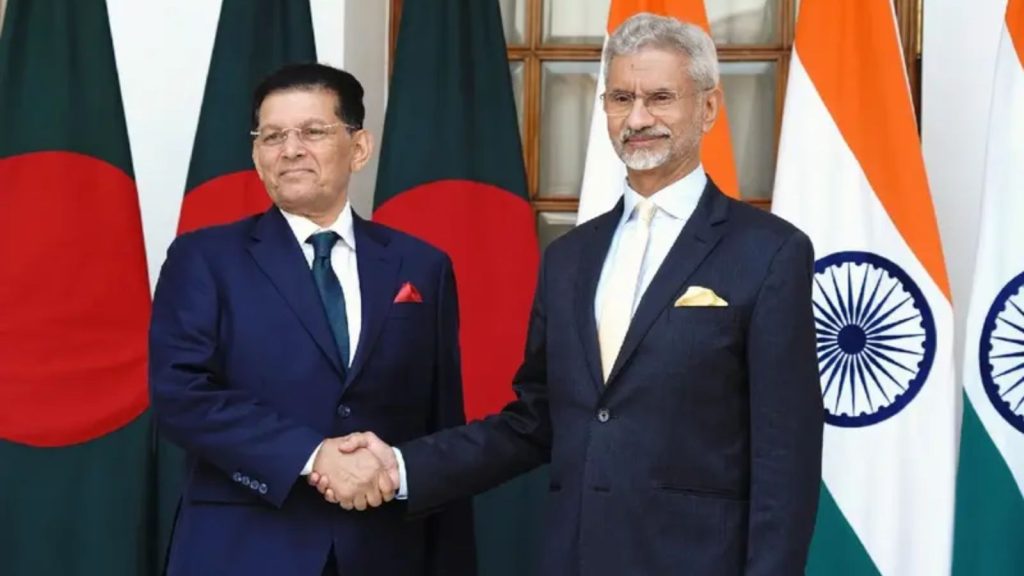
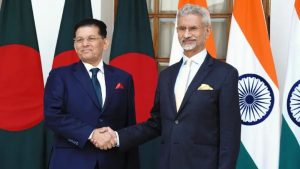
External Affairs Minister, Dr. S. Jaishankar met with Foreign Minister of Bangladesh, Dr. Khalilur Rahman in New Delhi. Photograph: (X)

While the geopolitical ‘experts’ were busy drafting an obituary for Indo-Bangladesh relations, they missed the most obvious law of the Subcontinent: Geography always outlasts grievance.

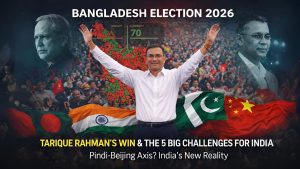
When the dust settled on the 2026 Bangladesh elections, the narrative was as predictable as it was grim: Tarique Rahman would inevitably pivot Dhaka toward Islamabad and Beijing, leaving New Delhi out in the cold. The rhetoric was high, the emotions were volatile, and the shadow of the Yunus interim administration loomed large.
But as I argued in my earlier article during the height of the election heat, diplomacy is rarely dictated by the ghosts of the past. It is driven by the cold, hard realities of the present. Today, as Bangladesh’s Foreign Minister Dr. Khalilur Rahman concludes a “fruitful” three-day visit to New Delhi and signals an upcoming state visit for Prime Minister Tarique Rahman, my prediction of a “thaw” is no longer a contrarian theory, it is a headline.
The Rationality of Realpolitik
India and Bangladesh are now once again walking paths that converge into a common trajectory, one that both can tread side by side, benefiting their people and the world. But what exactly prompted the Rahman government to take a U-turn on the Yunus approach and work to mend these frayed relations?
The answer lies in the indisputable realities of the region.For any popular and democratically elected leader, especially of a country that has been through bloodshed, uncertainty, and turmoil, the immediate priority is to stabilize conditions, reverse the damage, and reopen the path to peace and prosperity. It is in the best interest of the new leader because a stable country ensures the continuity of the regime and fewer headaches for the top boss.
Aligning with India does just that. A strong neighbor, over seven decades of mutual trust and cooperation, and a shared destiny locked by geography are too fundamental to ignore. In this context, Rahman is doing exactly what a sensible, educated, and rational leader should do.
Moving Beyond the Yunus Interregnum
The period following August 2024 was arguably the most precarious for the Dhaka-Delhi axis in decades. Under Muhammad Yunus, the interim government’s stance was perceived as increasingly critical of India, flirting with a realignment that seemed to favor China and Pakistan. For two years, the connectivity, trade, and water-sharing talks that form the bedrock of this relationship were effectively on ice.
However, the transition from an interim setup to a mandate-backed government under Tarique Rahman in February has shifted the calculus. The “personal rapport” being cited between PM Rahman and PM Narendra Modi suggests that both leaders recognize a fundamental truth: Bangladesh and India are geographically and economically locked in a destiny that neither can afford to ignore.
The Pragmatic Pivot
Foreign Minister Khalilur Rahman’s recent meetings with S. Jaishankar have paved the way for progress on four critical pillars: trade, connectivity, water sharing, and visa services. These aren’t just diplomatic talking points; they are the lifeblood of the Bangladeshi economy and India’s “Neighborhood First” policy.
The speculation that Tarique Rahman would sit “in the lap of China” ignored the pragmatic needs of a developing nation. While China remains a vital infrastructure partner, India is Bangladesh’s gateway to regional stability and a primary trading partner. By exchanging letters and initiating high-level visits within months of taking office, the Rahman administration is signaling that it prefers a policy of “sovereign balance” over “antagonistic alignment.”
Bangladesh PM to Visit India
The upcoming visit of Prime Minister Tarique Rahman to New Delhi will be more than just a diplomatic formality; it will be a recalibration. We are witnessing the easing of a strain that many thought was permanent.
The critics who feared a permanent drift toward Pakistan have been met with a reality where Dhaka and Delhi are actively working to restore ties. As I maintained months ago, the shared history and mutual economic stakes between these two nations are far heavier than the political rhetoric of an election cycle. The thaw is here, and for the stability of South Asia, it has arrived not a moment too soon.