Bangladesh Election 2026: Tarique Rahman’s Landslide Victory – Opportunity or Doom for India–Bangladesh Relations?
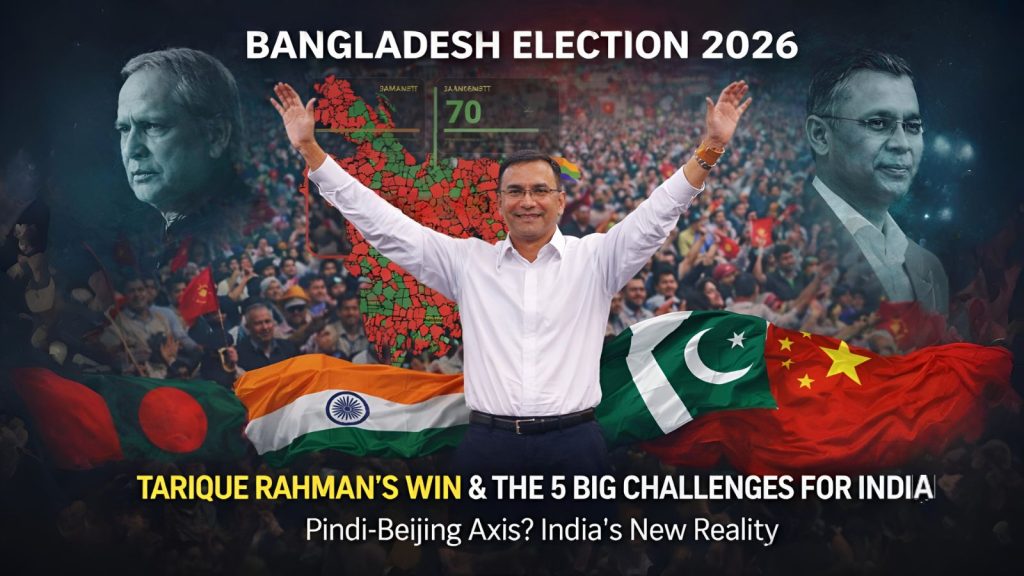

The political map of South Asia shifted fundamentally on February 12, 2026. As the final ballots were tallied in Dhaka, the message was deafening: a landslide victory for the Bangladesh Nationalist Party (BNP) and its chairman, Tarique Rahman.
In this article, I discuss how the leadership change in Bangladesh is going to impact India-Bangladesh relations and 5 challenges India could face with the new and permanent regime for the next 5 years.
For nearly two decades, India’s “Neighborhood First” policy relied on the predictability of Sheikh Hasina. Today, that “Golden Chapter” has closed. With the BNP securing a commanding two-thirds majority (over 200 seats) and the Islamist Jamaat-e-Islami emerging as a formidable second power with 60+ seats, New Delhi faces its most complex diplomatic challenge in a generation.
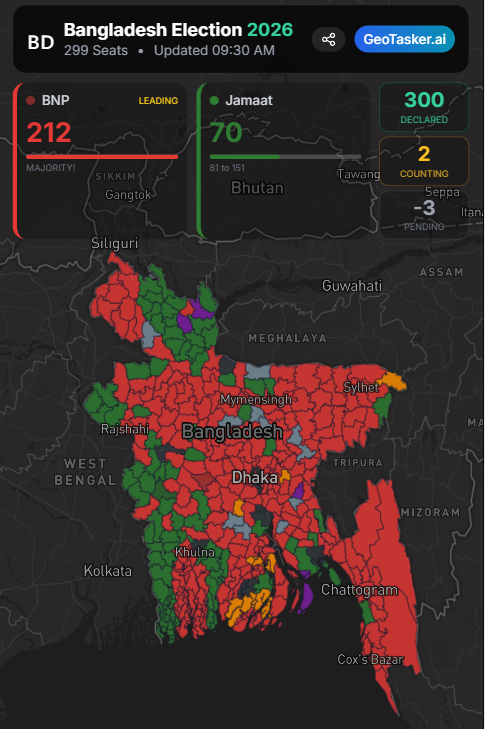
At a Glance: Why This Result Matters for India
The transition from a pro-India monolith to a nationalist-Islamist coalition resets the bilateral clock. Here is the immediate impact:
- The “Pindi-Beijing” Pivot: Expect a shift away from New Delhi toward a “Bangladesh First” doctrine, likely seeking deeper Chinese investment and a “thaw” in ties with Pakistan.
- The Hasina Dilemma: Sheikh Hasina, currently in an Indian “safe house,” faces a death sentence at home. Dhaka’s certain extradition request puts India in a legal and moral vice.
- Security in the Northeast: The “Chicken’s Neck” (Siliguri Corridor) is a concern. While Rahman promises “no anti-India activity,” the rise of Jamaat-e-Islami creates fears of renewed insurgent safe havens.
- Minority Safety: With an empowered Islamist bloc in the parliament, New Delhi is watching the safety of Bangladesh’s Hindu minorities closely, as any unrest there triggers political ripples in West Bengal and Assam.
- Transactional Ties: The relationship will move from “familial” to “transactional.” Essential projects like the ‘Maitri’ energy links will likely continue, but new deals will face much tougher negotiations.
Tarique 2.0: Statesman or Shadow Prince?
Tarique Rahman, 60, returned from 17 years of London exile with a rebranded image. His campaign focused on “clean politics” and a 10-year term limit for Prime Ministers to prevent future autocracy.+1
While he has traded his past fiery rhetoric for a softer tone—pledging that “religion is individual, but the state belongs to everyone”—Indian analysts remain cautious. Can a leader who was once a bitter rival truly build a partnership with the country that currently shelters his predecessor?
Myth-Busting: Is This a Win for Pakistan?
A common fear in India is that a BNP win is an automatic win for Islamabad. The Reality: In 2026, Bangladesh is an economic powerhouse with a $450 billion GDP. While Rahman may seek better ties with Pakistan (evidenced by recent JF-17 jet talks), he cannot afford to alienate India, his largest source of electricity and trade. It is less about being “pro-Pakistan” and more about being “equidistant” from regional powers.
The “Chicken’s Neck” & National Security
The Siliguri Corridor remains India’s strategic “Achilles’ heel.” Under Hasina, anti-India groups were dismantled. The concern now is whether a BNP-Jamaat dominated landscape will provide these elements breathing room.
However, Rahman knows that to fix the economy, he needs Indian transit routes. New Delhi’s swift congratulatory message from PM Modi today signals a “Realpolitik” shift: India is ready to work with the mandate, regardless of the man.
Frequently Asked Questions about India-Bangladesh Relations 2026
Frequently Asked Questions about India-Bangladesh Relations 2026
Q1: Will Sheikh Hasina be extradited back to Bangladesh?
Answer: This remains the biggest question in bilateral ties. Following her death sentence in absentia in late 2025, the new BNP government is expected to formally seek extradition. India faces a sensitive situation between honouring the bilateral treaty and the moral implications of handing over a long-term ally. A prolonged legal process in Indian courts is likely.
Q2: How will this affect the safety of Hindu minorities in Bangladesh?
Answer: Tarique Rahman has publicly stated that religion is a personal matter and the state belongs to everyone, assuring protection for all communities. However, with Jamaat-e-Islami emerging as a strong parliamentary force, New Delhi remains concerned and is expected to use diplomatic channels to ensure minority safety.
Q3: Will the ‘Maitri’ train and energy projects continue?
Answer: Most signs suggest continuity. Bangladesh is facing an energy shortage, and halting Indian electricity imports or rail connectivity would be politically risky for a new government promising stability and growth. Cooperation in infrastructure and power is expected to continue.
Q4: Is the Siliguri Corridor (“Chicken’s Neck”) under threat?
Answer: Security around the corridor is currently at one of its highest levels in recent years. While earlier periods saw insurgent concerns, Indian forces have upgraded border management significantly. Rahman has indicated he will not permit anti-India activity from Bangladeshi soil, but India is maintaining a cautious approach.
Q5: Can Indians still get visas to visit Bangladesh?
Answer: Visa services were disrupted during the unrest in late 2025. With the new government focusing on stability, visa operations are expected to gradually normalise by mid-2026 to support trade and family visits. However, security checks are likely to remain tighter than before.
Q1: Will Sheikh Hasina be extradited back to Bangladesh? A: This is the $64,000 question. Following her death sentence in absentia in late 2025, the new BNP government is expected to formalize an extradition request. India faces a dilemma: honoring the bilateral treaty versus the “moral hazard” of handing over a long-term ally. Expect a long, drawn-out legal process in Indian courts.
Q2: How will this affect the safety of Hindu minorities in Bangladesh? A: Tarique Rahman has publicly pledged that “religion is individual, but the state belongs to everyone,” promising a safe haven for all. However, with the rise of the Jamaat-e-Islami as a major parliamentary force, New Delhi remains “gravely concerned” and will likely use diplomatic leverage to ensure the protection of minorities.
Q3: Will the ‘Maitri’ train and energy projects continue? A: Most likely, yes. Bangladesh is currently facing an energy crunch. Stopping Indian electricity imports or rail connectivity would be political suicide for a new government promising “clean politics and prosperity.”
Q4: Is the Siliguri Corridor (“Chicken’s Neck”) under threat? A: Security at the corridor is at its highest level in years. While the BNP-Jamaat era of 2001-2006 saw insurgent activity, the Indian Army and BSF have significantly modernized their border management. Rahman has signaled he will not allow “anti-India activity” on his soil, but New Delhi is adopting a “trust but verify” stance.
Q5: Can Indians still get visas to visit Bangladesh? A: Following the unrest in late 2025, visa services were erratic. With the new government seeking stability, visa operations are expected to normalize by mid-2026 to encourage trade and family travel, though security screening will be more stringent.
Conclusion: The Road Ahead
The “Hasina Era” was defined by a personal bond between leaders. The “Rahman Era” will be defined by cold, hard interests. For India, the task is no longer about supporting a specific party, but about engaging with the democratic will of 170 million neighbors.
What do you think? Is India’s “Neighborhood First” policy due for an overhaul, or is this just a temporary bump in a long-term friendship?
Stay tuned to PuneNow for more live analysis as the new Cabinet in Dhaka takes shape.
Vineet Gupta is the Founder and Managing Editor of PuneNow, where he oversees local news delivery and explores mindful living, parenting, and personal growth. An alumnus of the University of Wales, Vineet has travelled extensively and worked across hospitality, finance, and academia. Now based in Pune, his diverse global background informs his hyper-local perspective, helping the community find meaning, balance, and connection in everyday life.