ARAI Launches India’s First ADAS Test City in Pune to Conduct ADAS Testing Under Indian Driving Conditions
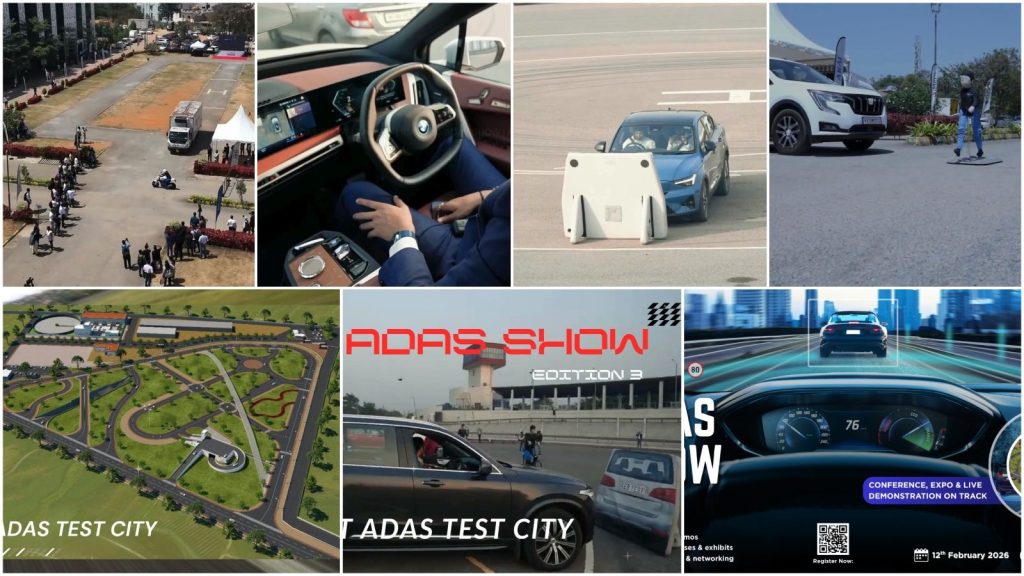

In a major step towards safer and smarter roads, the Automotive Research Association of India (ARAI) has unveiled India’s first dedicated ADAS Test City, marking a significant milestone for advanced vehicle safety testing under real Indian driving conditions.
Located at ARAI’s Mobility Research Centre in Takwe near Talegaon, Pune, the new facility is designed to test and validate Advanced Driver Assistance Systems (ADAS) in a controlled yet realistic environment that closely mirrors Indian road and traffic conditions.
India’s First Dedicated ADAS Test City
The newly launched ADAS Test City spans around 20 acres and replicates a pseudo-urban road network tailored to Indian driving realities. Unlike conventional test tracks that often simulate European or US conditions, this facility focuses on the complexity of Indian roads, including varied traffic density, unpredictable movement patterns, and mixed road users.
The initiative aims to strengthen ADAS testing in India by enabling automakers, technology providers, and original equipment manufacturers (OEMs) to validate safety technologies before deploying them on Indian roads.
ARAI has formally commenced ADAS testing under Indian driving conditions at the facility, making it the country’s first structured ecosystem dedicated exclusively to such validation.
Why ADAS Testing Under Indian Conditions Matters
Advanced Driver Assistance Systems are becoming increasingly common in modern vehicles. Features such as adaptive cruise control, automatic emergency braking, lane departure warning, blind spot detection, pedestrian detection, traffic sign recognition, driver monitoring systems, and automatic parking assist are now being offered even in mid-range vehicles in India.
However, Indian traffic conditions differ significantly from global markets. Roads are shared by cars, two-wheelers, auto-rickshaws, buses, trucks, pedestrians, stray animals, and cyclists. Lane discipline can vary, signage quality is inconsistent in some regions, and road infrastructure differs across cities and rural areas.
Testing ADAS systems in such an environment is critical to ensure that these technologies function reliably in real-world scenarios.
The ARAI ADAS Test City bridges the gap between simulation-based validation and on-road performance. It provides a structured space where ADAS features can be evaluated in complex, Indian-style traffic situations without compromising safety.
🚗 Big boost for road safety in India!
— PuneNow (@itspunenow) February 13, 2026
ARAI has launched 🇮🇳 India’s first dedicated ADAS Test City in Pune to conduct real-world ADAS testing under Indian driving conditions.
From automatic emergency braking to lane assist and smart navigation 🛣️⚙️, vehicles will now be… pic.twitter.com/BXZr0TVxVH
Key ADAS Features Being Tested
The facility supports validation of a wide range of advanced driver assistance technologies, including:
Collision Avoidance Systems
Automatic Emergency Braking (AEB)
Forward Collision Warning
Lane and Highway Assist Systems
Lane Departure Warning
Lane Keep Assist
Traffic Jam Assist
Adaptive Cruise Control
Detection and Monitoring Systems
Blind Spot Detection
Pedestrian Detection
Driver Monitoring Systems
Night Vision Assistance
Smart Navigation and Parking
Traffic Sign Recognition
Automatic Parking Systems
By enabling comprehensive ADAS validation in India, the test city is expected to improve the reliability and responsiveness of these systems in dense urban environments.
Boost to Road Safety and Smart Mobility
India continues to face a high number of road accidents annually. Policymakers, regulators, and the automotive industry have increasingly emphasised the role of safety technologies in reducing fatalities and serious injuries.
The launch of India’s first ADAS testing facility aligns with broader road safety and smart mobility goals. By allowing manufacturers to refine ADAS safety tech in India before market launch, the facility could significantly enhance vehicle safety standards.
Smart mobility in India depends not only on electrification and connectivity but also on automation and driver assistance technologies. The ARAI ADAS Test City strengthens the country’s readiness for future mobility solutions, including higher levels of vehicle automation.
Industry Participation and Technology Partnerships
The facility has also become a platform for collaboration between automotive manufacturers and global technology providers.
Industry players such as Mobileye and HERE Technologies have participated in events and demonstrations linked to the ADAS ecosystem at the site. HERE Technologies has been named the official navigation partner for the ADAS Test City, highlighting the importance of precise digital mapping and localisation data in ADAS validation.
Such partnerships are expected to support indigenous ADAS solutions in India while integrating global best practices in mapping, sensor fusion, and perception technologies.
Enabling OEMs and Startups
Beyond established automakers, the ADAS Test City offers opportunities for Indian startups, component manufacturers, and technology developers working on sensor systems, radar, camera-based perception, artificial intelligence, and vehicle software.
With structured ADAS testing in India now available domestically, companies may reduce dependency on overseas validation facilities. This could lower costs, shorten development cycles, and accelerate the rollout of advanced safety features in Indian vehicles.
For OEMs, the ability to validate ADAS features in conditions that closely resemble Indian roads improves product reliability and consumer confidence.
Strategic Importance for Pune and Maharashtra
The establishment of the ADAS Test City near Pune reinforces the region’s position as one of India’s leading automotive and research hubs. Pune already hosts major automotive manufacturers, R&D centres, and engineering institutions.
By launching India’s first dedicated ADAS Test City in Pune, ARAI has added another layer to the city’s mobility innovation ecosystem.
The facility is expected to attract increased industry engagement, technical events, and collaborative research projects in advanced vehicle safety systems.
The Road Ahead for ADAS in India
As ADAS features become more accessible across vehicle segments, regulatory frameworks may also evolve to encourage or mandate certain safety technologies. A structured validation platform like the ARAI ADAS Test City could support policy decisions by providing tested, data-backed insights into system performance.
In the long term, widespread and reliable ADAS deployment can play a crucial role in reducing accidents caused by human error. While these systems do not replace drivers, they act as critical support layers that enhance situational awareness and response time.
The commencement of ADAS testing under Indian driving conditions marks a shift from technology adoption to technology adaptation. It signals that India is not just importing advanced safety systems but is building the infrastructure needed to refine and validate them locally.
With India’s first ADAS Test City now operational, the country has taken a concrete step towards safer roads, smarter vehicles, and a future-ready mobility ecosystem.