From Thecha to Gochujang: How Pune Made Korea Its Own
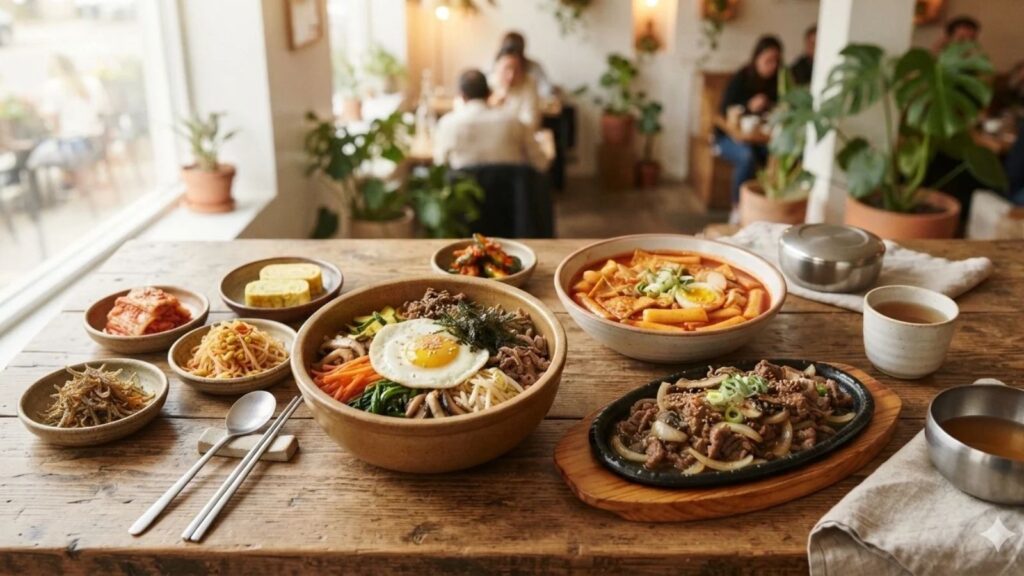
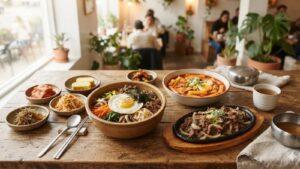
From sizzling bibimbap and kimchi to spicy tteokbokki, Korean comfort dishes are finding a loyal fan base across Pune’s neighborhoods. (Photo: AI-generated illustration / Courtesy: Aryan Sharma)

It started with K-dramas. Now it is in our food, our face wash, and our Sunday plans.

By Aryan Sharma | Pune
Walk into a Korean restaurant in Aundh on a Sunday afternoon and you will see the new Pune at one table. A family trying kimchi for the first time. Friends splitting a sizzling bibimbap. A student filming tteokbokki for Instagram.
A few years ago, Korea in Pune meant a K-drama recommendation or a BTS song stuck in your head. Today, you can taste it, wear it, and pose with it.
For most Punekars, Korea arrived on a plate. Restaurants like K Restaurant in Aundh, Gangnam Kitchen in Balewadi, and Seoul Bunsik in Viman Nagar made it familiar.
It works here because it feels both new and comforting. Gochujang brings the same slow heat we love in a thecha. Bibimbap is basically a colourful, crunchy khichdi in a hot stone bowl. Korean BBQ is built for sharing, which is exactly how Pune likes to eat.
What started as curiosity has become habit. One Sunday it is Korean fried chicken. The next, it is a hunt for gochujang paste at a Korean store in Koregaon Park or Pimpri, where the auntie at the counter now knows why you are buying three packets of ramen.
After food came beauty. Walk through Phoenix Marketcity or a store on FC Road and you will see it: sheet masks, serums, cushion foundations. The fashion followed too: oversized shirts, pleated skirts, clean sneakers — in colleges in Viman Nagar, cafes in Baner, and offices in Hinjewadi.

Ask anyone why the dramas stuck and they will not say production quality. They will say, it felt like us. Family pressure, office politics, unspoken crushes, food as love, mothers who know everything.
And it is not one-way. You see Korean families at the next table, for whom Pune is not exotic. It is home, office, school runs, and weekend misal pav.
So, is this just a phase? Probably not. This has stuck because it fits daily life: a lunch, a serum, a word, a song, a Sunday plan.
We added Korean fried chicken to our menu, but we still want our vada pav. We learned to say saranghae, but we still say kai, bhari! with more feeling.
That is the real story. The Korean wave in Pune is not a flood. It is a few small, happy currents. And Pune, being Pune, is happily swimming in all of them.
Author Bio
Aryan Sharma is a Pune-based writer covering urban culture, food trends, and everyday city life.