Pune Air Quality Dipped After Monsoon Withdrawal
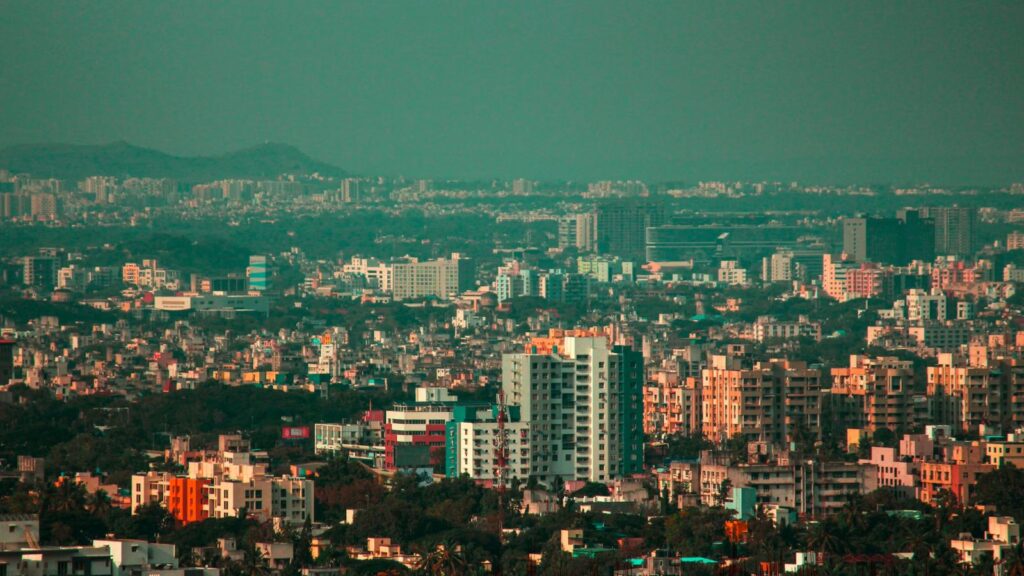

Pune’s Air Quality Index (AQI) stood at 130 on October 26, 2026, as the city continued to record moderate air pollution levels on most days this month. The AQI was updated at 11.01 am, with pollution levels remaining above 100 on all but three days in October.

According to data from the Central government’s Sameer app, Pune’s AQI peaked at 141 on October 22 before standing at 130 on October 25. The AQI fell below 100 only on October 4, 5 and 6. In early October, the Central Pollution Control Board (CPCB) recorded 24-hour average AQI readings of 107 on October 1, 112 on October 2 and 110 on October 3.
Air quality had been better in late September, when the AQI remained in the satisfactory category between September 22 and 26, ranging from 62 to 88. It briefly entered the good category at 50 on September 27 before rising again over the following three days.
Area-wise readings showed significant differences across Pune. Revenue Colony in Shivajinagar recorded the city’s highest late-October AQI at 149, while Katraj registered 91, falling in the satisfactory category. Earlier in October, Dhankawadi recorded an AQI of 146, followed by Revenue Colony at 144. Other readings included 108 at Savitribai Phule Pune University, 104 at Panchawati-Pashan, 97 at Hadapsar and 76 at Katraj Dairy.
In the Pimpri-Chinchwad region, the average AQI stood at 142, while Bhosari recorded the highest pollution level in the industrial city at 158.
As of 11.01 am on October 26, Pune’s PM2.5 concentration stood at 47 micrograms per cubic metre, while PM10 was recorded at 57 micrograms per cubic metre. The city ranked 168th among the most polluted cities globally at the time of the update.
Dry weather, road and construction dust, vehicular emissions and weak winds are among the factors associated with the rise in pollution levels. The absence of rain reduces the atmosphere’s natural cleansing effect, while dry surfaces allow dust from roads, unpaved areas and construction sites to become airborne. Weak winds and seasonal atmospheric conditions can also limit the dispersion of pollutants near the ground.