Pune Water Storage: As Monsoon Prepares to Leave, How Much Water is Available in City’s Reservoirs?
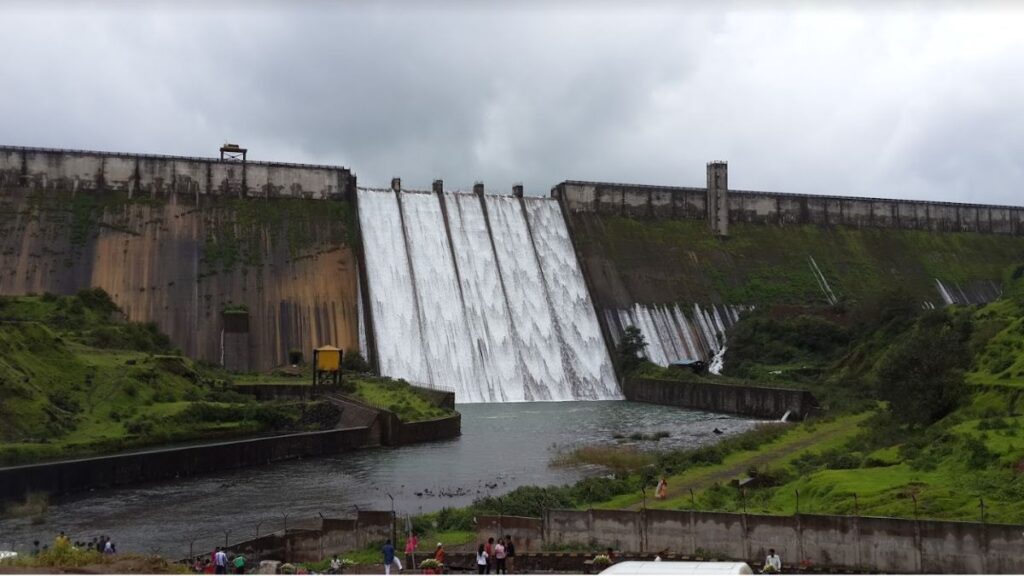

Pune: As the monsoon begins its return journey from the Indian subcontinent and is set to bid adieu to Maharashtra in the coming days, Pune enters the post-monsoon period with healthy water storage in most of its important dams. Pawana, Panshet, Warasgaon and Temghar are at 100% live storage, while Mulshi Tata is at 98.19% as of September 22.

Khadakwasla is the exception, with live storage at 51.99%. The dam currently holds 29.07 million cubic metres (Mcum) of water against its designed live storage of 55.91 Mcum. On the same date last year, Khadakwasla was at 97.87%.
Panshet has 301.61 Mcum, Warasgaon 363.13 Mcum and Temghar 105.01 Mcum, putting all three at 100% of their designed live storage. Pawana is also full with 240.97 Mcum.
Mulshi Tata currently holds 513.30 Mcum against its designed live storage of 522.76 Mcum, or 98.19%. It was at 100% on the same date last year.
Pawana, Panshet, Warasgaon and Temghar were also at 100% on September 22 last year.
It may be noted that Pawana dam waters are used by Pimpri Chinchwad Municipal Corporation through Pawana River.
Khadakwasla, Panshet, Warasgaon and Temghar, together form the Khadakwasla dam chain that supplies water to Mutha River that is utilized by Pune Municipal Corporation.
Mulshi Tata dam feeds the Mula River that flows through Pune. Large townships on the banks of this river in the Hinjawadi IT Park are dependent on this river’s water.
Maharashtra’s overall storage lower than last year
The picture across Maharashtra is different. The state’s 3,032 projects together have 31,054.88 Mcum of live water storage, or 76.09% of their designed capacity. On the same date last year, storage stood at 88.01%.
The difference is visible across all three categories of water projects. The state’s 138 major projects are at 85.33%, compared with 96.38% last year. The 264 medium projects have 64.68% storage against 77.93% last year, while 2,630 minor projects are at 42.75%, compared with 57.59% a year ago.
There are also large differences between regions.
The Kokan revenue region has the highest storage at 91.88%, compared with 93.62% last year. Pune region is at 88.21%, against 92.71% last year, while Nashik stands at 83.02%, close to last year’s 83.92%.
Storage is lower in Nagpur at 72.43%, compared with 86.29% last year, and Amravati at 64.40%, against 84.70%.
Chhatrapati Sambhajinagar has the lowest storage among the six revenue regions at 45.86%. The region had 81.63% storage on the same date last year, a difference of 35.77 percentage points.
All information based on data from water storage reports of Water Resources Department, Government of Maharashtra.