Driving Through a Tunnel? This Common Habit Could Put Everyone at Risk
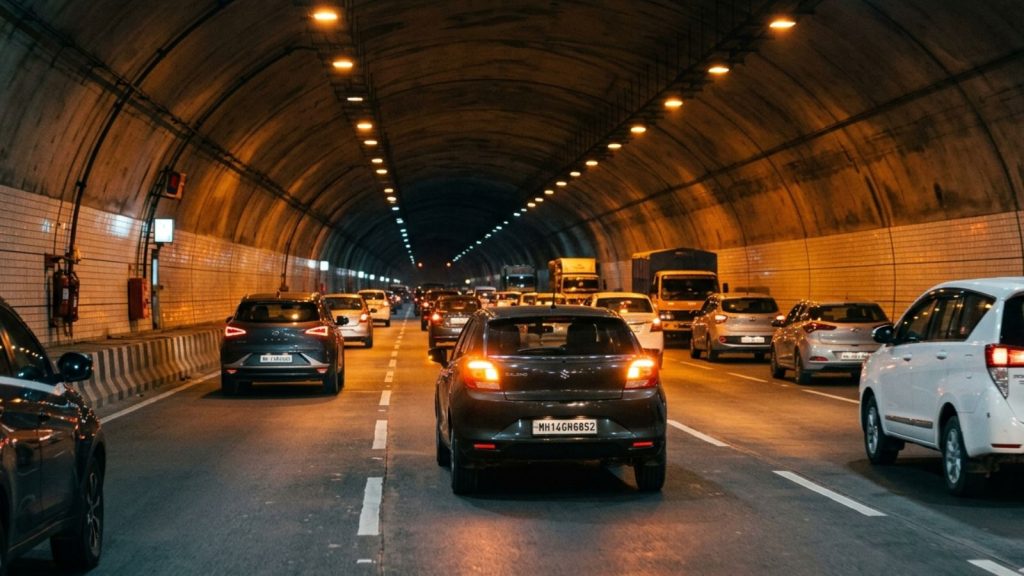

If you enter a highway tunnel and immediately reach for the red triangle button, you aren’t being safe, you are becoming a hazard.

Across India’s rapidly expanding expressway network, a dangerous “copycat” behavior has taken hold. Thousands of motorists are switching on their hazard lights while traversing tunnels, mistakenly believing it enhances visibility. However, road safety experts and traffic authorities are now sounding the alarm: this habit is not just unnecessary; it’s a recipe for high-speed disaster.
The Indicator Illusion: A Fatal Blind Spot
The primary danger of driving with hazard lights (blinkers) on is the technical override of your car’s communication system. In the vast majority of vehicles sold in India, activating hazard lights locks both left and right indicators into a synchronized flash.
When a driver decides to change lanes inside a tunnel while their blinkers are on, the lane-change stalk becomes useless. To the driver behind you, there is no signal indicating your intent to move. You move left, but your car continues to blink “danger/stopped” in both directions. In the confined, echo-heavy environment of a tunnel, this lack of communication often leads to side-swipe collisions.
Tunnels Are Not “Dark” Zones
A common justification for this habit is the perceived lack of light. “Drivers often equate tunnels with heavy rain or night driving,” says a senior Highway Patrol official. “But modern Indian tunnels like the Atal Tunnel or the Kamshet tunnels are equipped with 24/7 high-intensity LED lighting.”
Using hazard lights in a well-lit tunnel creates a ‘strobe effect’ that can disorient other drivers, leading to “target fixation” where trailing motorists accidentally steer toward the blinking lights.

The Psychology of “Follow the Leader”
Why do so many Indians do it? Research suggests a “herd mentality” at play. When one driver activates their hazard lights, trailing drivers often assume there is an emergency ahead or a new rule they aren’t aware of. This creates a domino effect where an entire convoy traverses the tunnel blinking incessantly, rendering the actual purpose of hazard lights, signaling a stationary vehicle or a breakdown, completely void.
Know the Law: Fines and Regulations
Under Section 177 of the Motor Vehicle Act, hazard lights are strictly reserved for:
- Stationary breakdowns on the carriageway.
- Emergency stops due to an accident or obstruction.
- Towing situations where the vehicle is a moving obstacle.
Driving through a tunnel with hazard lights on can result in on-the-spot fines ranging from ₹300 to ₹1,000 in certain jurisdictions like Meghalaya and Maharashtra, where traffic police have begun specialized “Safe Tunnel” drives.
Proper Tunnel Etiquette
To stay safe and avoid fines, follow these three simple steps:
- Headlights On: Use low-beam headlights to ensure you are visible from the front and rear.
- Maintain Lane: Avoid unnecessary lane changes. If you must, use your indicators—ensure your hazard lights are OFF first.
- Observe Speed: Follow the displayed speed limit, usually 60-80 km/h in most Indian tunnels.
Tunnels are designed for safe, well-lit travel, and the best way to keep them that way is by driving predictably. Keep your headlights on, use indicators normally, and reserve hazard lights only for genuine emergencies.